API 650 vs API 620
Atmospheric storage tanks and low-pressure storage tanks
The short answer
Both cover welded steel storage tanks, and the pressure inside decides between them. API 650 covers tanks at close to atmospheric pressure, up to about 18 kPa (2.5 psi) with its Annex F. API 620 covers large low-pressure tanks up to about 103 kPa (15 psi) in the vapour space, and it has annexes for refrigerated products and liquefied gases.
Side by side
| API 650 | API 620 | |
|---|---|---|
| What it is | Welded tanks for oil storage | Design and construction of large, welded, low-pressure storage tanks |
| Issued by | API | API |
| Internal pressure | Close to atmospheric. Up to about 18 kPa (2.5 psi) with Annex F | Up to about 103 kPa (15 psi) |
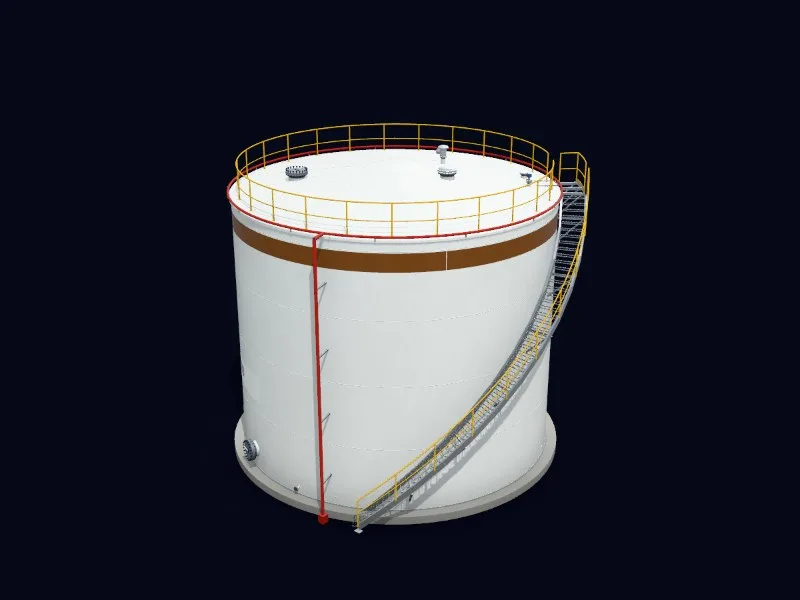
| Shape | Vertical, cylindrical, flat bottom, with an open top, fixed roof or floating roof | Any shape with a single vertical axis of revolution, including flat-bottom tanks and curved roofs and bottoms |
| Refrigerated storage | Not covered. It is for non-refrigerated service | Annexes for refrigerated products and liquefied gases |
| Typical oil and gas use | Crude, condensate, products, produced water, firewater and chemicals | Products with higher vapour pressure, and refrigerated liquefied gas storage |
| Venting | API 2000 | API 2000 |
| How they relate | Covers the tanks below the API 620 range | Picks up above the API 650 pressure range. Higher pressures go to ASME Section VIII |
Commonly quoted headline limits. Annex letters and limits can change between editions, so confirm them against the edition the project names.
When each one applies
Start from the vapour pressure of the product and the pressure the tank must hold. Crude oil, water and most products can be stored at close to atmospheric pressure in an API 650 tank, with a floating roof for volatile products.
Where the vapour space must be held at a pressure above the API 650 range, the tank moves to API 620. Above about 103 kPa (15 psi) it is no longer a tank but a pressure vessel, such as an LPG sphere or bullet designed to ASME Section VIII.
Both on one site
A terminal or gas plant may have both: API 650 tanks for crude, condensate and water, and an API 620 tank for a product that needs a little more pressure, or for refrigerated storage of liquefied gas. Pressurised LPG at ambient temperature sits in spheres or bullets.
In service, API 653 covers the inspection, repair, alteration and reconstruction of API 650 tanks.
Common confusions
Open-top tanks at zero pressure are only part of API 650. Its annexes allow a small internal pressure and a small vacuum, within stated limits.
API 620 stops well short of pressure vessel territory. Its upper limit is low, and anything above it is designed as a pressure vessel.
Small tanks are not always API 650 tanks. Shop-welded tanks for production liquids are usually bought to API 12F, and API 650 has its own annex for shop-assembled tanks up to 6 m in diameter.
How it shows up on a datasheet
A tank datasheet names the standard and edition, the design pressure and vacuum, the design temperature, the product and its specific gravity, the roof type and the annexes that apply. The design pressure is usually the first clue to which standard the tank belongs to.
Questions
What is the difference between API 650 and API 620?
API 650 covers welded steel tanks at close to atmospheric pressure. API 620 covers large welded tanks at low pressure, up to about 103 kPa (15 psi), including refrigerated storage.
Can an API 650 tank hold pressure?
A little. With its Annex F, an API 650 tank can be designed for an internal pressure of up to about 18 kPa (2.5 psi). Above that the tank is designed to API 620.
When does a storage tank become a pressure vessel?
Above the API 620 range of about 103 kPa (15 psi), storage is designed as a pressure vessel, usually to ASME Section VIII, as with LPG spheres and bullets.
Which standard covers inspection of tanks in service?
API 653 covers the inspection, repair, alteration and reconstruction of API 650 tanks in service. See the atmospheric storage tank.
This page explains two standards in plain words. It is not a substitute for the standards themselves, and project specifications often add to both. Deck Twin uses these standards as reference values for visualisation. Check the current edition of each standard before using any value for design, procurement or fabrication.