ASME VIII Div 1 vs Div 2
Two sets of rules for building pressure vessels in the ASME Boiler and Pressure Vessel Code
The short answer
Both are parts of ASME BPVC Section VIII for building pressure vessels. Division 1 designs by rule, with simple formulas and a larger design margin, and it is used for most vessels. Division 2 gives alternative rules that need more detailed analysis, material control and examination. In return they allow a lower design margin and thinner walls, which pays off on large, thick-walled or high-pressure vessels.
Side by side
| ASME VIII Division 1 | ASME VIII Division 2 | |
|---|---|---|
| What it is | Rules for construction of pressure vessels | Alternative rules for construction of pressure vessels |
| Issued by | ASME | ASME |
| Design approach | Design by rule: formulas for shells, heads and openings | Design by rule, with design by analysis allowed for detailed checks |
| Design margin | The larger margin on material strength: 3.5 on tensile strength | A lower margin on material strength, so allowable stresses are higher |
| Fatigue | Not usually evaluated | Screened for fatigue, with analysis where needed |
| Documents | Design calculations and the manufacturer's data report | A user's design specification and a manufacturer's design report, as well as the data report |
| Certification mark | Certification Mark with U designator | Certification Mark with U2 designator |
| Typical oil and gas use | Separators, scrubbers, drums, filters, columns, air receivers and exchanger shells | Large, thick-walled or high-pressure vessels where a thinner wall saves cost, weight or fabrication time |
| How they relate | The default route | An alternative route to the same goal |
A summary in our own words. The 2017 to 2023 editions split Division 2 into Class 1 and Class 2, and the 2025 edition removed that split. Check the edition your project names for the margins and rules.
When each one applies
The purchaser chooses the division. Division 1 is the usual choice for the separators, drums and columns of an oil and gas plant, because its rules are simple and well known, and most pressure vessel shops build to it.
Division 2 earns the extra engineering when the walls are thick. The lower design margin gives a thinner wall, which can cut material, welding and heat treatment on a large high-pressure vessel. Offshore, the weight saved can matter too.
What Division 2 asks for in return
The user writes a design specification that sets out the loads and operating conditions, including cycles. The manufacturer then produces a design report showing how the vessel meets it. Materials, fabrication and examination are more tightly controlled than under Division 1.
This takes more engineering time and needs a fabricator experienced with Division 2. For a small or moderate vessel, the saving in steel is rarely worth it.
Common confusions
Some people read Division 2 as a stricter version of Division 1 that every critical vessel must meet. It is an alternative route, and both give safe vessels when their rules are followed.
Division 3 is a third set of rules, for high-pressure vessels. It is a separate division, not a higher grade of Division 2.
Piping follows ASME B31.3, and relief devices are usually sized to API 520. The relief device rules of the BPVC now sit in Section XIII.
How it shows up on a datasheet
The vessel datasheet names the code, the division and the edition. A Division 2 vessel built to the 2017 to 2023 editions also names its class. The nameplate carries the U or U2 designator, and the manufacturer's data report records the division used.
Questions
Is Division 2 better than Division 1?
Neither is better. Division 1 uses simpler rules and a larger margin. Division 2 uses more detailed analysis and tighter control and allows a thinner wall. The choice is about cost, weight and engineering effort for the vessel in question.
Why are Division 2 vessels thinner?
Division 2 allows a higher design stress, because its rules require more detailed analysis, material control and examination. A higher allowable stress gives a thinner wall for the same pressure.
What were Division 2 Class 1 and Class 2?
From the 2017 edition, every Division 2 vessel was designated Class 1 or Class 2. Class 2 used a design margin of 2.4 on tensile strength and Class 1 used 3.0, against 3.5 for Division 1. The 2025 edition removed the two-class structure, so check which edition a vessel was built to.
What stamp does a Division 2 vessel carry?
The ASME Certification Mark with the U2 designator. Division 1 vessels carry the U designator. See ASME Section VIII Division 1.
This page explains two standards in plain words. It is not a substitute for the standards themselves, and project specifications often add to both. Deck Twin uses these standards as reference values for visualisation. Check the current edition of each standard before using any value for design, procurement or fabrication.
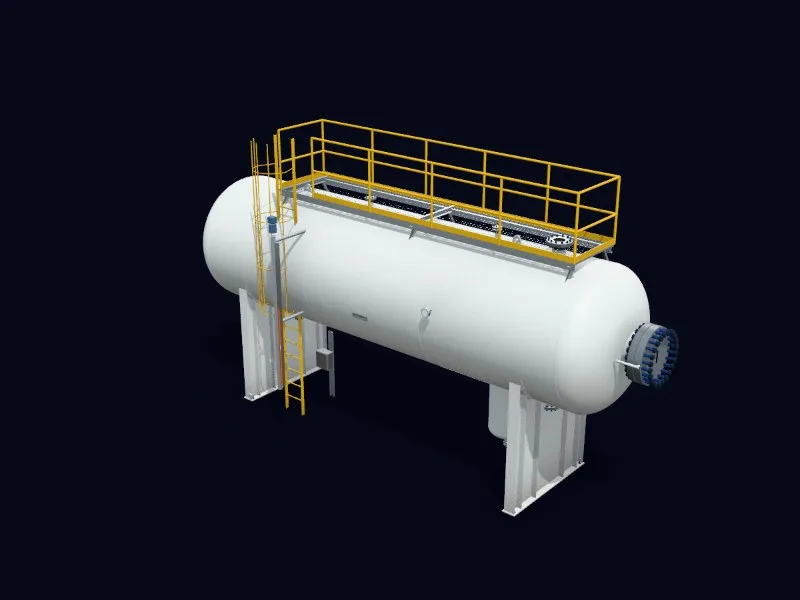
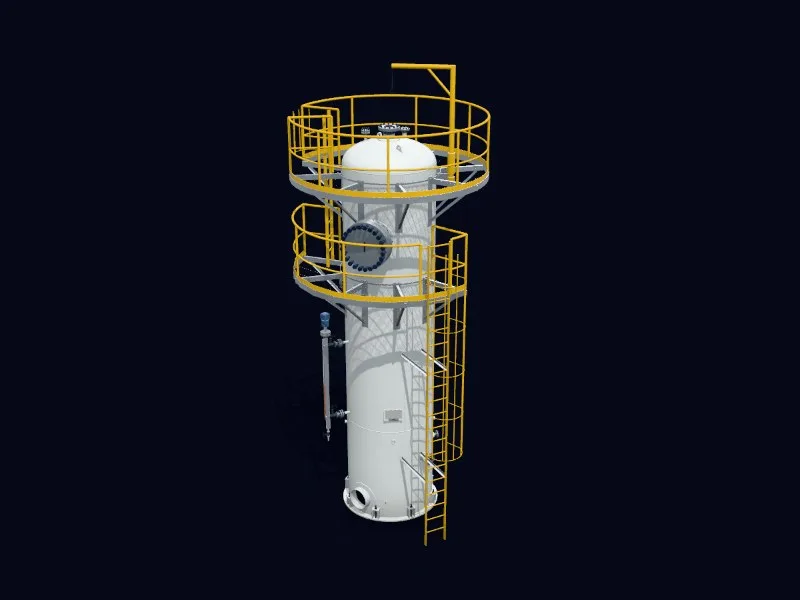
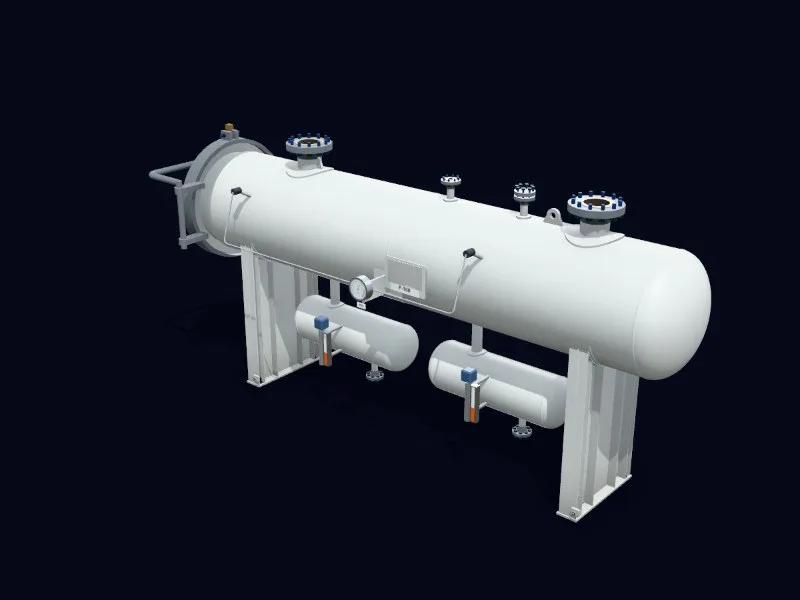
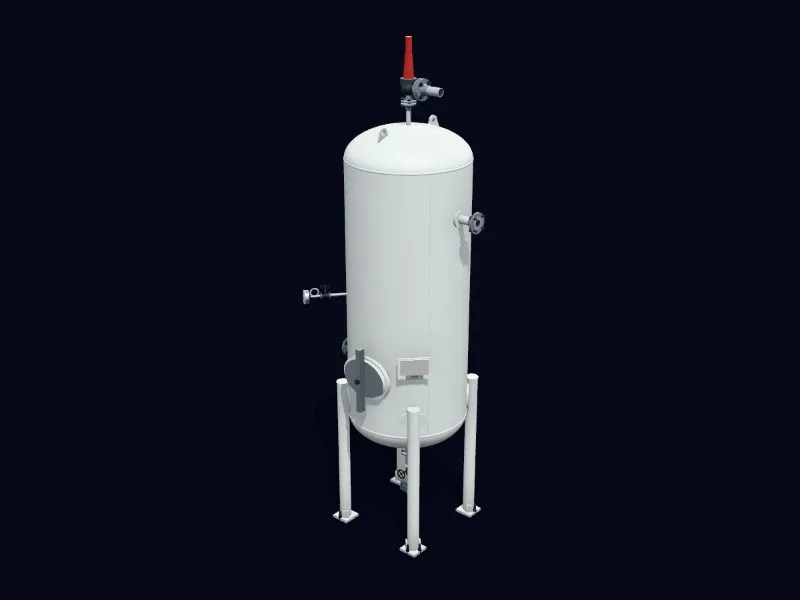
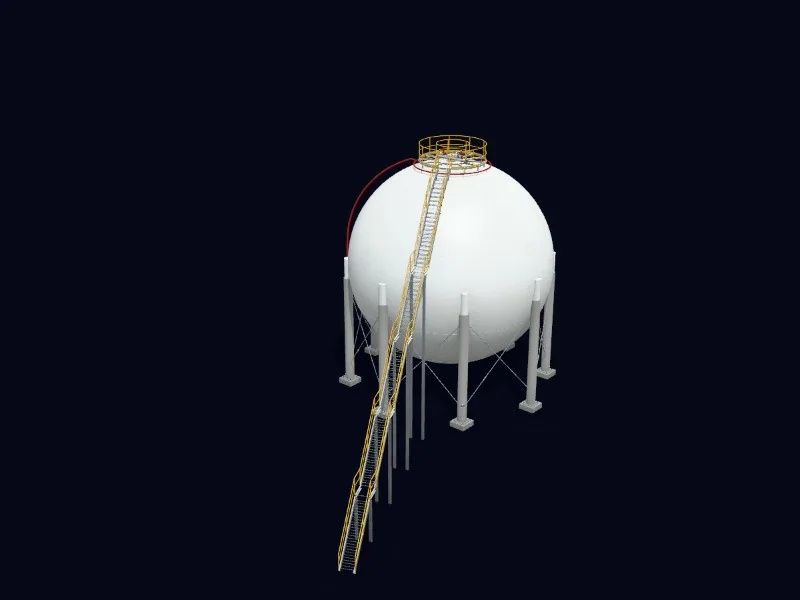
Components that follow ASME VIII Division 1 or ASME VIII Division 2
More on ASME BPVC Section VIII Division 1.