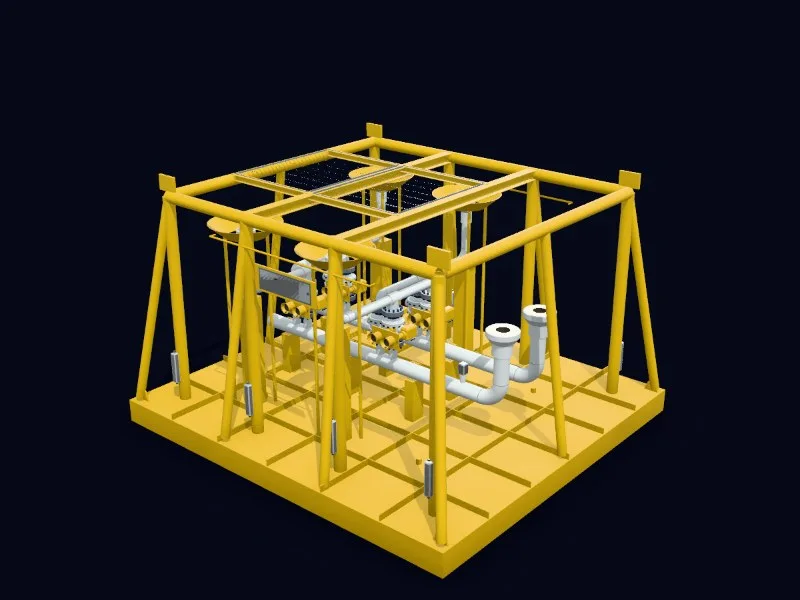
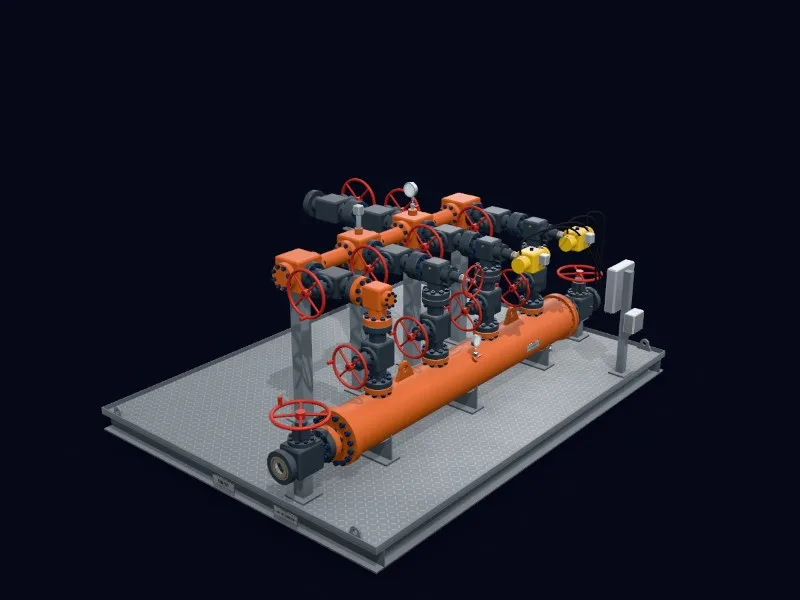
API 6A vs API 17D
Surface wellhead and tree equipment, and subsea wellhead and tree equipment
The short answer
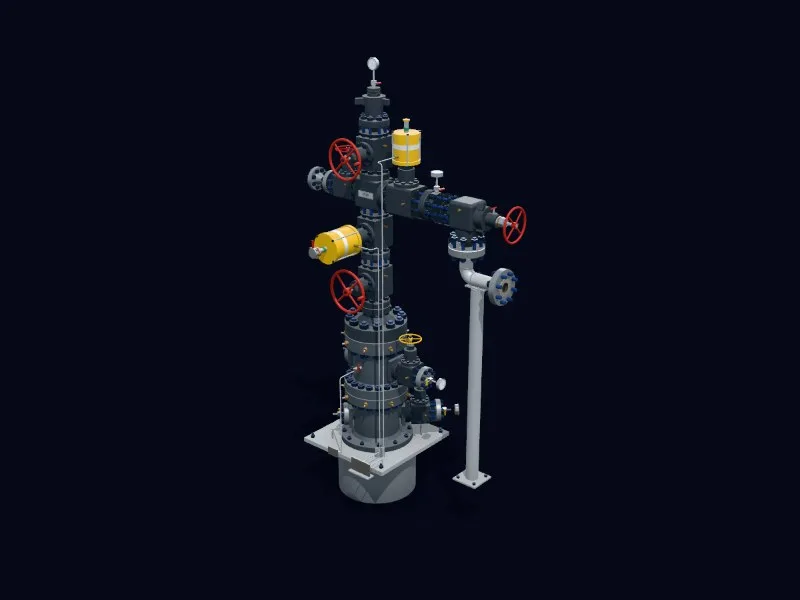
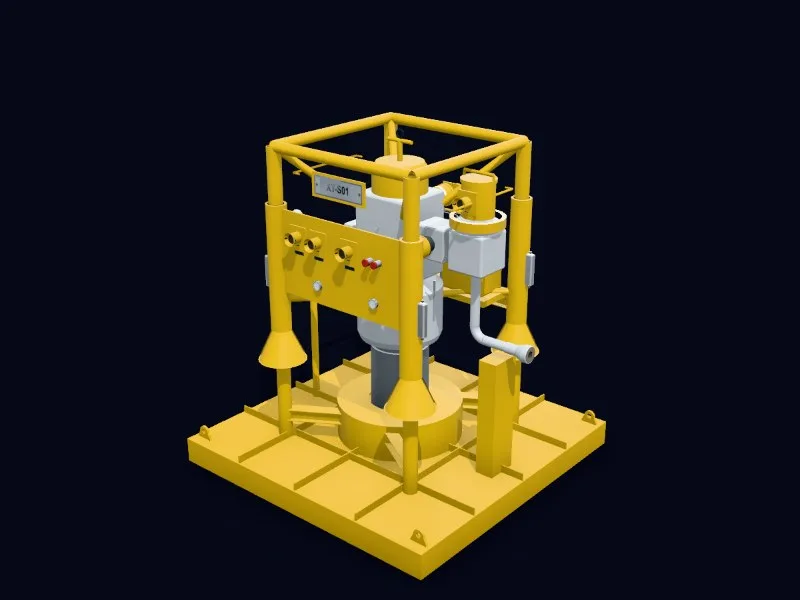
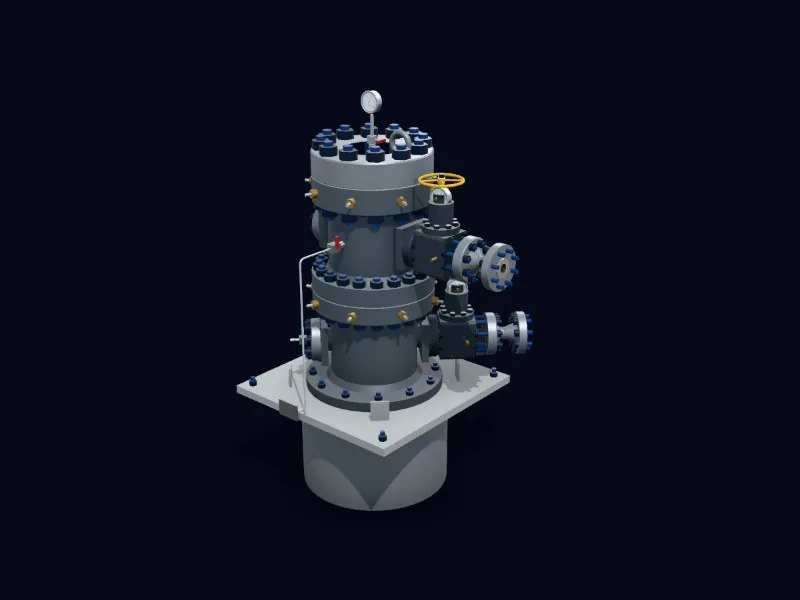
API 6A covers wellhead and christmas tree equipment at the surface, on land and on platforms. API 17D covers subsea wellheads and trees on the seabed. API 17D uses the same style of pressure ratings and material classes as 6A, and adds what the seabed needs: external pressure, remotely made-up connectors, ROV interfaces and hydraulic control through an umbilical.
Side by side
| API 6A | API 17D | |
|---|---|---|
| What it is | Specification for wellhead and tree equipment | Specification for subsea wellhead and tree equipment |
| Issued by | API. ISO 10423 used to be identical, and its 2022 edition is now a supplement to API 6A | API. ISO 13628-4:2010 is identical to the earlier second edition of API 17D |
| Where | Wellheads on land and on platform wellbays | On the seabed |
| Equipment | Casing and tubing heads, hangers, trees, gate valves, chokes, tees, crosses, adapters and end connections | Subsea wellheads, vertical and horizontal trees, tubing hangers, tree caps, valves, actuators and connectors |
| Pressure rating | In psi: 2000 to 20000 | In psi, in the same style as API 6A |
| Materials | Material classes AA to HH, and temperature classes | Uses the same style of material classes |
| End connections | Mainly 6B and 6BX flanges with ring gaskets | Often clamp or collet hub connectors, made up remotely |
| Operation | Hand wheels and hydraulic surface safety valves, worked from the wellbay | Hydraulically actuated valves, the main ones fail-safe closed, controlled through an umbilical, with ROV overrides |
| Related standards | API 16A for BOPs, API 6D for pipeline valves downstream | API 17F controls, 17E umbilicals, 17H ROV interfaces, 17P structures and manifolds |
A summary in our own words. Check the editions your project names: API 6A and ISO 10423 are no longer identical, and API 17D has moved on from the ISO 13628-4 text.
When each one applies
It comes down to where the tree sits. A dry tree, one that sits in the air on a land wellpad or a platform wellbay, is API 6A equipment, even offshore. A wet tree, one that sits on the seabed, is API 17D equipment.
API 6A normally stops at the choke outlet. The flowline downstream follows the plant piping code, ASME B31.3.
Both on one field
A field with a platform and subsea tiebacks has both. The platform's own wells have 6A trees in the wellbay. The subsea wells have 17D trees, connected by jumpers to manifolds and flowlines that come up a riser to the platform.
Because 17D shares the 6A style of pressure ratings and material classes, engineers can describe both sets of wells in the same terms: bore, rated pressure, material class and temperature class.
Common confusions
Offshore does not mean 17D. Platform dry trees are 6A equipment.
API 6D covers pipeline and piping valves downstream of the wellhead, rated in ASME classes rather than psi. It is a valve standard, not a wellhead standard.
BOP stacks fall outside both 6A and 17D. They follow API 16A, and choke and kill equipment follows API 16C. Both use the 6A flange and gasket system.
How it shows up on a datasheet
A surface tree is described by bore and rating, such as 3-1/16 in 10K, with its PSL, PR level, material class and temperature class. A subsea tree datasheet uses the same terms and adds the tree type, vertical or horizontal, the water depth, the connector and the ROV and control interfaces.
Questions
Is API 17D the same as API 6A?
They are separate standards. API 6A covers surface wellheads and trees. API 17D covers subsea equipment. It uses the same style of pressure ratings and material classes and adds requirements for external pressure, remote connection, ROV operation and hydraulic control.
Does API 6A apply offshore?
Yes, to dry trees on platforms. Any tree that sits in the air on a wellbay is 6A equipment. Only trees on the seabed are 17D equipment.
Is API 17D the same as ISO 13628-4?
Not any more. ISO 13628-4:2010 is identical to the second edition of API 17D. API published a third edition in 2021, so check which document and edition a project names before comparing them clause by clause.
Which standard covers blowout preventers?
API 16A. Choke and kill equipment follows API 16C. Both use the 6A flange and ring gasket system.
This page explains two standards in plain words. It is not a substitute for the standards themselves, and project specifications often add to both. Deck Twin uses these standards as reference values for visualisation. Check the current edition of each standard before using any value for design, procurement or fabrication.
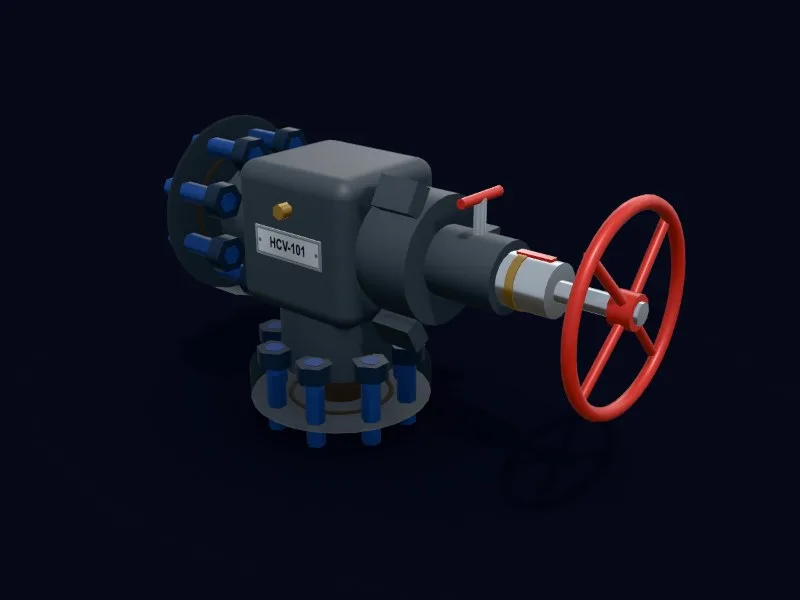
Components that follow API 6A or API 17D