API 610 vs ASME B73.1
API pump vs ANSI pump: heavy-duty process pumps and standard chemical process pumps
The short answer
An API pump is a centrifugal pump built to API 610 for petroleum, petrochemical and natural gas service. An ANSI pump is a horizontal end-suction chemical process pump built to ASME B73.1, whose main aim is that pumps of the same dimension designation from different makers are interchangeable. API 610 pumps are heavier, built and tested to tighter rules and cost more. Oil and gas projects use them for hydrocarbons and severe duties, and may use ANSI pumps for lighter water, chemical and utility services.
Side by side
| API 610 | ASME B73.1 | |
|---|---|---|
| What it is | Centrifugal pumps for petroleum, petrochemical and natural gas industries | Specification for horizontal end suction centrifugal pumps for chemical process |
| Issued by | API. The current edition is the 13th, from 2026. ISO 13709:2009 matches the 11th edition | ASME, approved as an American National Standard |
| Common name | API pump | ANSI pump |
| Pump types | Three families, overhung (OH), between bearings (BB) and vertically suspended (VS), each with numbered types such as OH2 and BB5 | One build: horizontal, end suction, single stage, centreline discharge |
| Intended service | Hydrocarbons, high pressure, high temperature and critical duties | Chemical and general process service at moderate pressure and temperature |
| Dimensions | Not standardised between makers | Standardised, so pumps of the same dimension designation are interchangeable |
| Casing support | Centreline mounted on hot horizontal pumps | Usually foot mounted under the casing |
| Materials | Metallic, chosen for the service | Metallic, and solid polymer pumps as well |
| Mechanical seal | Specified to API 682, with its seal piping plans | Chosen by the purchaser and maker for the duty |
| Cost and lead time | Higher, with more testing and documentation | Lower, often from standard ranges |
A general comparison for orientation. Project specifications add to both, so read the datasheet and the current edition of each standard.
When a pump needs to be an API pump
The scope of API 610 lists six limits of pressure, temperature, speed, head and impeller size, and says its pumps suit services beyond any one of them. They are listed under when a pump needs to be an API 610 pump. Below all six, an ASME B73.1 or ISO 5199 pump may be acceptable.
Some oil and gas operators go further and ask for API 610 on every hydrocarbon pump, whatever the conditions, because a leak of flammable liquid is a serious hazard. The project specification decides.
Why it is called an ANSI pump
ASME writes B73.1, and ANSI approves it as an American National Standard. Engineers kept the older habit of naming the standard after ANSI, in the same way an ASME B16.5 flange is still called an ANSI flange.
The point of ASME B73.1 is interchangeability. For a given dimension designation the mounting dimensions and the size and position of the suction and discharge nozzles are fixed, so a pump from one maker can replace a pump from another on the same foundation and piping. ASME B73.2 does the same for vertical inline chemical pumps.
Both on one plant
Most oil and gas facilities have both. Crude export, condensate, produced water and glycol pumps are usually API 610. Utility water, chemical transfer, washdown and some drain pumps may be ANSI pumps, where the project specification allows them.
The two are bought differently. An API 610 pump is engineered to a detailed datasheet, with a list of exceptions to review. An ANSI pump is chosen from a maker's standard range by dimension designation and material.
Common confusions
ANSI pump names a design standard, B73.1, rather than a rating or a pressure class.
Calling a pump API style or similar to API does not make it an API 610 pump. That takes a pump built, tested and documented to the standard, with any exceptions agreed.
Positive displacement pumps are outside API 610. Reciprocating pumps follow API 674, metering pumps API 675 and rotary pumps API 676.
How it shows up on a datasheet
An API 610 datasheet gives the pump type code, such as OH2 or BB3, the rated point, the seal plan to API 682 and the tests. An ANSI pump is called up by its B73.1 dimension designation, its materials and its seal, and often by the maker's model number.
Questions
What is the difference between an API pump and an ANSI pump?
An API pump is built to API 610 for heavy-duty petroleum, petrochemical and gas service. An ANSI pump is built to ASME B73.1, a dimensional and design standard for horizontal end-suction chemical process pumps. API pumps are heavier, more tightly specified and more costly. ANSI pumps are interchangeable between makers.
Is an ANSI pump the same as an ASME B73.1 pump?
Yes. ANSI pump is the everyday name for a pump to ASME B73.1. ASME writes the standard and ANSI approves it as an American National Standard.
Can an ANSI pump be used in hydrocarbon service?
Sometimes, below the limits in the API 610 scope and where the project specification allows it. Some oil and gas operators require API 610 for every hydrocarbon pump, so check the specification first.
Are ANSI pumps interchangeable between manufacturers?
Yes, that is the purpose of ASME B73.1. Pumps of the same dimension designation share mounting dimensions and nozzle sizes and positions, so one can replace another without changing the foundation or piping.
This page explains two standards in plain words. It is not a substitute for the standards themselves, and project specifications often add to both. Deck Twin uses these standards as reference values for visualisation. Check the current edition of each standard before using any value for design, procurement or fabrication.
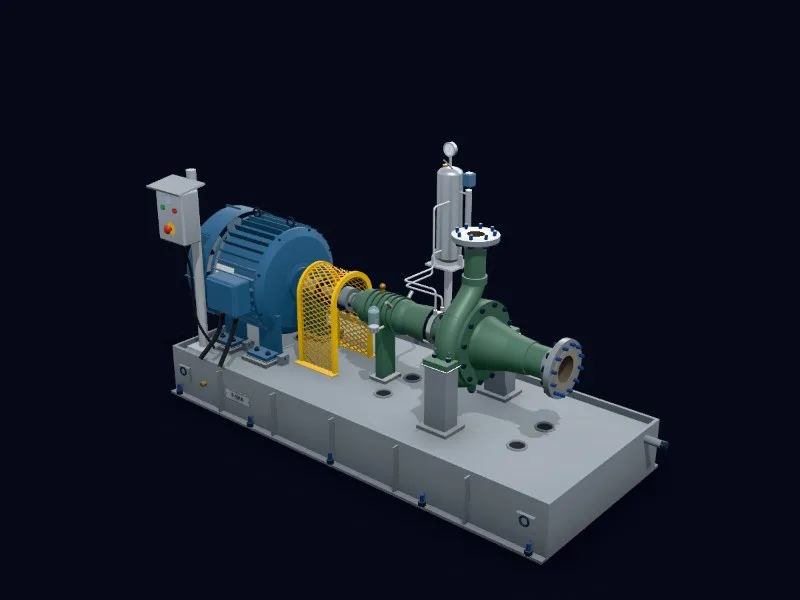
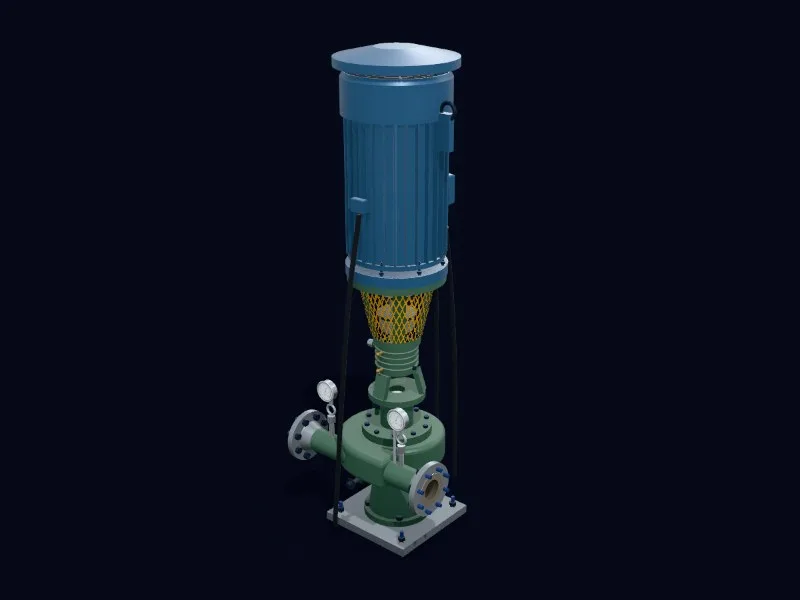
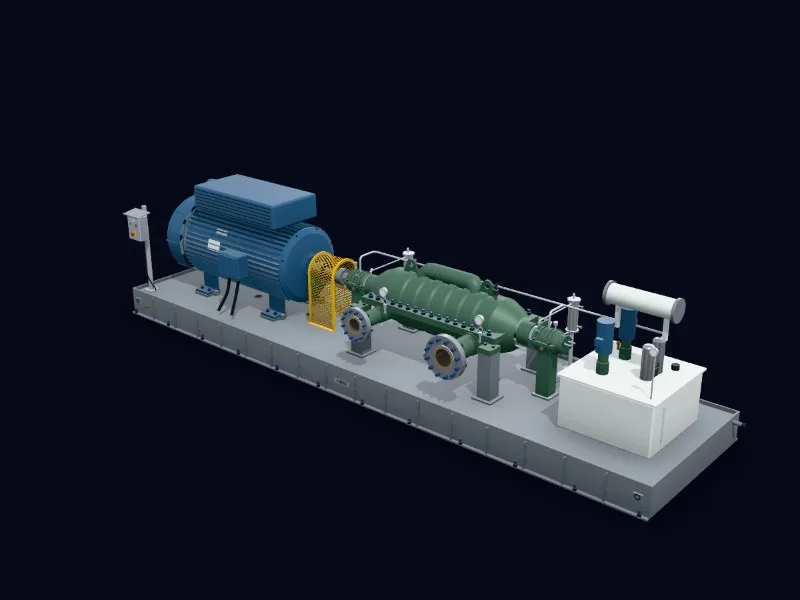
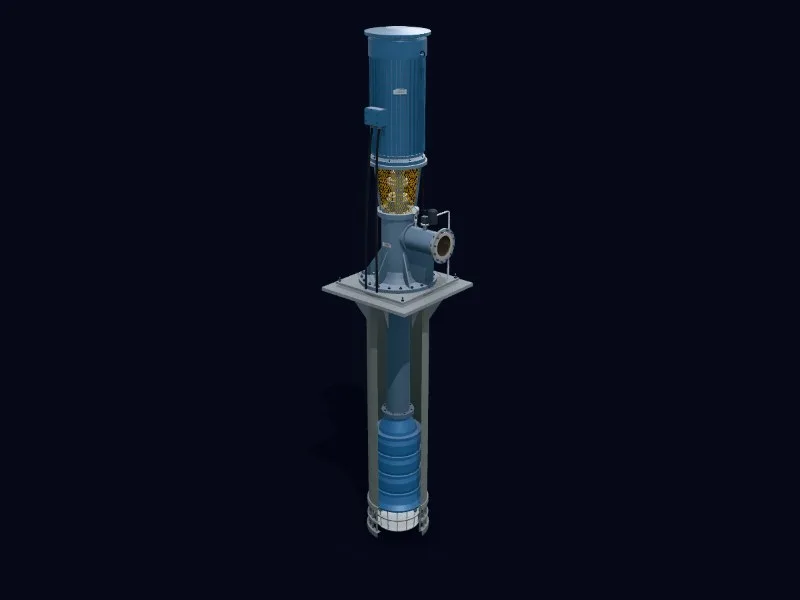
Components that follow API 610 or ASME B73.1
More on API 610 and ASME B73.1.