API 17D
Subsea wellhead and tree equipment
API 17D explained: subsea wellheads, vertical and horizontal (spool) trees, tubing hangers, tree valves and connectors, and API 17D vs API 6A.
Scope
API Spec 17D specifies subsea wellhead systems, subsea trees, tubing hangers, tree caps, valves and actuators, connectors and related tools. It sets pressure ratings, design, materials, testing and marking for equipment installed on the seabed. The current edition is the 3rd, of October 2021. ISO 13628-4:2010 is identical to the earlier 2nd edition, so check which document the project names.
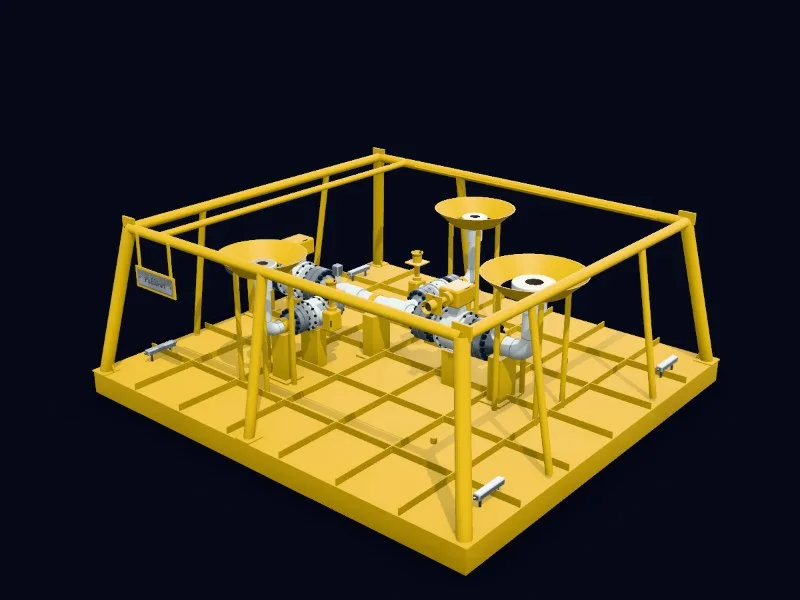
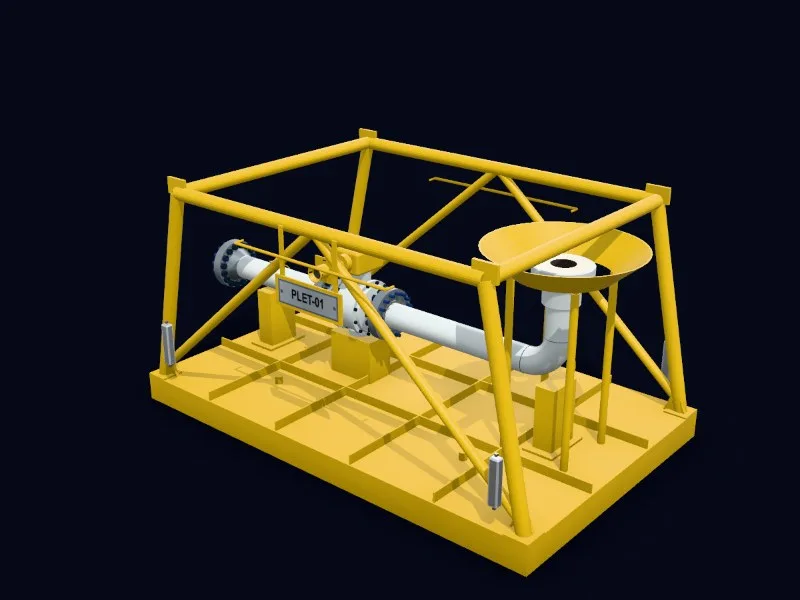
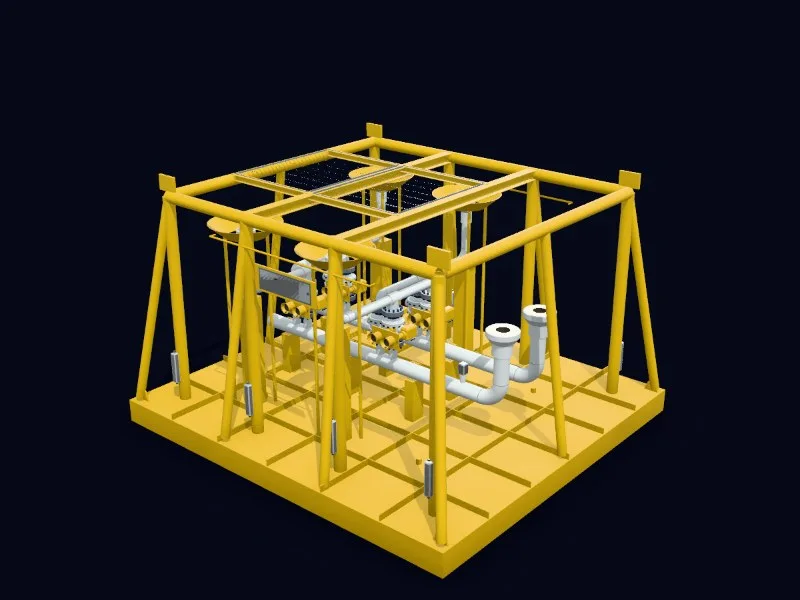
In a subsea field, each well has a 17D wellhead and tree, connected by jumpers to manifolds, PLETs and PLEMs that gather production into flowlines. The trees are controlled through umbilicals from the host platform or vessel.
Subsea production control systems are covered by API 17F, umbilicals by API 17E, ROV interfaces by API 17H, and subsea structures and manifolds by API 17P. Surface wellhead equipment is covered by API 6A.
Key concepts
- Vertical and horizontal trees
- In a vertical tree the master valves sit above the tubing hanger in the vertical bore, and the tree must be pulled to work over the well. In a horizontal tree the valves are on the side, the tubing hanger lands in the tree, and the completion can be pulled through it.
- Tree valves
- Typical valves are the production master valve (PMV), production wing valve (PWV), annulus master and wing valves (AMV, AWV) and a crossover valve. They are hydraulically actuated and fail closed on loss of control pressure.
- Pressure ratings
- Subsea equipment is rated in psi like API 6A, commonly 5000, 10000 or 15000 psi, with higher ratings for deep, high-pressure wells.
- Connectors and hubs
- Trees, jumpers and manifolds are joined by clamp or collet hub connectors rather than bolted flanges, because they are made up remotely on the seabed.
- ROV intervention
- Valve overrides, hot stabs and gauges are placed on an ROV panel so that a remotely operated vehicle can work the tree. Their geometry follows API 17H.
Questions
What is API 17D?
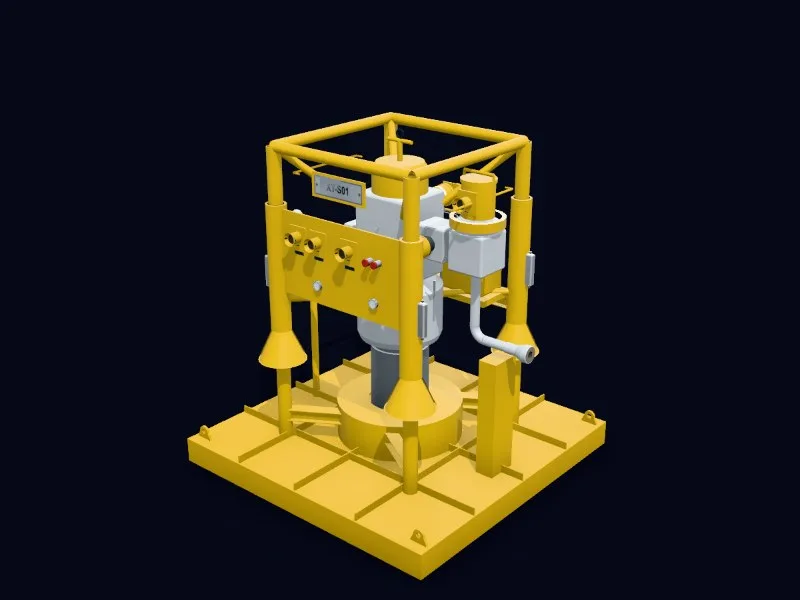
API Specification 17D is the standard for subsea wellhead and tree equipment. It sets the design, materials, testing and marking of subsea wellheads, trees, tubing hangers, valves and connectors. The current edition is the 3rd, of October 2021. ISO 13628-4:2010 matches the 2nd edition, so check which document the project names. The subsea Xmas tree is a 3D model of a vertical tree.
What is a spool tree?
A spool tree is a common name for a horizontal subsea tree. The tree body is a spool that the tubing hanger lands in, with the valves on the side. The completion can then be pulled through the tree without removing it.
What is the difference between API 6A and API 17D?
API 6A covers surface wellheads and trees. API 17D covers subsea equipment. It uses the same style of pressure ratings and material classes and adds requirements for external pressure, remote connection, ROV operation and hydraulic control.
In Deck Twin
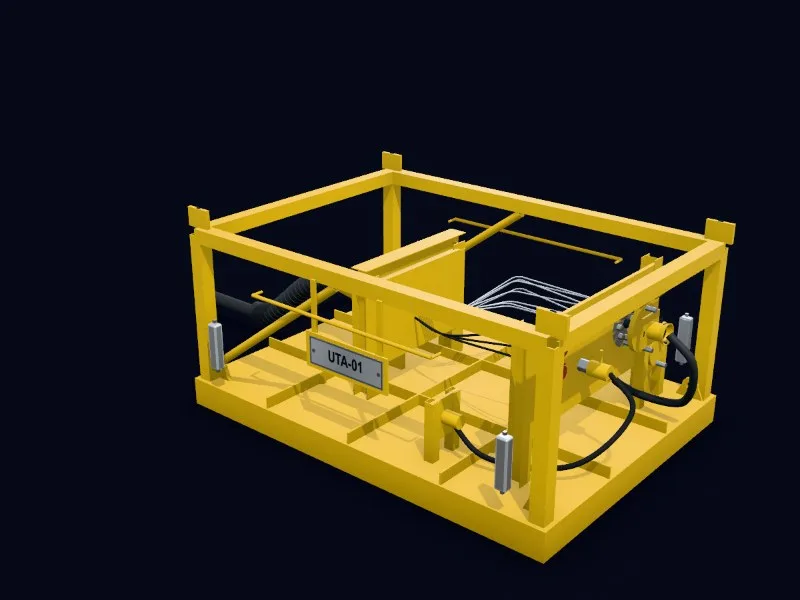
The subsea Xmas tree is a vertical or horizontal tree (treeType) with productionNps, annulusNps and an optional retrievable choke, a permanent guide base, a labelled ROV panel and a subsea control module. The subsea production manifold, PLEM, PLET and umbilical termination assembly use the same style of ROV-operated valves and hub connections. The seabed is at y = 0 and hub ports carry no flange class. The geometry is generic.
Deck Twin uses these standards as reference values for visualisation. Check the current edition of each standard before using any value for design, procurement or fabrication.