TEMA vs API 660
Shell-and-tube heat exchangers: the construction standard and the oil and gas purchase specification
The short answer
They work as layers, not alternatives. TEMA is a manufacturers' construction standard for shell-and-tube exchangers in any industry, and it defines the type letters such as AES and the construction Classes R, C and B. API 660 is a purchase specification for petroleum, petrochemical and natural gas service. It requires TEMA Class R unless the purchaser names another TEMA class, and adds its own requirements. Oil and gas datasheets therefore usually call up both, with ASME Section VIII for the pressure parts.
Side by side
| TEMA | API 660 | |
|---|---|---|
| What it is | Construction standard for shell-and-tube heat exchangers | Purchase specification for shell-and-tube heat exchangers |
| Issued by | Tubular Exchanger Manufacturers Association, a trade association of makers | American Petroleum Institute |
| Industries | Any: oil and gas, chemicals, power and general industry | Petroleum, petrochemical and natural gas |
| What it defines | Type letters, Classes R, C and B, tolerances, tube and baffle rules, and vibration guidance | Extra requirements for design, materials, fabrication, inspection, testing and shipment |
| Starting point | Its own rules, set by class | TEMA Class R, unless the purchaser specifies another TEMA class |
| Pressure parts | Designed to the pressure vessel code | Designed to the pressure vessel code named by the purchaser, usually ASME Section VIII Division 1 |
| Thermal design | Mainly mechanical, with some thermal data and fouling guidance | Gives no thermal design method |
| Related international standard | Not published as an international standard | ISO 16812, whose current edition is written as a supplement to API 660 |
| Other exchanger types | Shell-and-tube only | Shell-and-tube only. Air coolers, plate and hairpin exchangers have API 661, 662 and 663 |
A general comparison in our own words, not a clause-by-clause list. Check the editions your project names.
What each one does
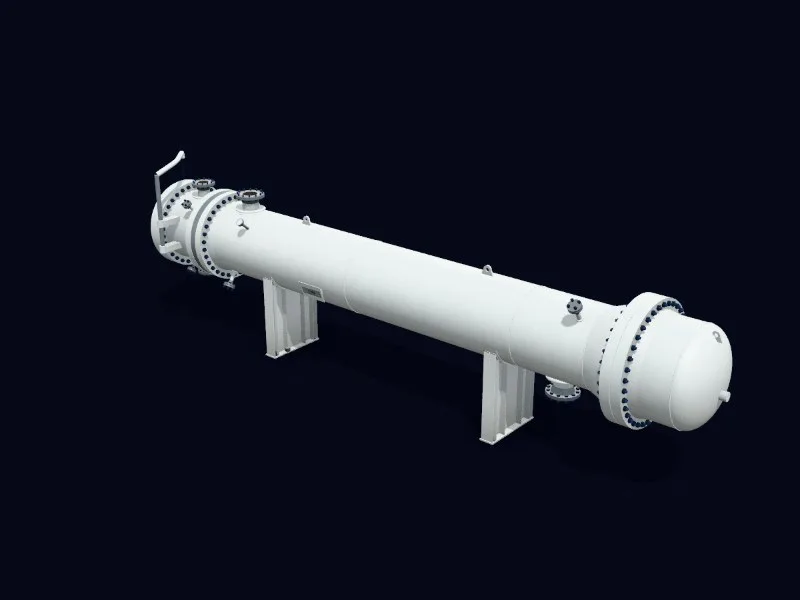
TEMA sets how a shell-and-tube exchanger is named and built. Its three-letter code tells everyone the front head, the shell and the rear head, and its classes set how heavy-duty the construction is. Class R is the class for the generally severe duty of petroleum and related processing.
API 660 sets what an oil and gas purchaser expects on top of that. It is written as requirements placed on a manufacturer, marks the points where the purchaser must choose, and comes with a datasheet. It covers matters such as bundle removal and cleaning, tube vibration, inspection, testing and preparation for shipment.
How they are used together
On an oil and gas datasheet each document covers a different layer. A typical one reads: exchanger to API 660, TEMA Class R, pressure parts to ASME Section VIII Division 1, flanges to ASME B16.5.
The thermal design comes first, usually with specialist software. The mechanical design then follows TEMA and API 660, and the shell, channels, tubesheets and nozzles are checked to the pressure vessel code.
Common confusions
API 660 builds on TEMA rather than replacing it, so an API 660 exchanger is still described by its TEMA type and class.
Outside oil and gas, a purchaser can ask for TEMA Class R, or another class, without API 660. Oil and gas specifications usually ask for both.
Wall thicknesses and the pressure test come from the vessel code. Neither TEMA nor API 660 is a pressure design code.
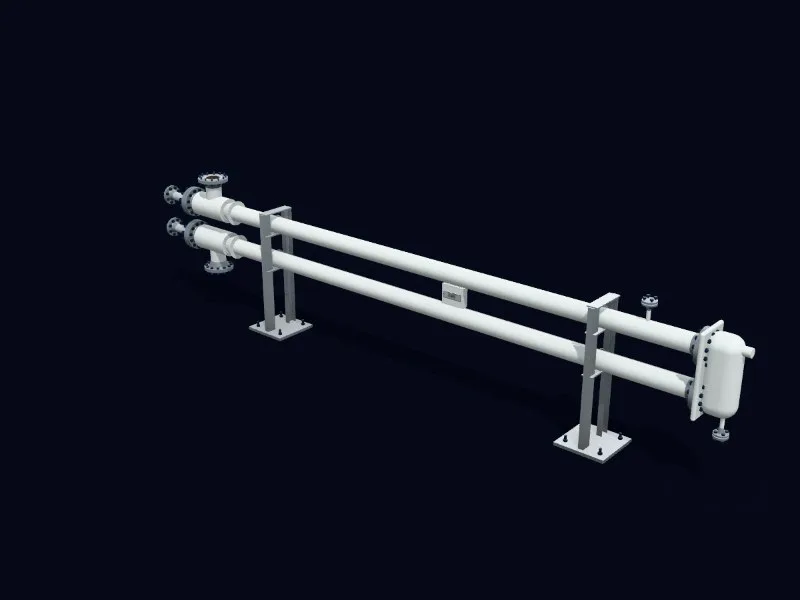
Air-cooled exchangers follow API 661, plate exchangers API 662 and hairpin exchangers API 663. TEMA and API 660 are for shell-and-tube units.
How it shows up on a datasheet
The datasheet gives the TEMA size and type, such as 23-192 AES, and the class. It names API 660 as the governing specification, lists any exceptions the manufacturer takes to it, and names the pressure vessel code and edition. When offers are compared, the list of exceptions to API 660 is often where they differ most.
Questions
Is API 660 the same as TEMA?
No. TEMA is a construction standard from a manufacturers' association, for any industry. API 660 is a purchase specification for oil, gas and petrochemical service that starts from TEMA Class R and adds requirements.
Does API 660 require TEMA Class R?
Yes, as its default. API 660 says exchanger construction shall conform to TEMA Class R unless another TEMA class is specified.
Do I need TEMA if I specify API 660?
Yes. API 660 builds on TEMA, so the exchanger is still described by a TEMA type and class, and the datasheet normally names both with a pressure vessel code.
Which standard covers air-cooled heat exchangers?
API 661. Plate exchangers are covered by API 662 and hairpin exchangers by API 663. See the air-cooled exchanger.
This page explains two standards in plain words. It is not a substitute for the standards themselves, and project specifications often add to both. Deck Twin uses these standards as reference values for visualisation. Check the current edition of each standard before using any value for design, procurement or fabrication.