API 610
Centrifugal pumps for petroleum, petrochemical and natural gas industries
API 610 centrifugal pumps explained: when a pump must be API, the OH, BB and VS types, API vs non-API pumps, 50 Hz speeds and how to check an offer.
Scope
API Std 610 (also published as ISO 13709) specifies centrifugal pumps for petroleum, petrochemical and natural gas service. It covers the pump, its baseplate, bearings, coupling and guard, and sets requirements for casings, rotors, vibration, nozzle loads, testing and documentation.
Most process pumps on an oil and gas facility are API 610: crude export pumps, produced water pumps, condensate pumps, glycol and amine pumps, seawater lift pumps and many firewater pumps. The type code is often the first thing an engineer reads on a pump datasheet.
Mechanical seals and their piping plans are specified in API 682. Lube oil consoles for larger pumps follow API 614. Firewater pumps must also meet NFPA 20, and positive displacement pumps are covered by API 674, 675 and 676.
When a pump needs to be an API 610 pump
API 610 is written for demanding process service: hydrocarbons, high pressure, high temperature, and duties where a failure is costly or dangerous. Its scope says that industry experience supports API 610 pumps once a service goes beyond any one of six limits. Below all six, a lighter process pump is often acceptable.
Those lighter pumps are what people call non-API pumps. The usual ones are built to ASME B73.1 (horizontal end-suction chemical process pumps, often called ANSI pumps), ASME B73.2 (vertical inline pumps) or ISO 5199. Many oil and gas operators still ask for API 610 on every hydrocarbon pump, whatever the conditions, because a leak of flammable liquid is a serious hazard.
| Condition | API 610 is suited above |
|---|---|
| Discharge pressure (gauge) | 19 bar (275 psi) |
| Suction pressure (gauge) | 5 bar (75 psi) |
| Pumping temperature | 150 °C (300 °F) |
| Rotational speed | 3600 r/min |
| Rated total head | 120 m (400 ft) |
| Impeller diameter, overhung pumps | 330 mm (13 in) |
Commonly quoted reference values from the scope of the 12th edition (2021). Going beyond any one of them points to API 610. Check them against the 13th edition (2026) before you rely on them.
The three pump families
API 610 sorts every centrifugal pump into one of three families with one question: where is the impeller in relation to the bearings? Each family then has numbered types, 18 in all. The type code, such as OH2 or BB5, goes on the data sheet and tells everyone the basic build before any other detail is read.
| Family | Codes | How it is built | Typical oil and gas duty |
|---|---|---|---|
| Overhung | OH1 to OH6 | One impeller on the end of the shaft, beyond the bearings. Horizontal or vertical inline. OH6 runs at high speed through a gear built into the pump. | Process transfer, condensate, glycol, closed drain and chemical transfer pumps |
| Between bearings | BB1 to BB5 | Impellers on a shaft supported at both ends. One or two stages (BB1, BB2) or multistage (BB3 to BB5), with axially or radially split casings. | Crude export, pipeline, high-pressure water injection and large cooling water pumps |
| Vertically suspended | VS1 to VS7 | The pump hangs below its driver: in a sump, pit or caisson (VS1 to VS5), or inside a can set below grade (VS6, VS7). | Seawater lift, firewater, drain sumps, and low-NPSH duties such as LPG and condensate loading |
A summary in our own words of the types in the 12th edition, not the classification table of the standard. Confirm the details of each type against the current edition.
API pumps and non-API pumps compared
An API 610 pump is heavier and stiffer, and it is built and tested to tighter rules, because it is expected to run for years in hot or flammable service. A chemical process pump to ASME B73.1 or ISO 5199 is lighter, cheaper and quicker to buy, and it is the right choice for many water, chemical and utility duties.
| Point | API 610 (ISO 13709) | ASME B73.1 or ISO 5199 |
|---|---|---|
| Intended service | Petroleum, petrochemical and gas process service, including hot, high-pressure and flammable liquids | General chemical and industrial service at moderate pressure and temperature |
| Casing support | Centreline mounted on hot horizontal pumps, so the shaft stays aligned as the casing grows | Usually foot mounted under the casing |
| Dimensions | Not standardised between makers | Main dimensions standardised (ASME B73.1, ISO 2858), so pumps from different makers can be swapped |
| Mechanical seal | Specified to API 682, with its seal piping plans | Chosen by the purchaser and maker for the duty |
| Cost and lead time | Higher, with more testing and documentation | Lower, often from standard ranges |
A general comparison for orientation, not a clause-by-clause list. Project specifications add to both, so read the data sheet and the current edition of each standard.
How API 610 is organised
The 13th edition, published in June 2026, is the current edition. It replaced the 12th edition of January 2021. ISO 13709:2009 matches the earlier 11th edition. The body of the standard runs from general rules down to the specific pump types, and the annexes hold the detailed methods and the data sheets. The outline below follows the 12th edition, so check the section numbers against the 13th.
- 1
Sections 1 to 5: scope and general
Scope, references, terms, unit responsibility and the classification of pump types.
- 2
Section 6: basic design
Pressure casings, nozzles and the piping loads they must carry, rotors, wear rings, mechanical seals, dynamics and vibration, bearings, lubrication and materials.
- 3
Section 7: accessories
Drivers, couplings, guards, baseplates, instruments and auxiliary piping.
- 4
Section 8: inspection and testing
Inspection, hydrostatic and performance tests, optional tests, and preparation for shipment.
- 5
Section 9: specific pump types
Extra rules for single-stage overhung, between-bearings and vertically suspended pumps.
- 6
Section 10 and the annexes
Vendor's data, then annexes on materials, piping design, lateral analysis, baseplates, an inspector's checklist and the data sheets.
50 Hz and 60 Hz API pumps
API 610 applies to pumps on 50 Hz and 60 Hz supplies alike. The supply frequency sets the motor speed, and the speed sets what the pump delivers. A two-pole induction motor runs a little under 3000 r/min on 50 Hz and a little under 3600 r/min on 60 Hz.
By the pump affinity laws, flow rises with speed and head rises with the square of speed. The same pump on 50 Hz gives about 83 % of its 60 Hz flow and about 69 % of its 60 Hz head. A 50 Hz pump for the same duty therefore needs a larger impeller, more stages or a larger size, so a 60 Hz selection cannot simply be reused at a 50 Hz site.
Europe, most of Asia, Africa and Australia use 50 Hz. North America and some other countries, including Saudi Arabia, use 60 Hz. Offshore platforms that make their own power can use either.
| Motor poles | Synchronous speed at 50 Hz | Synchronous speed at 60 Hz |
|---|---|---|
| 2 | 3000 r/min | 3600 r/min |
| 4 | 1500 r/min | 1800 r/min |
| 6 | 1000 r/min | 1200 r/min |
Basic motor values, not taken from API 610. Induction motors run slightly below these speeds because of slip, and pump curves are drawn at the actual rated speed.
API 610 pumps on an oil and gas facility
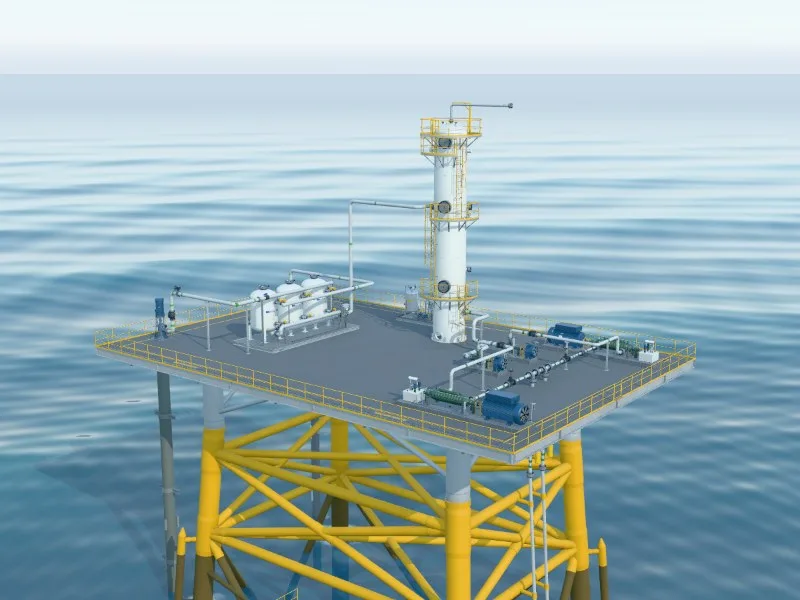
A typical offshore platform uses all three families. Seawater lift and firewater pumps are vertically suspended pumps hanging in caissons. Process transfer pumps are mostly OH2, with OH3 inline pumps where deck space is short. Export and injection duties that need high head use multistage between-bearings pumps, and the highest pressures use BB5 barrel pumps.
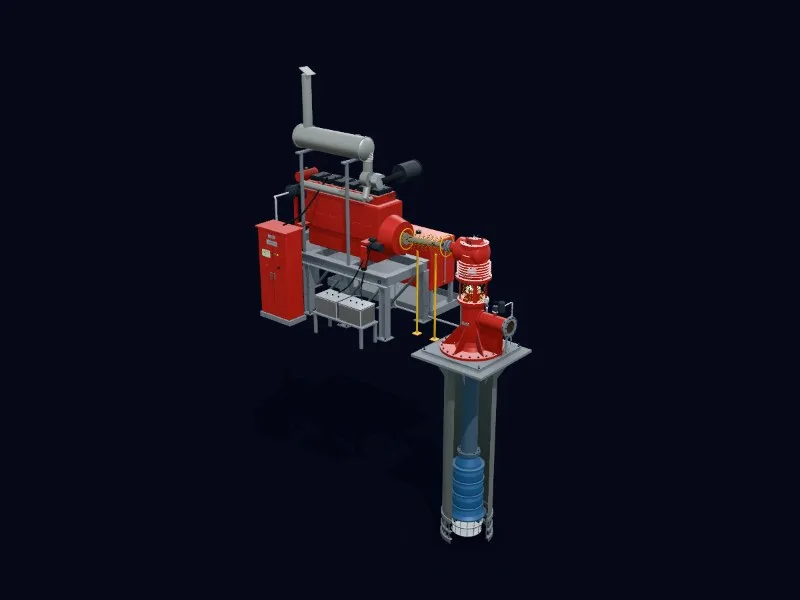
The water injection example below has all three. A VS1 vertical turbine pump lifts seawater, OH2 centrifugal pumps boost it after the deaerator, and BB3 multistage pumps raise it to injection pressure. Firewater pumps also follow NFPA 20, as in the diesel firewater pump.
Checking an API 610 pump offer
Many pump makers build to API 610, and the standard does not favour any of them. What matters is how closely a given offer follows it. These are the points a purchaser usually checks.
- 1
Data sheet
The purchaser fills in the API 610 data sheet with the duty, the liquid and the site conditions, and the vendor completes the rest. Both sides work from the same sheet.
- 2
Type code
Check that the type suits the duty: centreline mounting for hot service, a between-bearings pump for high head, a vertical pump where the suction head available is low.
- 3
Operating point
The rated flow should sit inside the preferred operating region around the best efficiency point, with room for the minimum and maximum flow cases.
- 4
NPSH margin
Compare the NPSH the plant gives with the NPSH the pump needs, using the margin the project specification asks for.
- 5
List of exceptions
The vendor lists where the offer departs from the standard. An offer with few exceptions is closer to the standard than one with many.
- 6
Seal and lubrication
Confirm the mechanical seal and its piping plan to API 682, the bearing lubrication and, on larger pumps, the lube oil system to API 614.
- 7
Tests
Agree which tests are witnessed: the hydrostatic test, the performance test, and options such as an NPSH test or a complete unit test.
Key concepts
- Overhung pumps (OH)
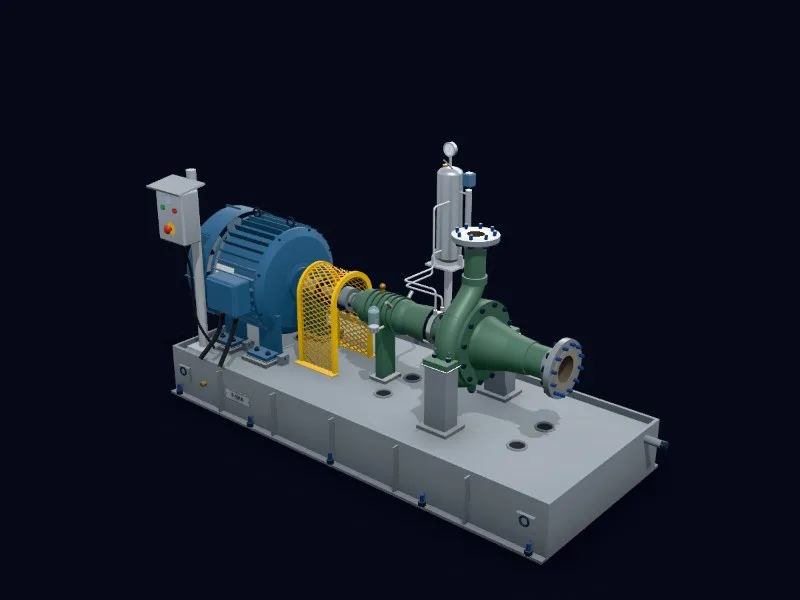
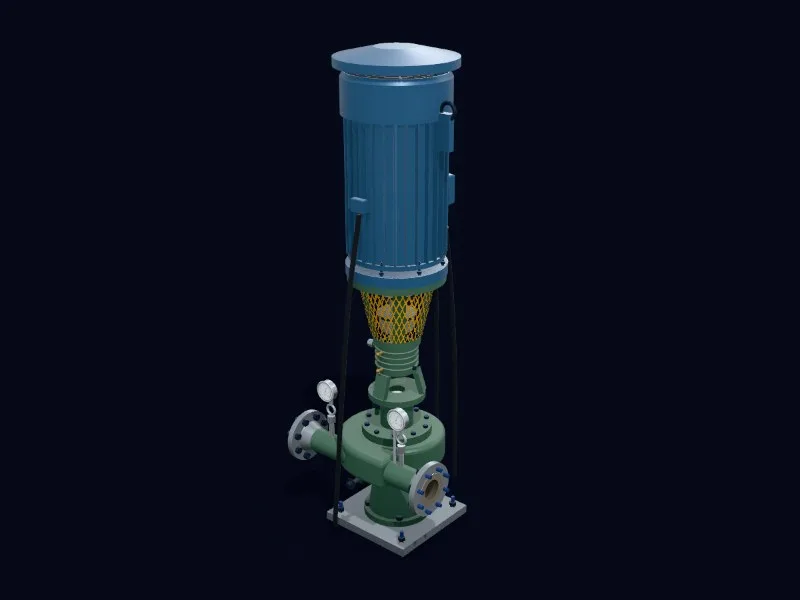
- The impeller is on the end of the shaft, outboard of the bearings. OH2 is a horizontal, centreline-mounted pump with its own bearing housing, the workhorse of process plants. OH3 is a vertical inline pump with a separate bearing bracket.
- Between-bearings pumps (BB)
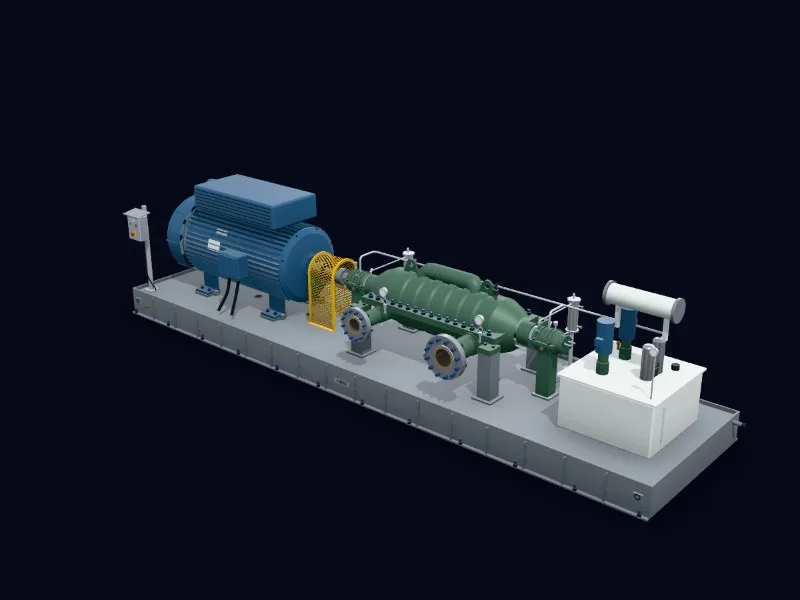
- The impeller or impellers sit between two bearings. BB1 is axially split with one or two stages, BB2 is radially split with one or two stages, BB3 is an axially split multistage pump, BB4 is a single-casing radially split multistage pump, and BB5 is a double-casing barrel pump for the highest pressures.
- Vertically suspended pumps (VS)
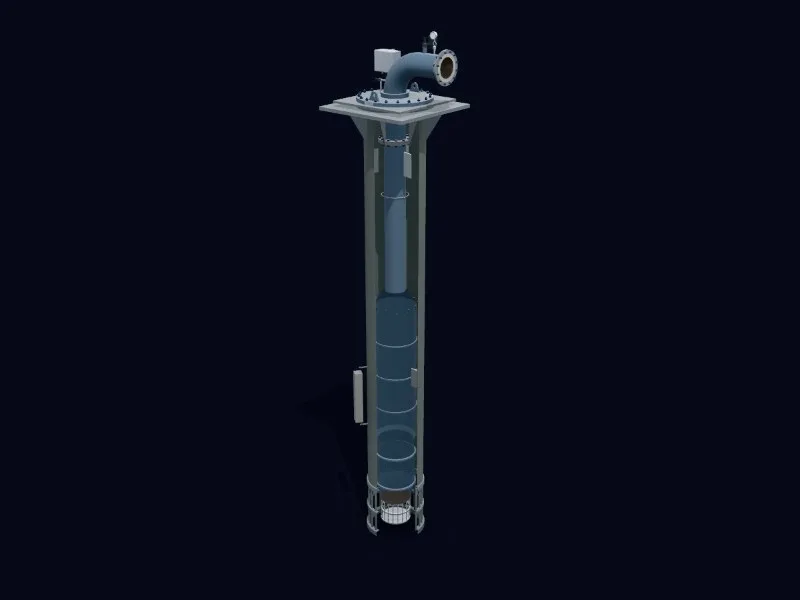
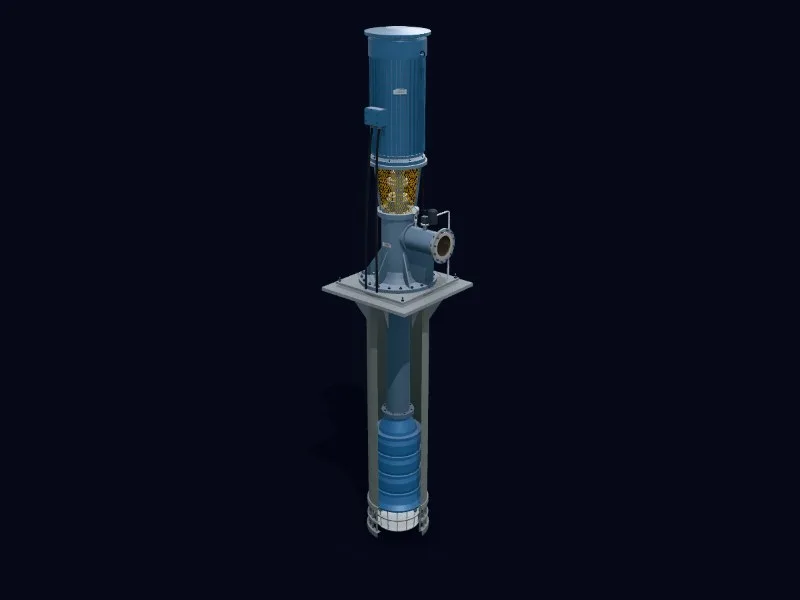
- The pump hangs below its driver in a sump, caisson or can. VS1 is a wet-pit diffuser pump with a line shaft, the usual seawater lift and firewater caisson pump offshore. VS6 and VS7 are double-casing can pumps for low NPSH service.
- Centreline mounting
- Hot pumps are supported at the shaft centreline so that thermal growth does not move the shaft out of alignment. This is why OH2 pumps have feet at the casing centreline rather than under the casing.
- Operating region
- The standard defines a preferred and an allowable operating region around the best efficiency point. Running far from the best efficiency point raises vibration and shortens bearing and seal life.
- Baseplates and nozzle loads
- Pumps sit on rigid baseplates with a drain rim. The pump must accept specified forces and moments from the connected piping without misalignment, which drives pipe support design around the pump.
Questions
What is an API 610 pump?
It is a centrifugal pump built to API Standard 610, the heavy-duty pump standard for oil, gas and petrochemical service. People often just call it an API pump. Compared with a general industrial pump it has a stronger casing, centreline support on hot services, a stiffer shaft and bearings, and set limits for vibration and nozzle loads.
What is the difference between an API pump and a non-API pump?
A non-API process pump is usually built to ASME B73.1, often called an ANSI pump, or to ISO 5199. These are lighter pumps for water, chemicals and utilities at moderate pressure and temperature. API 610 pumps are chosen for hydrocarbons, high pressure, high temperature or critical service, where a failure has serious consequences. They are heavier and cost more.
What are the API 610 pump types?
There are three groups. Overhung pumps are OH1 to OH6, between-bearings pumps are BB1 to BB5, and vertically suspended pumps are VS1 to VS7. The library models four of them: the OH2 centrifugal pump, the OH3 vertical inline pump, the BB3 multistage pump and the VS1 vertical turbine pump.
Is API 610 the same as ISO 13709?
ISO 13709:2009 has the same technical content as the 11th edition of API 610. API has since published a newer edition on its own. Check which edition the project specification names before you compare clauses.
When is an API 610 pump required?
The scope of the 12th edition says its pumps suit services beyond any one of six limits: 19 bar discharge pressure, 5 bar suction pressure, 150 °C, 3600 r/min, 120 m of head, or a 330 mm impeller on an overhung pump. Below all of them, an ASME B73.1 or ISO 5199 pump may be acceptable. Many operators still specify API 610 for every hydrocarbon service, so the project specification decides.
What is the current edition of API 610?
The 13th edition, published in June 2026. It replaced the 12th edition of January 2021, which many project specifications still name. ISO 13709:2009 matches the older 11th edition, so the ISO and API documents are no longer identical. Check which one the project specification names.
Can an API 610 pump run on a 50 Hz supply?
Yes. The standard applies at either frequency. A two-pole motor runs near 3000 r/min instead of 3600 r/min, so the same pump gives roughly 83 % of the flow and 69 % of the head it would give on 60 Hz. The pump is selected and tested at the speed it will run on site.
Who makes API 610 centrifugal pumps?
Most large process pump makers offer API 610 ranges, and some smaller makers build particular types such as OH2 or VS1. The standard is the same for all of them, so offers are compared by their data sheets and their lists of exceptions. Deck Twin does not sell or supply pumps, and its 3D models are generic.
In Deck Twin
Each pump in the library follows one type: the centrifugal pump is OH2, the vertical inline pump is OH3, the multistage pump is BB3 with an optional lubeConsole, and the vertical turbine caisson pump is VS1. The diesel firewater pump offers a VS1 caisson pump or a BB1 split-case pump through pumpType, and the submersible caisson pump uses the vertically suspended layout as its reference. Nozzles use flange (ASME B16.5) and motors use iecMotor (IEC 60072). Casings and frames are generic proportions, not any maker's hydraulics.
Deck Twin uses these standards as reference values for visualisation. Check the current edition of each standard before using any value for design, procurement or fabrication.
Components that follow API 610 6