API 617 vs API 618
Centrifugal and axial compressors, and reciprocating compressors
The short answer
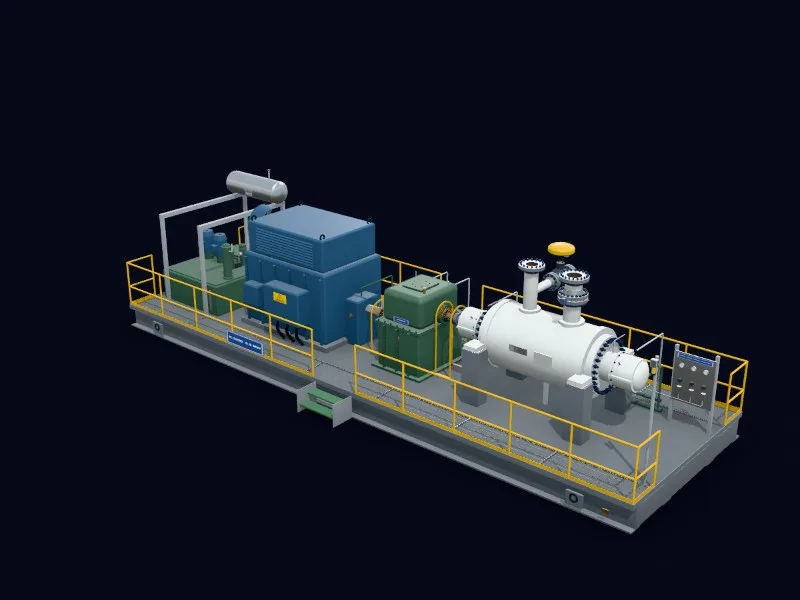
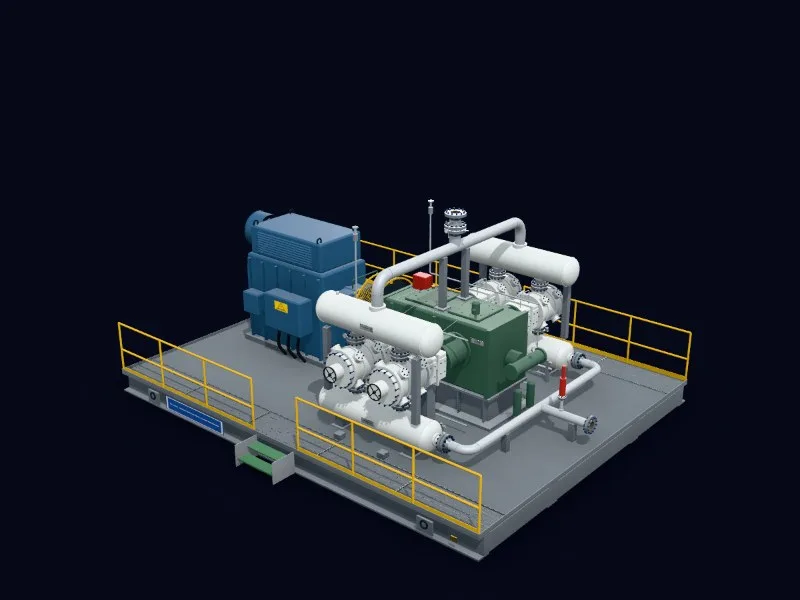
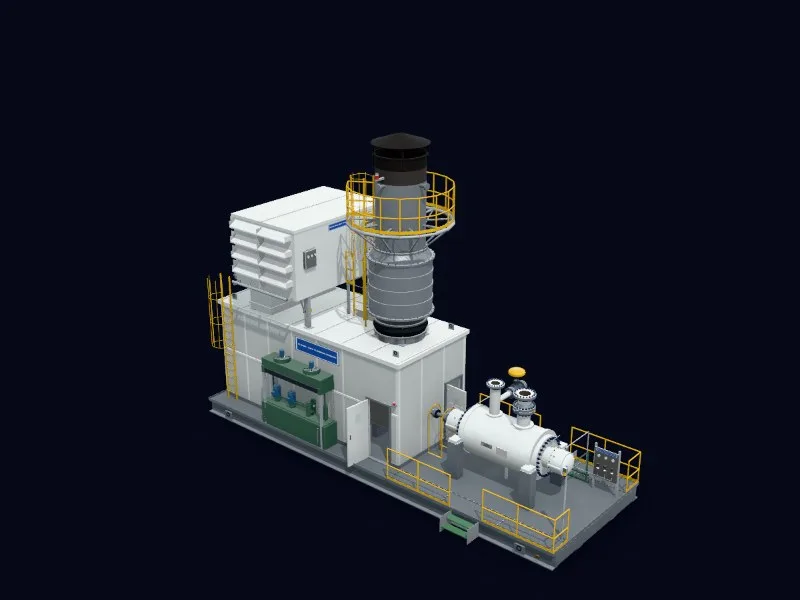
API 617 covers dynamic compressors: axial, centrifugal and integrally geared machines and expander-compressors, which add energy with rotating impellers or blades. API 618 covers reciprocating compressors, which trap gas in a cylinder and squeeze it with a piston. Centrifugal machines suit large flows and run for long periods between overhauls. Reciprocating machines suit smaller flows and high pressure ratios.
Side by side
| API 617 | API 618 | |
|---|---|---|
| What it is | Axial and centrifugal compressors and expander-compressors | Reciprocating compressors |
| Issued by | API | API |
| How it compresses | Rotating impellers or blades speed the gas up, and the casing turns speed into pressure | A piston in a cylinder traps the gas and reduces its volume |
| Suits | Large flows | Modest flows and high pressure ratios |
| Speed | High speed, through a gearbox or direct from a turbine | Low to moderate speed |
| Key design checks | Rotor dynamics, surge and anti-surge control | Crosshead pin load and the pulsation and vibration study |
| Shaft or rod sealing | Usually dry gas seals | Rod packing, with distance pieces between the frame and the cylinders |
| Auxiliaries | API 614 lube and seal oil, API 692 dry gas seals, API 671 couplings, API 613 gears | Frame lube system and cylinder lubricator. Pulsation bottles are pressure vessels |
| Typical oil and gas duties | Gas export, gas injection, gas lift, flash gas recovery and refrigeration | Gas lift, fuel gas boosting, vapour recovery, hydrogen and high-pressure injection |
| Current edition | Ninth edition, April 2022 | Sixth edition, May 2024 |
A summary in our own words. Editions as listed by standards sellers. Check the API catalogue for any later edition or addendum.
When each one applies
A centrifugal, axial or integrally geared compressor is bought to API 617. A reciprocating compressor for process service is bought to API 618.
The type itself comes from the duty. Large gas flows at moderate pressure ratios favour a centrifugal machine. Small flows, high ratios or changing gas compositions often favour a reciprocating machine.
Both on one facility
A gas processing plant or production platform often has both. The main export or injection compressor may be centrifugal, driven by a gas turbine or by a motor through a gearbox. Smaller duties such as fuel gas boosting or vapour recovery may use reciprocating machines.
Neighbouring standards
Rotary screw compressors follow API 619. Packaged reciprocating compressors for oil and gas production, such as the skid-mounted units common in gas gathering and gas lift, are often bought to API 11P instead of API 618.
Gas turbine drivers follow API 616, and lube and seal oil systems follow API 614 for both kinds of machine where they apply.
How it shows up on a datasheet
An API 617 datasheet gives the casing type, horizontally split or barrel, the number of stages, the seal system and the performance curve with its surge line. An API 618 datasheet gives the frame, the number of throws and stages, the cylinder sizes, the rod load figures and the depth of pulsation study the purchaser has chosen.
Questions
Is API 617 for reciprocating compressors?
It is not. API 617 covers axial and centrifugal compressors and expander-compressors. Reciprocating compressors follow API 618.
Which API standard covers screw compressors?
API 619 covers rotary-type positive displacement compressors such as screw compressors. They are neither API 617 nor API 618 machines.
When is a reciprocating compressor chosen over a centrifugal one?
Usually when the flow is modest and the pressure ratio is high, or the gas composition varies widely. Centrifugal machines are chosen for large flows and long runs between overhauls.
What is the difference between API 618 and API 11P?
API 618 covers low and moderate speed process compressors engineered for each duty. API 11P covers packaged reciprocating compressors for oil and gas production service, the skid-mounted units used in the field for gas gathering and gas lift. Its third edition was published in 2025.
This page explains two standards in plain words. It is not a substitute for the standards themselves, and project specifications often add to both. Deck Twin uses these standards as reference values for visualisation. Check the current edition of each standard before using any value for design, procurement or fabrication.