API 617
Axial and centrifugal compressors and expander-compressors
A plain guide to API 617: its four parts, how a compressor train is built, API 613 and API 616 alongside it, and API 617 vs API 618, 619 and 672.
Scope
API Std 617 specifies axial compressors, single-shaft and integrally geared centrifugal compressors, and expander-compressors for petroleum, chemical and gas industry service. It covers casings, impellers, rotor dynamics, shaft seals, bearings, controls, testing and the package around the machine.
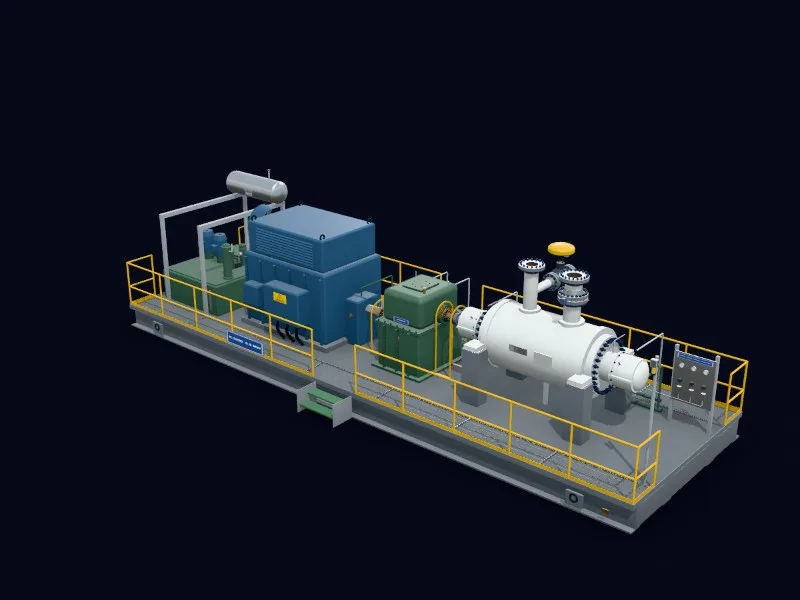
Offshore and onshore, API 617 compressors handle gas export, gas lift, gas injection, flash gas recovery and refrigeration. They are usually driven by an electric motor through a gearbox, or directly by a two-shaft gas turbine.
Auxiliary systems are specified in other API standards: lube and seal oil in API 614, dry gas seal systems in API 692, couplings in API 671, gears in API 613, and gas turbine drivers in API 616. Reciprocating and screw compressors are covered by API 618 and API 619.
How API 617 is organised
The ninth edition, published in April 2022, is the current one. Since the eighth edition of 2014 the standard has been split into four parts. Part 1 applies to every machine, and the purchaser adds the part for the type of machine being bought.
API 617 is meant for special-purpose machines: large compressors, usually without a spare, that a plant cannot run without. It does not cover fans or low-pressure blowers, which follow API 673, or packaged integrally geared plant and instrument air compressors, which follow API 672.
| Part | What it covers |
|---|---|
| Part 1: General requirements | Design, materials, rotor dynamics, controls and instruments, inspection, testing and vendor data for every machine in scope |
| Part 2: Non-integrally geared centrifugal and axial compressors | Single-shaft machines driven directly or through a separate gear unit. Most process gas compressors on oil and gas facilities are of this kind |
| Part 3: Integrally geared centrifugal compressors | Machines whose impellers sit on pinion shafts inside a gearbox, so each stage can run at its own speed |
| Part 4: Expander-compressors | A turboexpander and a compressor on one shaft, used in gas processing to cool the gas and recover the power |
Part titles as published since the eighth edition, with the contents summarised in our own words. Confirm against the current edition.
A compressor train, piece by piece
A compressor train is everything on one shaft line: the driver, any gear, the couplings and one or more compressor bodies. API 617 covers only the compressor bodies. The other pieces, and the systems that keep the train running, each have their own API standard.
The lube oil console feeds every bearing in the train, and on many trains it is shared with the gear and the driver. The dry gas seal panel supplies clean, filtered gas to the shaft seals and monitors the leakage to vent or flare. The anti-surge recycle valve opens to send gas from discharge back to suction whenever the flow falls towards surge.
| Part of the train | Usual API standard |
|---|---|
| Compressor bodies | API 617 |
| Gas turbine driver | API 616 |
| Steam turbine driver | API 612 |
| Large induction motor driver | API 541 |
| Separate gear unit | API 613 |
| Couplings | API 671 |
| Lube and seal oil systems | API 614 |
| Dry gas seal system | API 692 |
| Vibration, position and temperature monitoring | API 670 |
Commonly cited companion standards, given as reference only. A project specification may name others or particular editions.
API 613 and API 617 together
API 613 and API 617 are often named together because many trains need both. API 617 covers the compressor, and API 613 covers the special-purpose gear unit between the driver and the compressor. Less critical, spared gear units follow API 677 instead.
A gear is needed when the driver and the compressor want different speeds. A two-pole motor runs near 3000 r/min on 50 Hz or 3600 r/min on 60 Hz, while process compressors commonly run several times faster, so a speed-increasing gear closes the gap. Trains with a high-speed motor on a variable frequency drive, or with a gas turbine whose power turbine runs close to compressor speed, often need no gear at all.
Integrally geared compressors are different. Their gear is part of the compressor itself, so it is covered by Part 3 of API 617 and not by API 613.
Gas turbine driven compressors
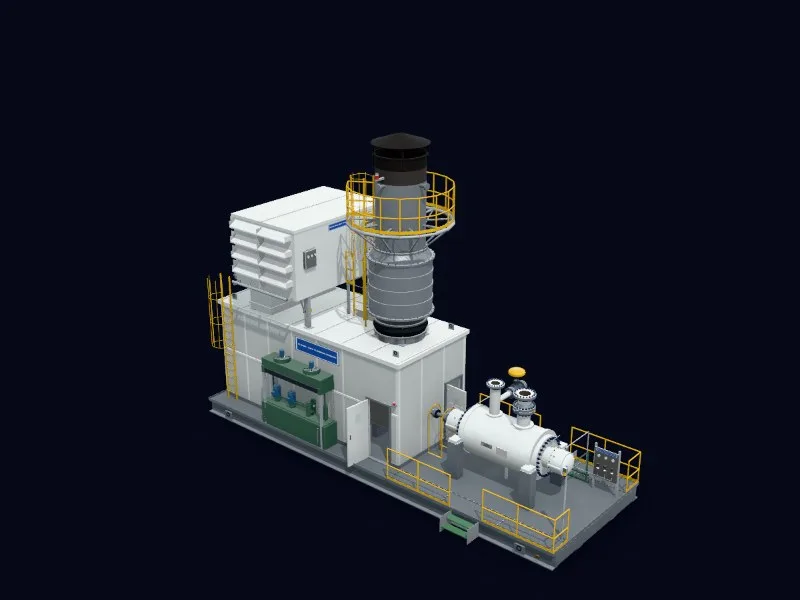
On many offshore platforms and pipeline stations the compressor is driven by a gas turbine that burns the facility's own fuel gas. Mechanical drive turbines are usually two-shaft machines: a gas generator makes hot gas, and a separate free power turbine drives the compressor. The power turbine speed can follow the process, so the compressor is controlled by speed as well as by its anti-surge valve.
The phrase gas turbine compressor is used for two different things. It can mean the axial compressor inside the gas turbine, which supplies air to the combustor and is part of the turbine under API 616. In oil and gas it more often means a process gas compressor driven by a gas turbine, which is an API 617 machine.
API 617, API 618, API 619 and API 672 compared
API has a separate standard for each main kind of compressor. The choice follows the flow, the pressure ratio and the gas. Compare the centrifugal compressor, the reciprocating compressor to API 618, and the screw compressor to API 619.
| Standard | Machine | Suits | Typical oil and gas use |
|---|---|---|---|
| API 617 | Centrifugal and axial compressors, expander-compressors | Large flows and a moderate pressure ratio per body | Gas export, gas injection, gas lift, refrigeration, expander plants |
| API 618 | Reciprocating compressors at low to moderate speed | Smaller flows, high pressure ratios and changing gas | Hydrogen make-up, fuel gas boosting, high-pressure injection, vapour recovery |
| API 619 | Rotary positive displacement compressors, mainly screw | Moderate flows and steady delivery, including wet or dirty gas | Flash gas and vapour recovery, fuel gas boosting, refrigeration |
| API 672 | Packaged integrally geared centrifugal air compressors | Plant and instrument air | Utility air packages |
A general guide to which standard usually applies. The ranges overlap, and the project specification decides.
What a purchaser specifies
- 1
Gas and operating cases
Give the gas composition and every operating case: normal, rated, start-up, settle-out and any alternative gases. The compressor is sized to cover all of them.
- 2
Casing and nozzles
Choose a split or barrel casing and the nozzle direction. Nozzles down need a raised compressor deck; nozzles up keep the deck simple.
- 3
Driver and speed
Choose the driver and whether the speed is fixed or variable. This decides whether a gear is needed and how the compressor is controlled.
- 4
Seals and auxiliaries
Name the standards for the seal system, lube oil, couplings and monitoring, and who supplies each one.
- 5
Testing
Agree the mechanical running test, any performance test to ASME PTC 10, and whether a string test of the full train is needed.
- 6
Data sheets
API publishes separate data sheets for API 617. The purchaser fills in the duty and the vendor completes the rest.
Key concepts
- Horizontally split and barrel casings
- A horizontally split casing opens along the shaft for easy maintenance and suits lower pressures. A radially split barrel casing slides its inner bundle out of a forged or welded barrel and is used for high pressure and light gases.
- Surge and anti-surge control
- Below a minimum flow at a given head, the flow through the compressor reverses in cycles, called surge. An anti-surge controller opens a recycle valve from discharge, usually after a cooler, back to suction to keep the machine away from the surge line.
- Dry gas seals
- Most modern machines seal the shaft with non-contacting dry gas seals instead of oil seals. A seal gas panel supplies filtered gas and monitors leakage to vent or flare.
- Rotor dynamics
- The standard requires lateral and stability analyses so that critical speeds are kept away from the operating range. Proximity probes in each bearing housing measure shaft vibration in service.
- Testing
- Each machine gets a mechanical running test. A performance test, often to ASME PTC 10, is added where the purchaser requires it.
Questions
What is API 617?
API Standard 617 is the specification for axial and centrifugal compressors and expander-compressors in petroleum, chemical and gas industry service. A purchaser uses it to set the minimum requirements for the machine: casings, rotors, bearings, shaft seals, rotor dynamics and testing. The current edition is the ninth, published in 2022.
What is the difference between API 617 and API 618?
API 617 covers dynamic compressors, which add energy to the gas with rotating impellers or blades. They suit large flows. API 618 covers reciprocating compressors, which trap gas in a cylinder and squeeze it with a piston. They suit smaller flows and high pressure ratios. Compare the centrifugal compressor with the reciprocating compressor.
Which API standards cover the auxiliaries of an API 617 compressor?
The lube and seal oil system follows API 614, and the dry gas seal system follows API 692. Couplings follow API 671, a separate gearbox follows API 613, and vibration and temperature monitoring follows API 670. A gas turbine driver follows API 616.
Where can I get the API 617 standard?
API sells it through its own publications store and through authorised resellers. Deck Twin does not supply standards. This page is a summary in our own words, and the 3D models use reference proportions for visualisation only.
What does API 613/617 mean?
It usually refers to a compressor train with a separate gear unit. The compressor is built to API 617, and the gear between the driver and the compressor to API 613, the standard for special-purpose gear units. Integrally geared compressors are different: their gear is covered within Part 3 of API 617.
What is a compressor train?
It is the set of machines on one shaft line: the driver, any gear, the couplings and one or more compressor bodies, with the lube oil, seal and control systems that serve them. Large trains can have two or three compressor bodies in series on one driver. Each item is specified to its own API standard.
Is a gas turbine driven compressor covered by API 617?
The process gas compressor is covered by API 617, and the gas turbine that drives it by API 616. The axial compressor inside the gas turbine, which supplies combustion air, is part of the turbine and is not an API 617 machine. See the gas-turbine-driven compressor train.
In Deck Twin
The centrifugal compressor package offers a barrel or split casing, nozzles up or down, and a motor or gas turbine driver, with an anti-surge valve, dry gas seal panel, API 614 lube console and rundown tank, all sized from mw. The gas-turbine-driven compressor train is the same component with the turbine driver. Nozzle flanges come from flange (ASME B16.5) at the selected rating. The geometry is a generic package layout, not any maker's machine.
Deck Twin uses these standards as reference values for visualisation. Check the current edition of each standard before using any value for design, procurement or fabrication.