API 618
Reciprocating compressors
API 618 explained: what changed in the 2024 sixth edition, how a compressor throw works, crosshead pin load, pulsation design approaches and compliance.
Scope
API Std 618 specifies moderate- and low-speed reciprocating compressors for petroleum, chemical and gas industry service, with lubricated or non-lubricated cylinders. It covers the frame, running gear, cylinders, valves, packing, distance pieces, lubrication, cooling, pulsation suppression and the skid.
On oil and gas facilities, reciprocating compressors are used where the flow is modest and the pressure ratio is high: gas lift, fuel gas boosting, vapour recovery, hydrogen service and high-pressure injection. Their pulsation study also guides the suction and discharge piping of large plunger pumps.
Packaged reciprocating compressors for oil and gas production services can be specified to API 11P instead, whose third edition was published in August 2025. Rotary screw compressors are covered by API 619 and pulsation bottles are pressure vessels under ASME VIII.
What changed in the sixth edition
The sixth edition of API 618 was published in May 2024, seventeen years after the fifth. Most of the standard carries over, but several changes matter to anyone buying or checking a compressor.
API 688, the companion standard on pulsation and vibration control for positive displacement machinery, was revised at about the same time. Its second edition came out in October 2023, and it is now a standard rather than a recommended practice.
| Topic | Fifth edition (2007) | Sixth edition (2024) |
|---|---|---|
| Load on the running gear | Combined rod load | Crosshead pin load, with gas load and inertia load defined separately |
| Load reversal at the crosshead pin | A note gave a minimum reversal of 15 degrees of crank angle and 3 % in load | The minimum is now a requirement, the 3 % is measured against the peak load in the other direction, and the load must also reverse at the relief valve set pressures |
| Pulsation design approaches | Design Approaches 1, 2 and 3 | Design Approach 1 (empirical bottle sizing) removed; small, low-pressure cylinders now go to Design Approach 2 |
| Pulsation guidance | Given in full in API 618 | API 618 refers to API 688 for guidance on applying pulsation and vibration control |
| Scope | Process reciprocating compressors | Diaphragm compressors stated as not covered |
Summarised from published reviews of the sixth edition, including the European Forum for Reciprocating Compressors review. Reference only: confirm each point against the current edition.
Inside one compressor throw
A throw is one crank on the crankshaft, with its connecting rod, crosshead, piston rod and cylinder. A balanced-opposed frame places its throws in pairs on opposite sides of the crankshaft, so a four-throw machine has two cylinders on each side.
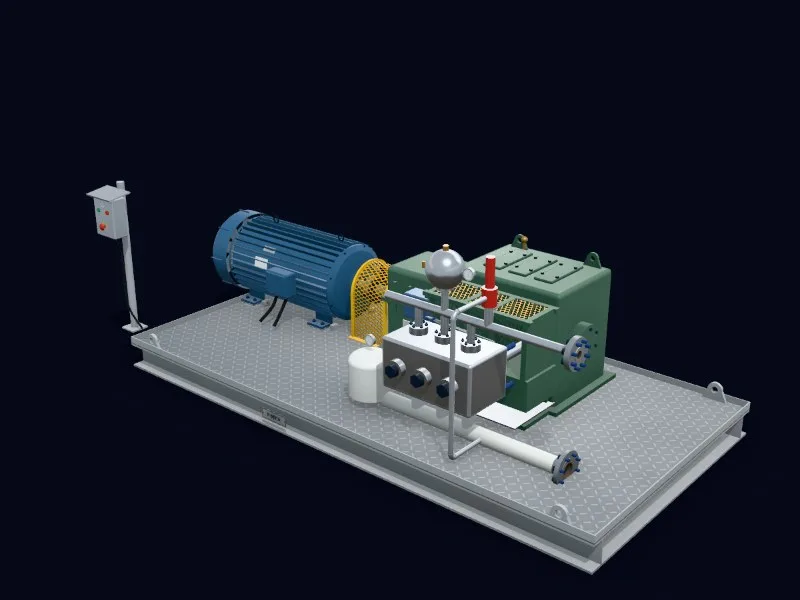
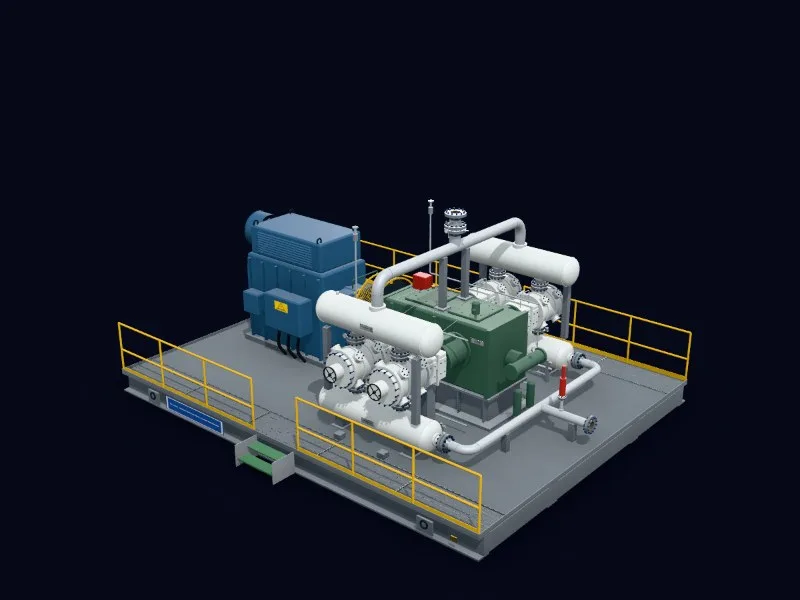
Most API 618 cylinders are double-acting: the piston compresses gas on both strokes, with suction and discharge valves at each end. The piston rod leaves the cylinder through packing and passes through the distance piece, which keeps any gas that leaks past the packing away from the crankcase oil. The pulsation bottles sit directly on the cylinder nozzles. See the reciprocating compressor in 3D.
Crosshead pin load and reversal
On every revolution the crosshead pin carries the gas force on the piston plus the inertia force of the moving parts. The sixth edition calls the result the crosshead pin load. It must stay within the frame rating at every operating case, including at the relief valve set pressures.
It must also change direction during each revolution. The pin bushing is lubricated by oil that enters the gap on its unloaded side. If the load pushes the same way all the time, the oil cannot get in and the bushing wears out or seizes. The standard therefore sets a minimum for how long the reversal lasts and how large it is.
Pulsation studies and design approaches
Each stroke sends a pressure pulse into the piping. If the pulses match an acoustic resonance of the piping, or a mechanical natural frequency of the pipe and its supports, the vibration can crack small-bore connections and fatigue welds. Pulsation bottles, orifice plates and pipe supports are designed to prevent that.
API 618 sets the depth of the study by design approach. The approach is selected mainly from the discharge pressure and the power per cylinder, and the study is usually done by a pulsation specialist working for the vendor or the purchaser.
| Design approach | What it checks | Typical outputs |
|---|---|---|
| Design Approach 2 | Acoustic simulation of pulsation and pressure drop in the compressor and its piping | Bottle sizes, orifice plate locations, piping changes |
| Design Approach 3 | Design Approach 2, plus the mechanical natural frequencies of the cylinders, bottles and piping, and the forced response where limits are not met | Support locations and stiffness, clamp design, small-bore bracing |
Summarised in our own words. The fifth edition also had an empirical Design Approach 1, which the sixth edition removed. Selection rules and acceptance limits are in the current editions of API 618 and API 688.
API 618 compliance: what to check
Compliance is checked against API 618 as modified by the project specification and the data sheets. The purchaser's engineers, or an independent reviewer acting for them, usually work through points like these.
- 1
Data sheets
API 618 has its own data sheets, published separately. Every operating case, gas composition and start-up condition goes on them.
- 2
Exceptions
Read the vendor's list of exceptions to the standard and the project specification. Every clause not on that list is expected to be met.
- 3
Crosshead pin load
Check the calculated load and its reversal at every case, including the relief valve set pressures, against the frame rating.
- 4
Discharge temperature
Check the predicted discharge temperature of each stage against the limit agreed for the service, especially on non-lubricated cylinders.
- 5
Pulsation study
Confirm the design approach, who performs it, and that the final piping layout and supports were included in it.
- 6
Distance piece and packing
Check the distance piece type, the vent and drain routing, and the packing cooling, against how toxic or flammable the gas is.
- 7
Shop inspection and tests
Agree the inspections and tests at the works and which of them are witnessed.
Key concepts
- Balanced-opposed frame
- Throws are arranged in opposed pairs on the crankshaft so that inertia forces largely cancel. Frames are described by the number of throws, for example two, four or six.
- Crosshead and distance piece
- The crosshead turns the crank motion into a straight piston rod stroke. The distance piece between the frame and the cylinder separates process gas from crankcase oil and can have one or two compartments, each with vent and drain connections.
- Crosshead pin load
- The gas load on the piston plus the inertia load of the moving parts, taken at the crosshead pin. Earlier editions called it combined rod load. It must stay within the frame rating and must reverse direction each revolution so that oil reaches the pin bushing.
- Pulsation and vibration
- Reciprocating flow causes pressure pulsations in the piping. The standard describes design approaches of increasing depth, from an acoustic simulation of the compressor and piping to a full acoustic and mechanical analysis, and the results set bottle sizes, orifice plates and pipe supports.
- Pulsation bottles
- Suction and discharge bottles on each cylinder damp the pulsations close to their source. They are pressure vessels and carry nozzles to the cylinders and the line.
- Cylinder cooling and lubrication
- Cylinders are usually water-jacketed. Lubricated cylinders and packing are fed by a force-feed lubricator, while the frame has its own pressure lube system.
Questions
What is an API 618 compressor?
It is a reciprocating compressor built to API Standard 618: a low to moderate speed process machine with crossheads and distance pieces between the frame and the cylinders. It is designed for long continuous runs in refinery, gas and chemical service. The reciprocating compressor shows the typical balanced-opposed layout.
What is the latest edition of API 618?
The sixth edition, published in 2024. It replaced the fifth edition of 2007. Check the API catalogue for later addenda, and check which edition your project specification names.
What is the difference between API 618 and API 11P?
API 618 covers moderate- and low-speed reciprocating compressors for petroleum, chemical and gas industry service. API 11P, Packaged Reciprocating Compressors, covers packaged machines for oil and gas production services, such as field gas gathering and gas lift. Its third edition was published in August 2025. Check which one the project specification names.
What is the difference between API 618 and API 617?
API 618 is for reciprocating compressors and API 617 is for centrifugal and axial compressors. Reciprocating machines suit smaller flows and high pressure ratios. Centrifugal machines suit large flows and run for longer between overhauls.
What changed in the sixth edition of API 618?
The sixth edition, published in May 2024, renames combined rod load as crosshead pin load and turns the minimum load reversal into a requirement. It drops the empirical Design Approach 1 for pulsation and refers to API 688 for pulsation and vibration guidance. It also states that diaphragm compressors are not covered.
What are the API 618 design approaches?
They set how deeply pulsation and vibration are studied. Design Approach 2 is an acoustic simulation of the compressor and its piping, and Design Approach 3 adds a mechanical analysis of natural frequencies and vibration response. The fifth edition also had an empirical Design Approach 1, which the sixth edition removed.
What does API 618 compliance mean?
It means the compressor meets every requirement of API 618, as modified by the project specification, apart from the exceptions the vendor lists and the purchaser accepts. It is checked through the data sheets, the exception list, design reviews such as the pin load and pulsation studies, and inspection and testing at the works.
In Deck Twin
The reciprocating compressor takes throws (2, 4 or 6), bore, kw, nozzle sizes and a rating from 300 to 2500. It draws a balanced-opposed frame, crossheads, two-compartment distance pieces, jacketed cylinders, pulsation bottles with orifice plates, a discharge PSV and vent and drain headers. The plunger pump uses the same pulsation thinking for its dampener and suction stabiliser. Flanges come from flange (ASME B16.5), and the proportions are generic.
Deck Twin uses these standards as reference values for visualisation. Check the current edition of each standard before using any value for design, procurement or fabrication.