API 660
Shell-and-tube heat exchangers
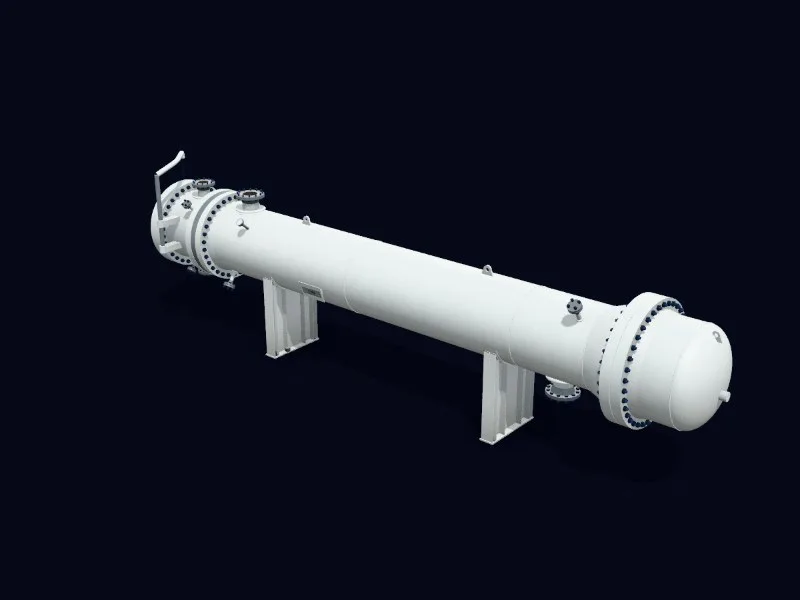
API 660 is the purchase specification for shell-and-tube heat exchangers in oil and gas service. What it adds to TEMA Class R and the vessel code.
Scope
API Std 660 gives requirements and recommendations for the mechanical design, material selection, fabrication, inspection, testing and preparation for shipment of shell-and-tube heat exchangers for the petroleum, petrochemical and natural gas industries. It applies to heaters, condensers, coolers and reboilers.
On oil and gas facilities it is the specification a purchaser puts on the datasheet for crude coolers, gas coolers, glycol and amine exchangers, reboilers and condensers. It is used together with the TEMA Standards and a pressure design code, normally ASME Section VIII. ISO 16812 is the related international standard, and its current edition refers to API 660.
It does not give a thermal design method or pressure design formulas. Air-cooled exchangers are covered by API 661, plate exchangers by API 662 and hairpin exchangers by API 663.
Key concepts
- Purchase specification
- API 660 is written as the requirements a purchaser places on a manufacturer. It marks the points where the purchaser must make a choice, and it comes with a datasheet that records the duty, the materials and the construction.
- TEMA Class R as the base
- Exchangers to API 660 are built to TEMA Class R unless the purchaser states otherwise. API 660 then adds to it or tightens it for oil and gas service.
- Pressure design code
- The shell, channels, tubesheets and nozzles are pressure parts, designed to the code named by the purchaser. On most projects that is ASME Section VIII Division 1.
- Bundle removal and cleaning
- The standard has requirements that make maintenance practical, such as provisions for pulling a removable bundle and for cleaning the tubes. This is one reason floating-head and U-tube types are common in fouling services.
- Tube vibration
- Flow across the tubes can make them vibrate and fail. The design is checked for flow-induced vibration, and baffle spacing and tube supports are set to prevent it.
- Inspection and testing
- The shell side and the tube side are each pressure tested, and welds are examined to the level the code and the purchaser require. The standard also covers the nameplate, drying and protection for shipment.
Questions
What is API 660?
API Standard 660 is the specification for shell-and-tube heat exchangers in petroleum, petrochemical and natural gas service. A purchaser uses it to set the minimum mechanical requirements for the exchanger. The current edition is the ninth, of March 2015, with Addendum 1 of August 2020.
What is the difference between API 660 and TEMA?
TEMA defines how shell-and-tube exchangers are named and built, for any industry. API 660 is a purchase specification for oil and gas service that starts from TEMA Class R and adds requirements. A datasheet normally calls up both, with a pressure vessel code for the pressure parts.
Which API standards cover other types of heat exchanger?
API 661 covers air-cooled exchangers, API 662 covers plate heat exchangers and API 663 covers hairpin exchangers. The library has an air-cooled exchanger, a plate heat exchanger and a hairpin exchanger.
In Deck Twin
The shell-and-tube exchanger cites API 660 with TEMA. It takes a tema prop of AES, AEU, BEM or AKT, sizes its shell wall from shellThickness with the pressure prop, and takes its nozzle flanges from ASME B16.5. The geometry is generic. It is not a thermal or mechanical design and has not been checked against API 660.
Deck Twin uses these standards as reference values for visualisation. Check the current edition of each standard before using any value for design, procurement or fabrication.