ASME PCC-1
Pressure boundary bolted flange joint assembly
ASME PCC-1 bolted flange joint assembly: face inspection, gasket fitting, lubrication, tightening patterns, passes, assembler training and joint records.
Scope
ASME PCC-1 gives guidelines for assembling bolted flange joints in the pressure boundary of pipework, vessels and exchangers. It covers preparation and inspection of flange faces and bolts, gasket installation, lubrication, bolt tightening methods and patterns, target bolt loads, and joint records.
Flange leaks are a leading cause of hydrocarbon releases on oil and gas facilities. Operators build their joint integrity programmes on PCC-1, especially for shutdowns and turnarounds, where many joints are broken and remade.
PCC-1 is a guideline, not a design code. Flange design, gasket dimensions and bolt material come from ASME B16.5, B16.47, B16.20 and the bolting specifications.
Key concepts
- Joint preparation
- Before assembly the flange faces are cleaned and inspected for scratches and damage across the gasket seating area, and bolts and nuts are checked for condition and correct material.
- Lubrication
- Lubricating the threads and nut faces makes the torque-to-load relationship predictable. The torque values used must match the lubricant.
- Target bolt load
- The aim is a bolt stress high enough to seat the gasket and hold pressure, without crushing the gasket or yielding the flange or bolts. PCC-1 gives guidance on choosing it.
- Tightening patterns and passes
- Bolts are tightened in a cross or star pattern in several passes of rising torque, followed by circular passes until the nuts stop turning. Alternative patterns that tighten several bolts at once are also described.
- Torque and tensioning
- Bolts may be tightened by torque wrench or by hydraulic tensioners. Tensioning stretches several studs at once and is common on large, high-class joints.
- Assembler qualification and records
- PCC-1 sets out training and qualification for joint assemblers. Each joint is often tagged and recorded with who assembled it, the method and the values used.
Questions
What is ASME PCC-1?
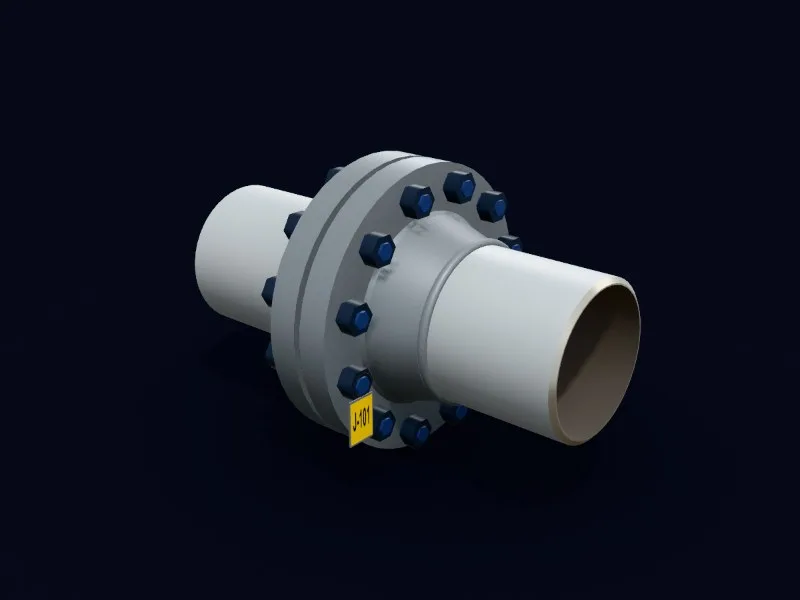
It is the ASME guideline for assembling bolted flange joints on pressure equipment and piping. It describes how to clean and inspect the joint, fit the gasket, lubricate and tighten the bolts in a set pattern, and record the work. See the flanged joint.
Is ASME PCC-1 mandatory?
Not by itself. It is a guideline, not a code. It becomes a requirement when an owner, a project specification or a regulator calls for it, and many operators do this for hydrocarbon service.
In Deck Twin
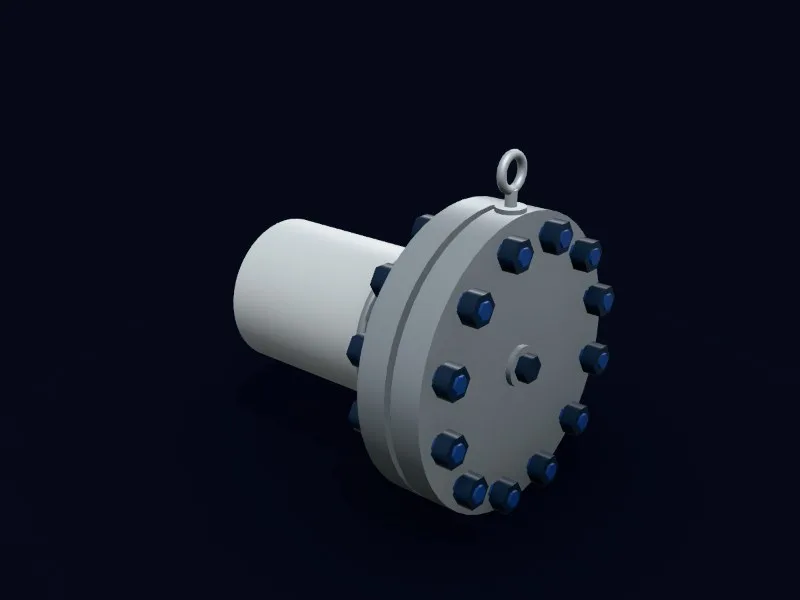
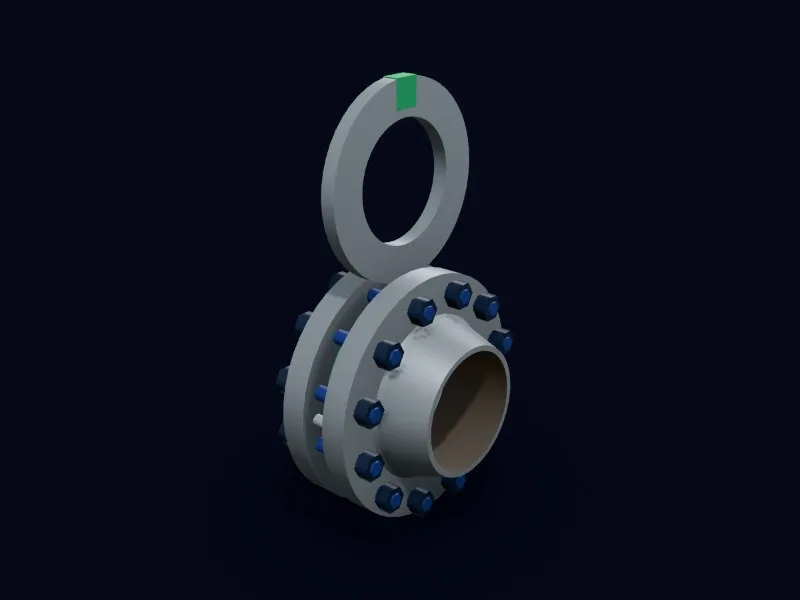
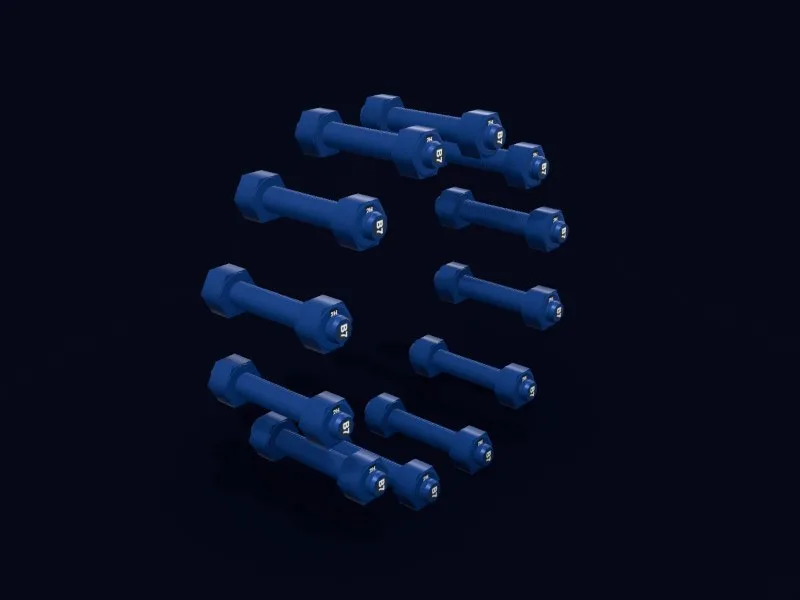
The flanged joint has a tag prop for the bolt-tensioning and joint-integrity tag that joint programmes hang on each joint. The stud bolt set sizes its studs with studLength(nps, rating). Deck Twin does not model torque values, tightening sequences or bolt loads. The blind flange and spectacle blind also cite PCC-1.
Deck Twin uses these standards as reference values for visualisation. Check the current edition of each standard before using any value for design, procurement or fabrication.