ISO 14726
Identification colours for piping contents
ISO 14726 sets identification colours for the contents of piping systems on ships and offshore units. How service bands are used on facilities.
Scope
ISO 14726 is a ships and marine technology standard for identifying what a pipe carries. It uses a main colour for the group of media, with additional colour bands that identify the specific fluid. Flow direction arrows and text can be added.
On offshore facilities it is used to band piping so that operators can tell oil, gas, water, firewater, air and chemicals apart in the field. Onshore plants in the UK often use the similar BS 1710 scheme, and many operators have their own colour tables.
It does not cover the paint system, safety colours for signs (that is ISO 3864) or line numbering. The exact colours must be checked against the current edition and the project's own scheme.
Key concepts
- Main colour
- The main colour shows the group the medium belongs to, such as water, fuels or air. It is applied as a wide band at intervals along the pipe and next to valves, branches and bulkheads.
- Additional bands
- Narrower bands next to the main colour identify the specific medium within the group, for example sea water versus fresh water.
- Firefighting systems
- Firewater and other fire protection lines are identified with red. This makes them easy to find in an emergency.
- Flow direction
- An arrow next to the bands shows the direction of flow. Some schemes add the fluid name or line number on a label.
- Where bands go
- Bands are placed at regular intervals, at both sides of valves and fittings, and where a pipe passes through a wall or deck, so every run can be read without tracing it.
Questions
What colours does ISO 14726 use for pipes?
Each main colour stands for a group of media. Blue is fresh water, green is sea water, brown is fuel, orange is oils other than fuel, grey is non-flammable gases, silver is steam, black is waste media and red is fire fighting. Narrower bands in a second colour identify the exact fluid. Check the current edition for the full list and the reference shades.
What is the difference between ISO 14726 and BS 1710?
ISO 14726 was written for ships and marine technology and is common on offshore units. BS 1710 is a British standard for pipes in buildings and on land sites. Both use a basic colour with code bands, but the colours do not all match, so a site follows one scheme and states it. The pipe spool paints service bands from the library colour table.
In Deck Twin
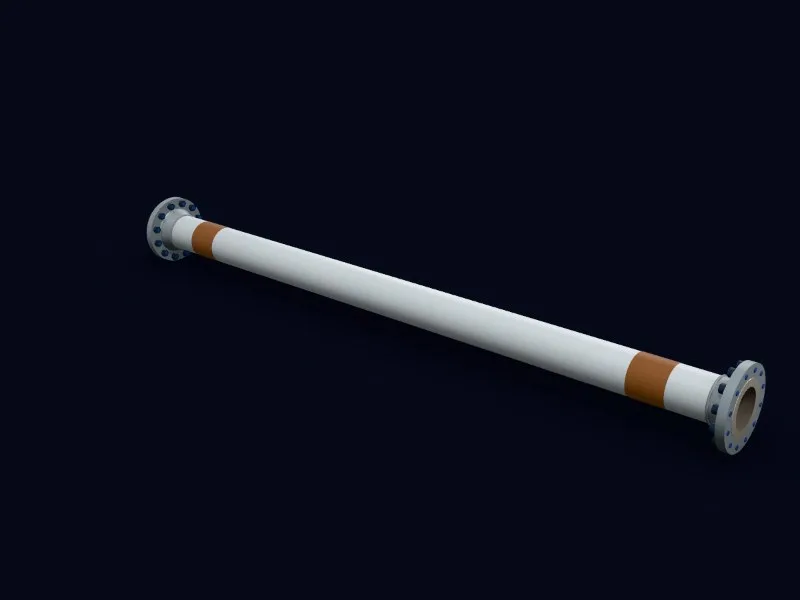
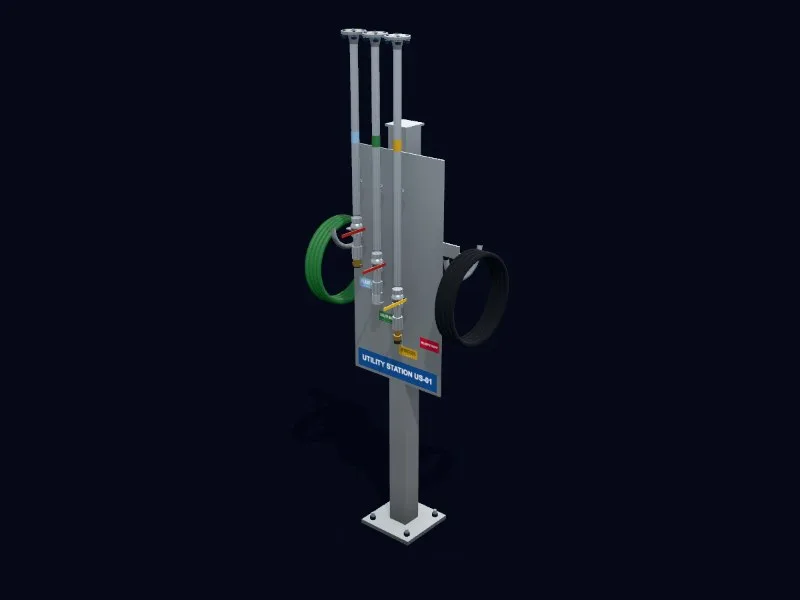
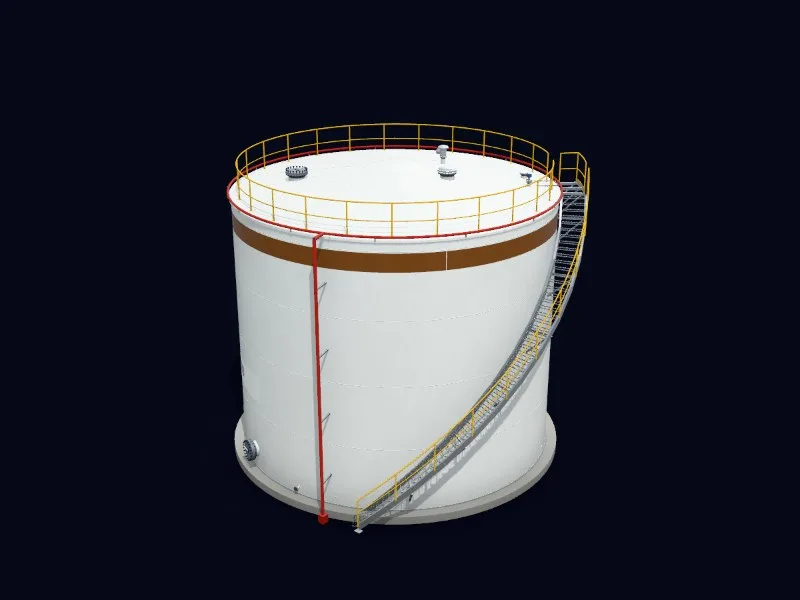
The SERVICE table in lib/standards/colors.ts gives each service a P&ID line code and an identification band colour after ISO 14726 and BS 1710. The pipe spool uses it through its service prop to paint the bands, and the utility station bands its air, water and nitrogen drops. The storage tank also cites it. The hex values are approximate screen colours for visualisation.
import { SERVICE } from './components/deck-twin/lib/standards'

SERVICE.oil.band        // '#7A4A24'  (code 'PO')
SERVICE.firewater.band  // '#A72920'  (code 'FW')
Deck Twin uses these standards as reference values for visualisation. Check the current edition of each standard before using any value for design, procurement or fabrication.