ICAO Annex 14
Aerodromes and heliports
ICAO Annex 14 sets international rules for aerodromes and heliports, including helidecks and the marking and lighting of tall obstacles.
Scope
Annex 14 to the Chicago Convention contains the International Civil Aviation Organization's standards and recommended practices for aerodromes. Volume I covers aerodromes, including the marking and lighting of obstacles. Volume II covers heliports, including elevated heliports and helidecks.
On oil and gas facilities Volume II is the international basis for helidecks, and member states apply it through national documents such as the UK's CAP 437. Volume I is the reference for marking and lighting tall structures that could be a hazard to aircraft, such as flare stacks, vent stacks, derricks and masts.
Annex 14 states what must be achieved. The detailed criteria a facility is assessed against come from the national aviation authority, so the national rules and the current edition must be checked.
Key concepts
- Standards and recommended practices
- Annex 14 contains standards, which member states are expected to apply, and recommended practices. States notify ICAO where their national rules differ.
- Helidecks
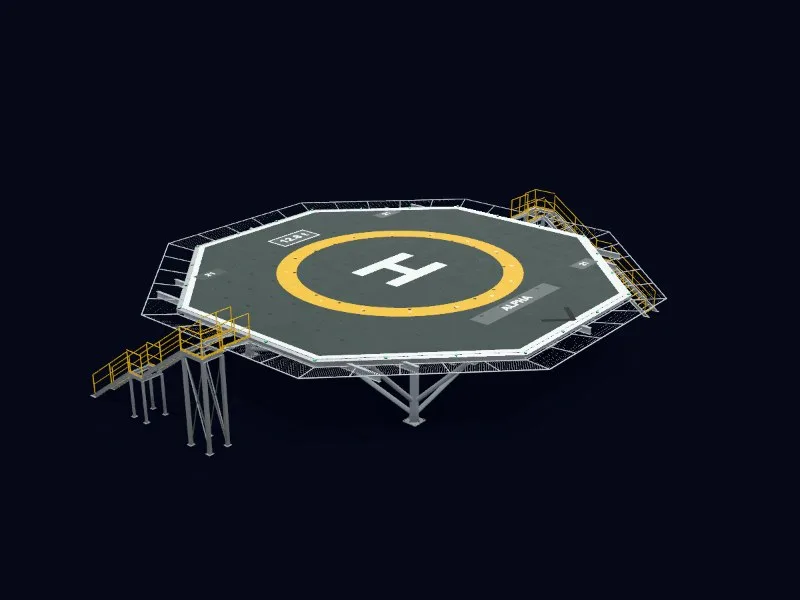
- A helideck is a heliport on an offshore structure. Volume II sets its size from the helicopter's D-value, its markings, lighting and the obstacle environment around it.
- Obstacle limitation
- Surfaces and sectors around a heliport must be kept free of obstacles, or obstacles must be limited in height. This drives the position of cranes, stacks and towers on a platform.
- Obstacle marking
- Tall objects are made visible by day with alternating bands of contrasting colours, such as red and white or orange and white.
- Obstacle lighting
- Tall objects are lit at night with obstacle lights. Low-intensity red lights are common on platform structures, and taller objects need medium or high-intensity lights.
- Wind direction indicator
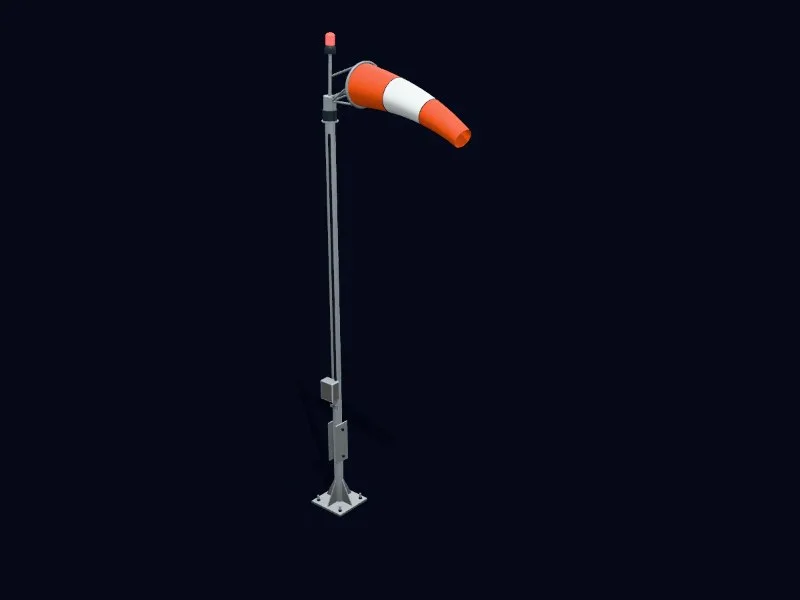
- A heliport must have a wind direction indicator, normally a windsock, that is visible to the pilot and lit for night operations.
Questions
What does ICAO Annex 14 Volume II cover?
Volume II covers heliports. It sets international standards and recommended practices for their physical layout, obstacle limits, markings, lights and rescue and fire fighting. It includes helidecks on offshore installations and on ships. Volume I covers aerodromes for aeroplanes.
What is the difference between ICAO Annex 14 and CAP 437?
Annex 14 is the international framework that states apply through their own rules. CAP 437 is the UK document for offshore helidecks. It describes itself as an amplification of Annex 14 Volume II, and it sets out the detailed criteria the UK uses to assess a deck. A helideck is assessed against the national document, not directly against Annex 14.
In Deck Twin
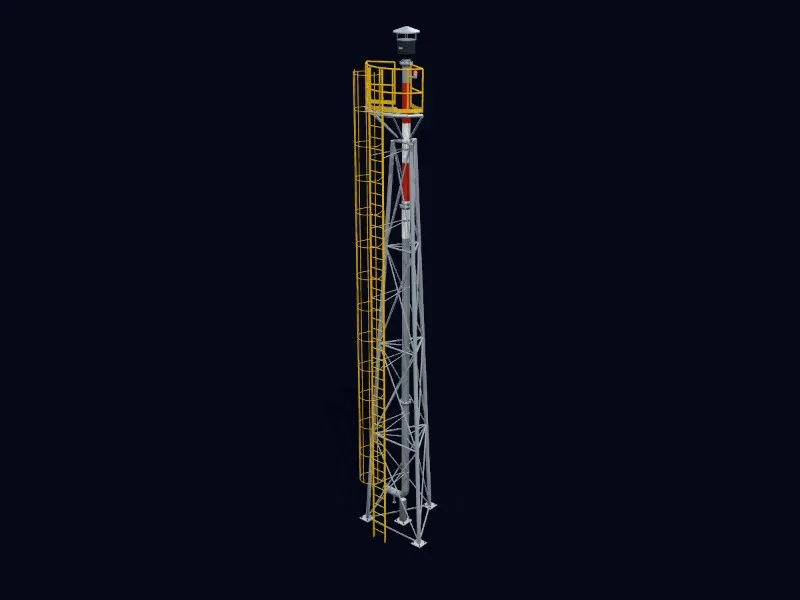
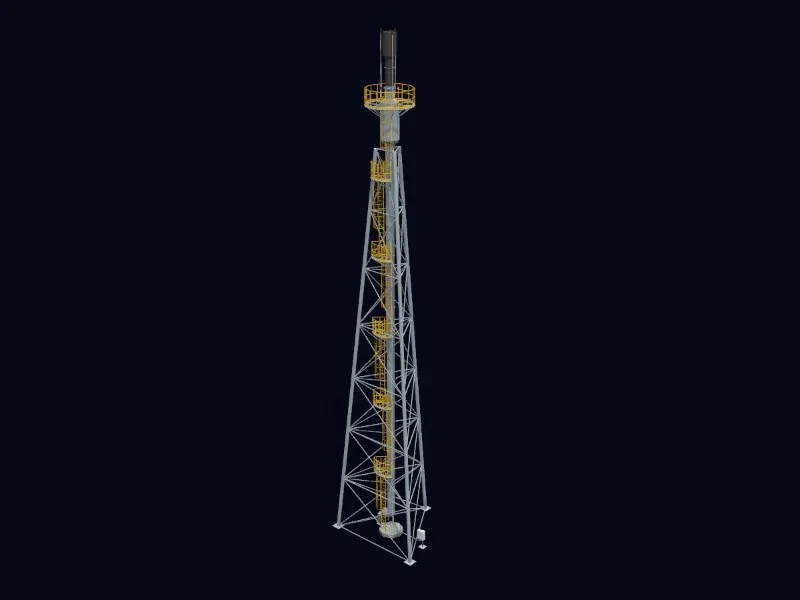
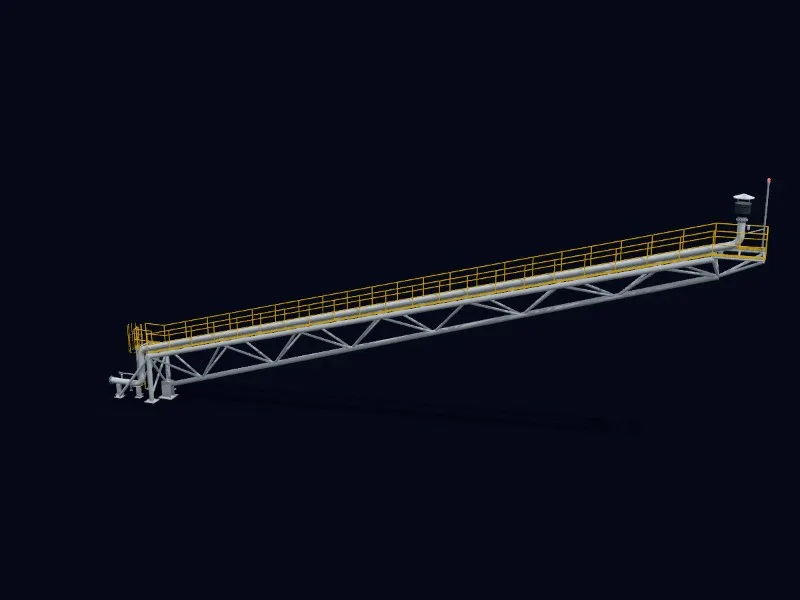
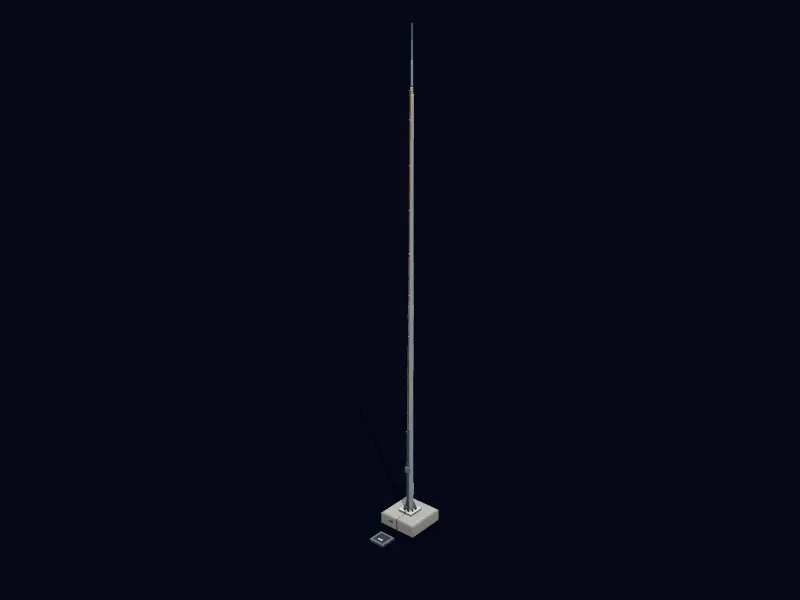
The helideck and windsock follow the heliport markings and wind indicator described in Volume II and CAP 437. The flare stack, vent stack and vent boom carry day-marking bands and obstruction lights, and the lightning protection mast cites it for obstacle marking. There is no lib/standards function for it.
Deck Twin uses these standards as reference values for visualisation. Check the current edition of each standard before using any value for design, procurement or fabrication.
Components that follow ICAO Annex 14 6