ISO 7010
Registered safety signs
ISO 7010 is the register of safety signs: E, F, M, P and W codes for escape, fire, mandatory, prohibition and warning signs on facilities.
Scope
ISO 7010 is a register of standardised safety sign symbols. Each sign has a reference code, a meaning and a fixed graphic, so the same sign means the same thing on any site. The colours and shapes follow the design rules in ISO 3864-1.
On oil and gas facilities it is used for escape route signs, muster point signs, fire equipment signs, mandatory PPE signs and hazard warnings. Offshore it is read alongside IMO requirements for escape route marking and life-saving appliances.
It does not set where signs go, how many are needed or how they are lit. Those come from local regulations, the escape and evacuation analysis and the project specification.
Key concepts
- Sign categories
- Each code starts with a letter for its category. E is safe condition and emergency equipment, F is fire equipment, M is mandatory action, P is prohibition and W is warning.
- Colours and shapes
- Safe condition signs are green squares or rectangles. Fire equipment signs are red squares. Mandatory signs are blue circles, prohibition signs are red circles with a bar, and warning signs are yellow triangles.
- Escape signs
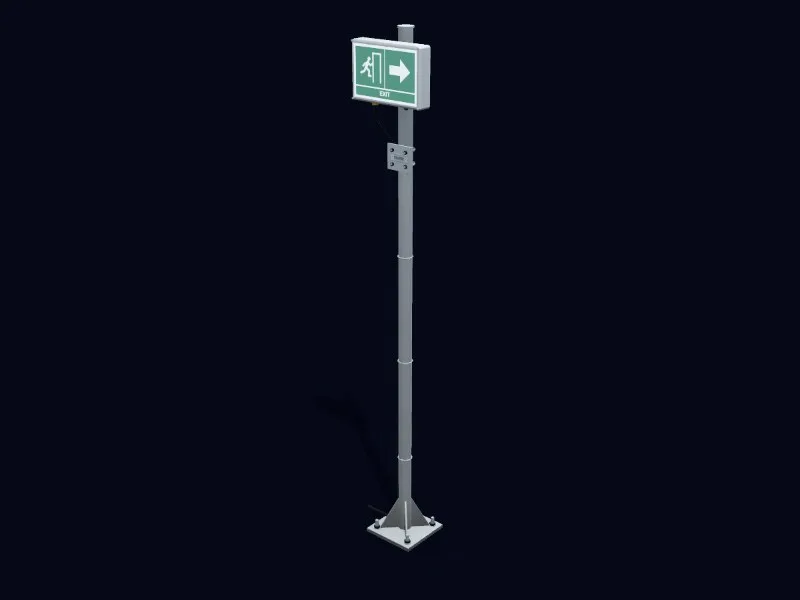
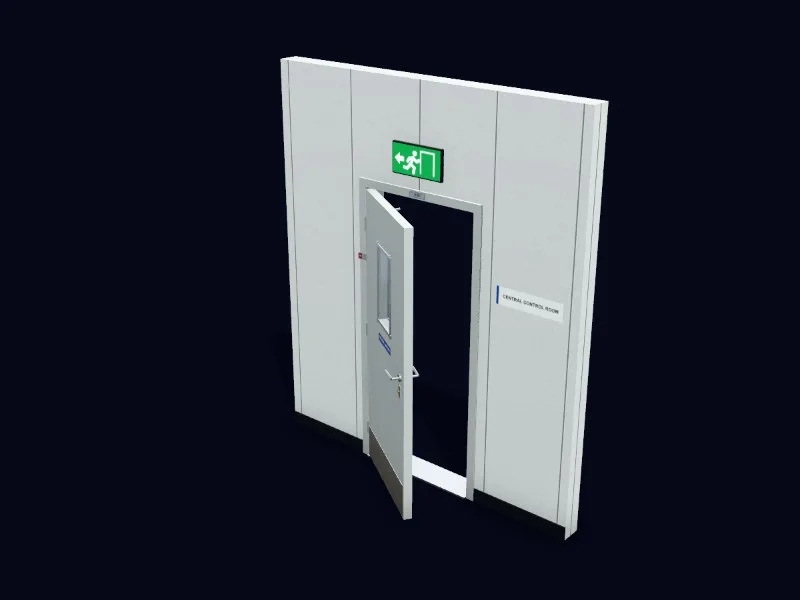
- E001 and E002 are the emergency exit signs for left-hand and right-hand routes, used with a supplementary direction arrow. E007 is the evacuation assembly point.
- Emergency equipment
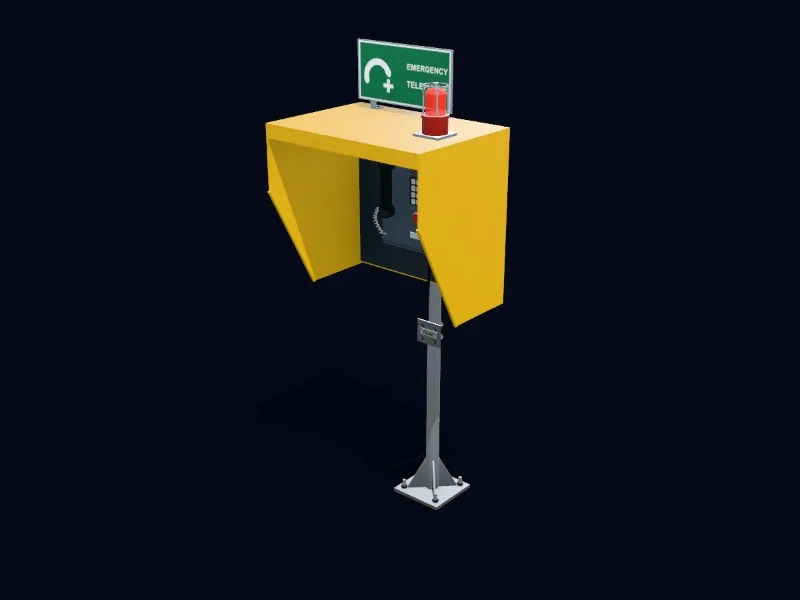
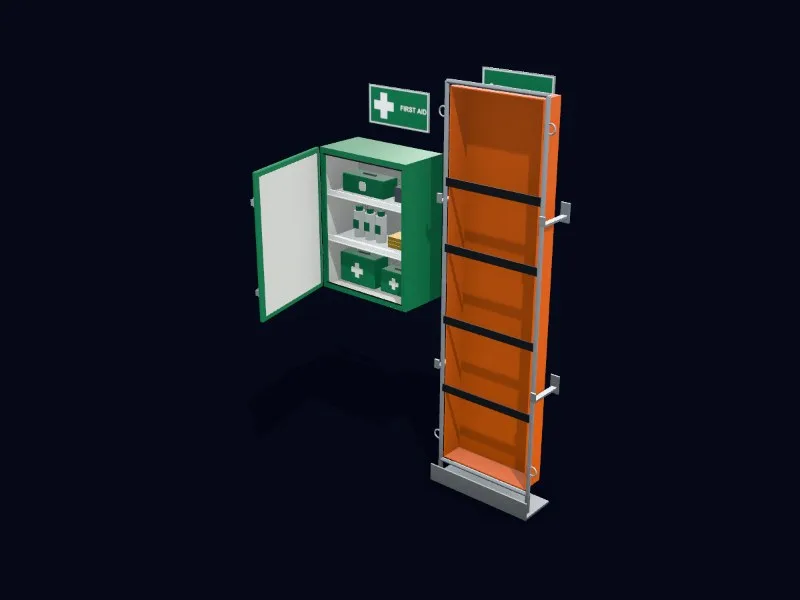
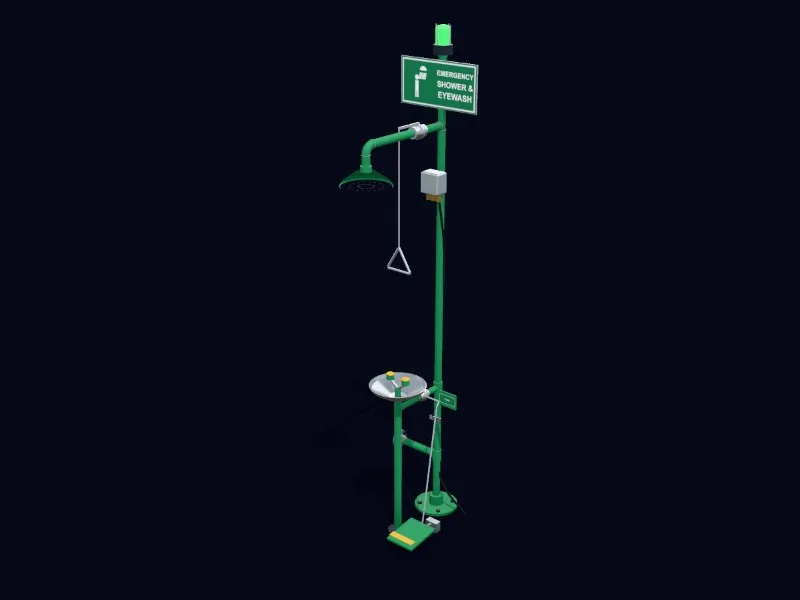
- E-codes also mark first aid (E003), emergency telephones (E004), eyewash stations and safety showers. They tell a person where help or equipment is.
- Fire equipment
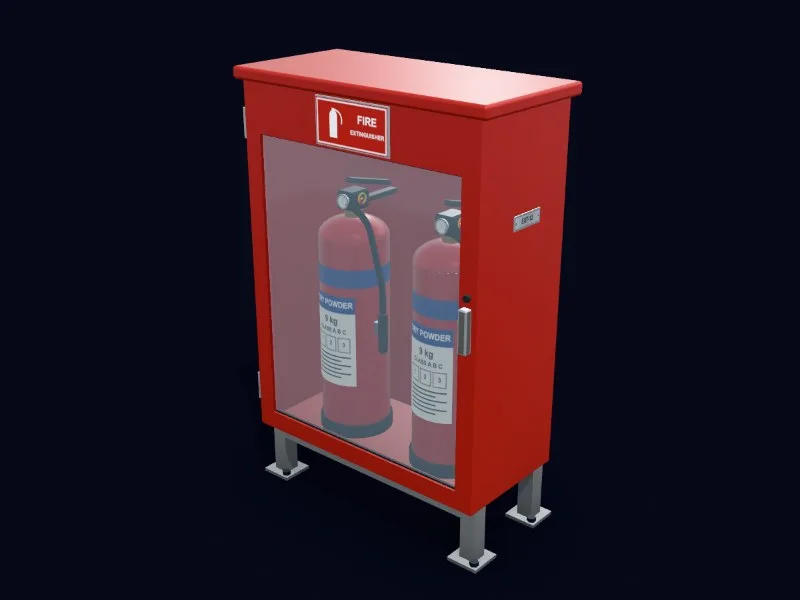
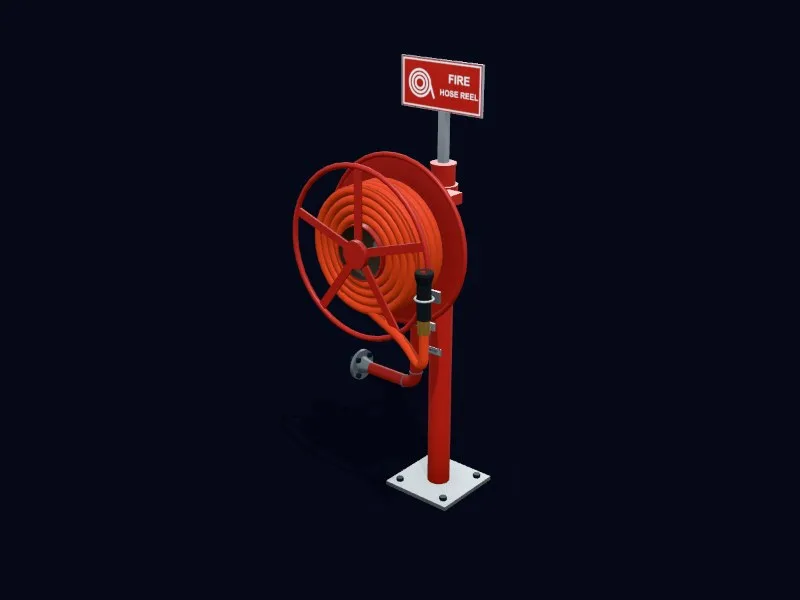
- F-codes mark fire extinguishers (F001), fire hose reels (F002) and other firefighting equipment. They are placed above or beside the equipment so it can be found from a distance.
- Supplementary signs
- A text panel or arrow can be added under a symbol, but the symbol must keep its registered form. Photoluminescent and internally lit versions keep the sign visible when power fails.
Questions
What is ISO 7010?
It is the international register of safety signs. Each sign has a code, a fixed symbol and a meaning, for example E001 for an emergency exit. Using registered signs means a person can read them without knowing the local language. The escape sign draws three of them.
What is BS EN ISO 7010?
It is the same standard, adopted as a European (EN) and British (BS) standard. The signs and codes are identical. In Europe the EN version is the usual reference for safety signs at work.
What do the letters in ISO 7010 sign codes mean?
The letter is the category. E is for safe condition signs such as exits and first aid, F is for fire equipment, M is for mandatory actions, P is for prohibitions and W is for warnings. The number after it identifies the sign.
In Deck Twin
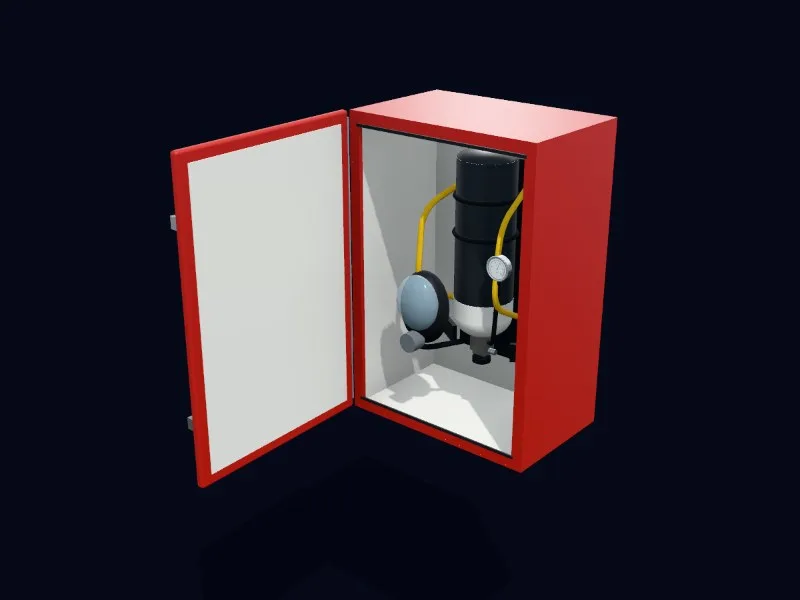
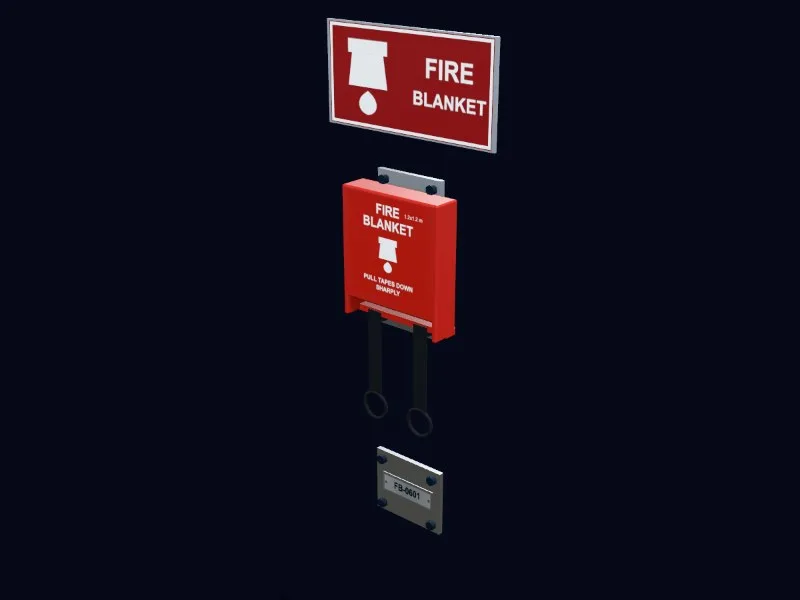
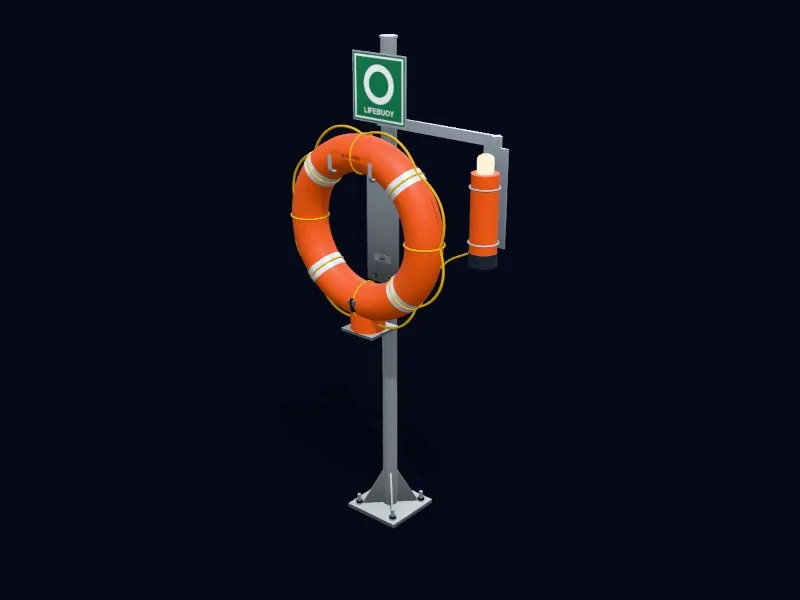
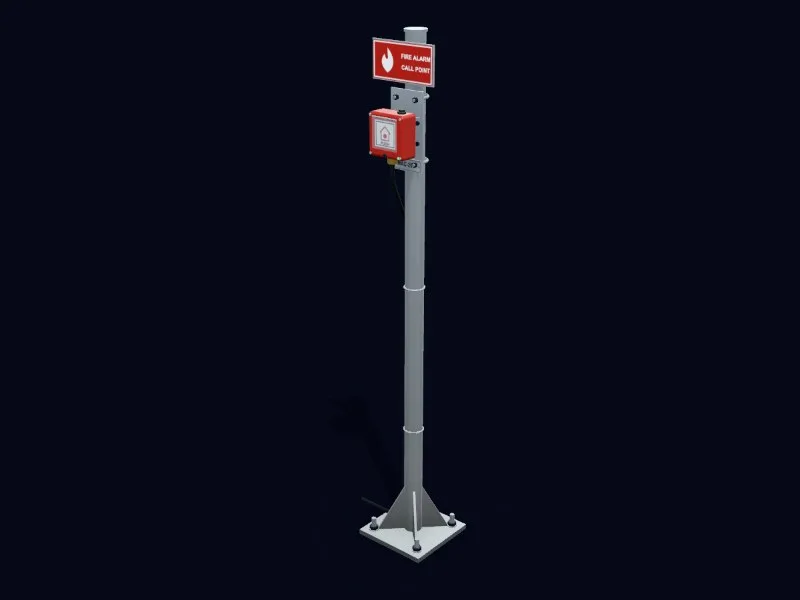
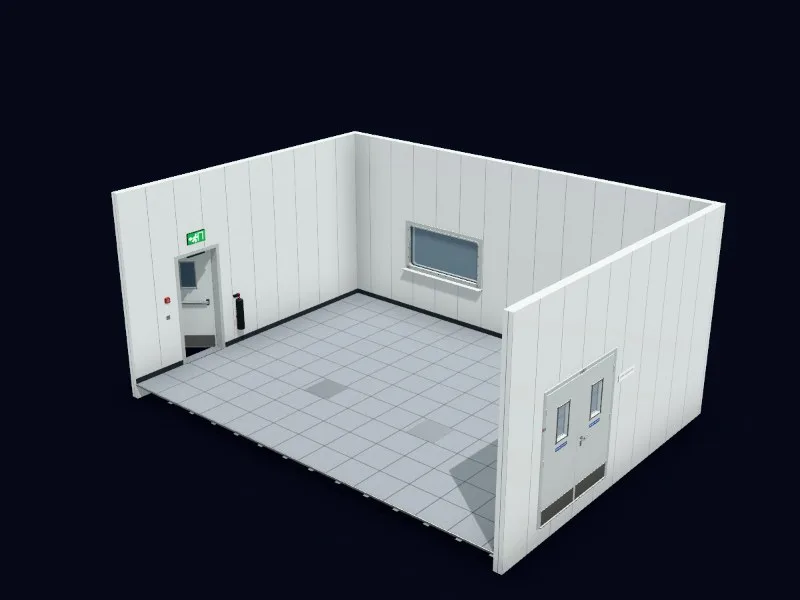
The escape sign draws E001, E002 and E007 with a direction arrow and a legend band, as a photoluminescent plate or an internally lit sign box. Signs to the same scheme appear on the first aid station, fire extinguisher, hose reel, safety shower, manual call point, emergency telephone, life ring and door. The sign graphics are simplified drawings for visualisation, not the registered artwork.
Deck Twin uses these standards as reference values for visualisation. Check the current edition of each standard before using any value for design, procurement or fabrication.
Components that follow ISO 7010 12