ISA-101
Human machine interfaces for process automation systems
ISA-101 HMI standard explained: the HMI lifecycle, philosophy and style guide, display levels 1 to 4, and how it relates to high-performance HMI.
Scope
ANSI/ISA-101.01 covers the design, build, operation and maintenance of the human machine interface (HMI) of a process control system: the screens operators use to watch and run the plant. It does not prescribe a look. It requires a site to define its own HMI philosophy and style guide and to manage the displays through a lifecycle.
On oil and gas facilities it is applied to DCS and SCADA operator displays in control rooms and on local panels. It is used with ISA-18.2 for alarms, which the HMI shows, and with ISO 11064 for the control room itself.
Grey backgrounds and muted colours are often called ISA-101 style, but the standard does not mandate any colour scheme. That style comes mainly from high-performance HMI guidance, such as the ASM Consortium guidelines and The High Performance HMI Handbook.
Philosophy, style guide and toolkit
ISA-101 builds the HMI from three documents and a library, each more detailed than the one before.
| Item | What it holds |
|---|---|
| HMI philosophy | The principles: who the users are, what the displays are for, how they are arranged and how the HMI is managed |
| HMI style guide | The specific rules: colours, fonts, symbols, how alarms and values are shown, and the display layouts |
| HMI toolkit | The library of graphic objects, faceplates and templates that put the style guide into the control system |
| Display hierarchy | How the displays are arranged from overview to detail, and how the operator moves between them |
Display hierarchy
ISA-101 describes a hierarchy of up to four levels. A site does not have to use all four, and the arrangement below is the common one.
| Level | Shows | Used for |
|---|---|---|
| Level 1 | The operator's whole span of control | Seeing at a glance whether anything needs attention |
| Level 2 | A unit or major task | Routine operation of one system, such as separation or compression |
| Level 3 | Detail of one part of a unit | Detailed tasks and troubleshooting |
| Level 4 | Diagnostics of one item | Faceplates, trends, interlock and instrument status |
A commonly used arrangement, not a copy of the standard.
Editions and related documents
The current standard is ANSI/ISA-101.01-2015. ISA has published technical reports alongside it, among them ISA-TR101.01-2022 on HMI philosophy and ISA-TR101.02-2019 on HMI usability and performance.
IEC 63303:2024 is the international HMI standard for process automation, developed from ISA-101.01. ISA has started a project to adopt it, with modifications, as the next version of ISA-101. Check the ISA site for the current status.
Key concepts
- HMI lifecycle
- The HMI is designed, implemented and operated in stages, with management of change, audit and validation running throughout. The aim is that displays stay consistent as they are added and changed over many years.
- Situation awareness
- Good displays show the state of the process at a glance: whether values are normal, where they are heading and what needs attention. Trends and analogue indicators often do this better than plain numbers.
- Use of colour
- Most style guides keep colour for abnormal conditions and alarms, so that it stands out when it appears. That is a choice made in the style guide, following high-performance HMI practice.
- Consistency
- The same object looks and behaves the same way on every display. Operators then read the screens by pattern, not by searching.
- Navigation
- An operator should reach any display in a few actions, and it should be clear where each display sits in the hierarchy.
Questions
What is ISA-101?
ANSI/ISA-101.01 is the standard for human machine interfaces in process automation systems. It requires an HMI philosophy, a style guide and a managed lifecycle for the operator displays, without prescribing a single look.
Does ISA-101 require grey backgrounds?
No. ISA-101 leaves colours and symbols to the site style guide. Grey backgrounds and reserving colour for abnormal conditions come from high-performance HMI guidance, such as the ASM Consortium guidelines and The High Performance HMI Handbook, and many style guides written under ISA-101 adopt them.
What is the difference between ISA-101 and ISO 11064?
ISA-101 is written for process-industry operator displays. ISO 11064 covers the whole control centre: its layout, consoles, lighting and environment, with general principles for displays and controls in Part 5. They are used together. See ISO 11064 vs ISA-101.
What is the current edition of ISA-101?
ANSI/ISA-101.01-2015. ISA has started a project to adopt IEC 63303:2024 with modifications as its replacement, so check the ISA site before you cite it.
In Deck Twin
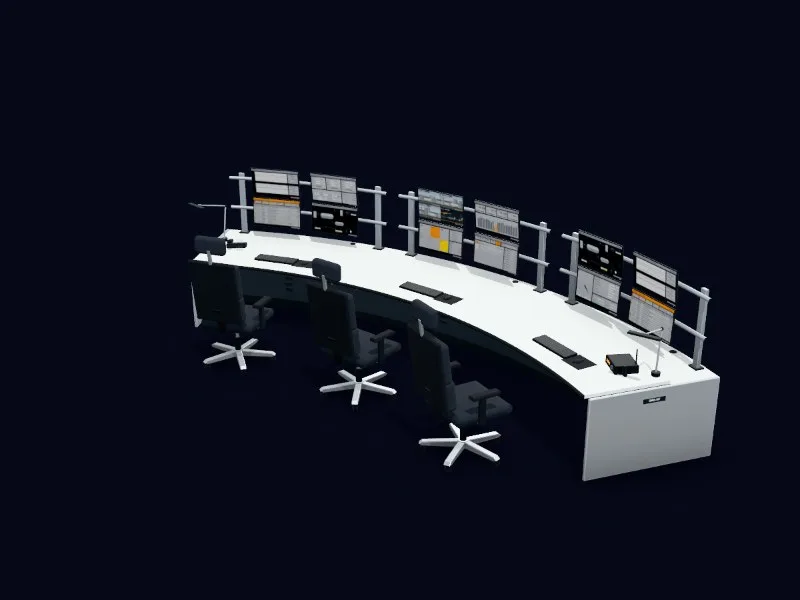
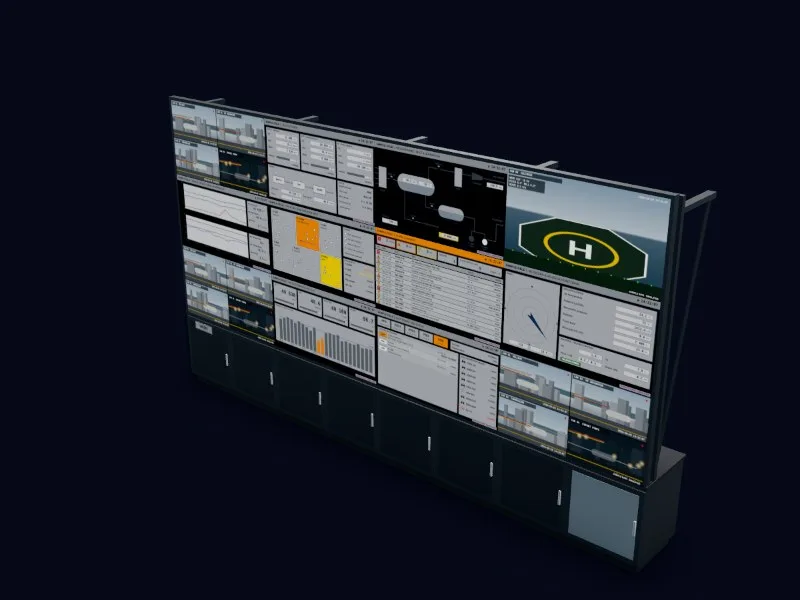
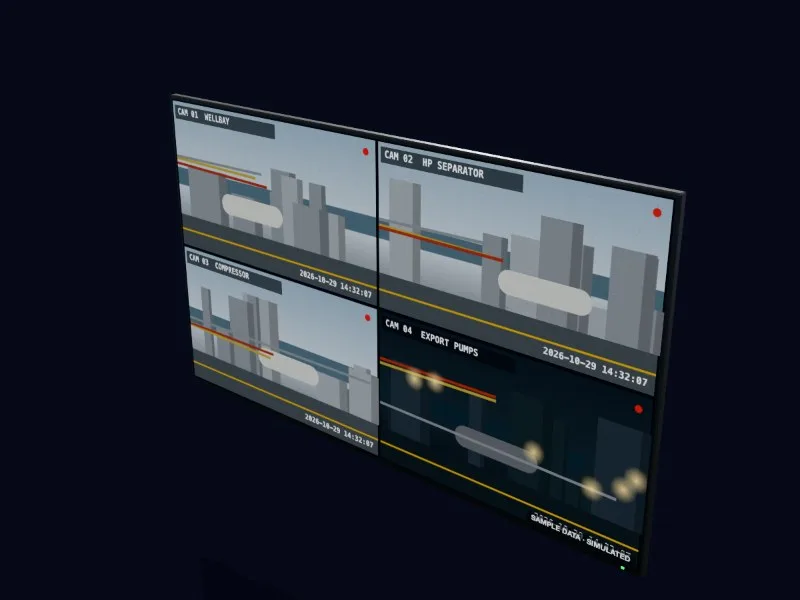
The control console, video wall and wall display cite ISA-101 for the screen style they draw: muted backgrounds with colour kept for alarms. They are 3D props with static images. They are not an HMI and have not been checked against ISA-101.
Deck Twin uses these standards as reference values for visualisation. Check the current edition of each standard before using any value for design, procurement or fabrication.