IEC 61508
Functional safety of electrical, electronic and programmable electronic safety-related systems
IEC 61508 explained: the basic functional safety standard, its seven parts, SIL in low and high demand mode, and what a SIL certificate means.
Scope
IEC 61508 is the basic international standard for functional safety. It covers safety functions carried out by electrical, electronic and programmable electronic (E/E/PE) systems: sensors, logic solvers, actuators and the software in them. It sets out a safety lifecycle and requirements for avoiding and controlling failures in hardware and software.
It is written to work in any industry, and sector standards build on it: IEC 61511 for the process industry, IEC 62061 for machinery and ISO 26262 for road vehicles. On oil and gas facilities it is met mostly through the products: the transmitters, safety PLCs, solenoid valves and valve actuators in an SIS carry SIL capability claims or certificates based on IEC 61508.
It does not say which safety functions a plant needs or what SIL they should have. That comes from the hazard and risk assessment, and on process plants from IEC 61511.
The seven parts of IEC 61508
| Part | Title |
|---|---|
| IEC 61508-1 | General requirements |
| IEC 61508-2 | Requirements for electrical/electronic/programmable electronic safety-related systems |
| IEC 61508-3 | Software requirements |
| IEC 61508-4 | Definitions and abbreviations |
| IEC 61508-5 | Examples of methods for the determination of safety integrity levels |
| IEC 61508-6 | Guidelines on the application of IEC 61508-2 and IEC 61508-3 |
| IEC 61508-7 | Overview of techniques and measures |
Parts 1 to 3 hold the requirements and Part 4 the definitions. Parts 5 to 7 are informative guidance. The current edition of all seven parts is edition 2.0, published in April 2010. A third edition is in preparation, so check the IEC webstore.
SIL in low demand and high demand mode
A safety function in low demand mode is called on no more than once a year, like most process trips. Its SIL is set by the average probability that it fails when called on. A function in high demand or continuous mode acts more often or all the time, like a machine guard interlock. Its SIL is set by the average frequency of a dangerous failure per hour (PFH).
| SIL | PFDavg, low demand | PFH, high demand or continuous |
|---|---|---|
| SIL 1 | 0.01 to 0.1 | 0.000001 to 0.00001 per hour |
| SIL 2 | 0.001 to 0.01 | 0.0000001 to 0.000001 per hour |
| SIL 3 | 0.0001 to 0.001 | 0.00000001 to 0.0000001 per hour |
| SIL 4 | 0.00001 to 0.0001 | 0.000000001 to 0.00000001 per hour |
Commonly quoted bands, also written as powers of ten, for example 10⁻² to 10⁻¹. They are not a copy of the standard. Meeting the number is only one of the requirements for a SIL.
What a SIL certificate means
A product is not SIL rated on its own. A certificate says that a device can be used in a safety function up to a stated SIL, under stated conditions, and gives its failure rates and its safe failure fraction. The end user still has to show that the whole function, with its architecture, proof test interval and other devices, meets its target.
Certificates are issued by assessment bodies after reviewing the design process, the failure analysis and, for programmable devices, the software development. A device can also be justified by prior use instead, under the rules of IEC 61511.
Key concepts
- Functional safety
- The part of overall safety that depends on a system working correctly in response to its inputs. A relief valve gives safety by physics. A pressure trip gives functional safety, because it must sense, decide and act.
- Systematic capability
- Failures caused by errors in specification, design or software cannot be predicted by a failure rate. IEC 61508 controls them through the development process, and rates a product's systematic capability from SC 1 to SC 4.
- Random hardware failures
- Components fail at random over time. Their rates are combined with the architecture, diagnostics and proof test interval to calculate PFDavg or PFH.
- Safe failure fraction
- The share of failures that are safe or detected by diagnostics. With the hardware fault tolerance, it sets the highest SIL a subsystem can claim from its architecture.
- Route 1H and Route 2H
- Two ways to meet the architecture rules. Route 1H uses hardware fault tolerance and safe failure fraction. Route 2H uses field reliability data with a minimum fault tolerance.
- Safety lifecycle
- A structured set of phases from concept to decommissioning, with verification at each step and a functional safety assessment. IEC 61511 uses the same idea for process plants.
Questions
What is IEC 61508?
IEC 61508 is the basic international standard for the functional safety of electrical, electronic and programmable electronic safety-related systems. It sets requirements for the whole lifecycle of a safety function and defines the four safety integrity levels. It has seven parts.
What is the difference between IEC 61508 and IEC 61511?
IEC 61508 is written for any industry and is used mostly by device and system makers. IEC 61511 is the process industry standard, used by the people who design and run safety instrumented systems on plants. See IEC 61508 vs IEC 61511.
What is the latest edition of IEC 61508?
Edition 2.0, published in 2010, for all seven parts. A third edition is in preparation but had not been published when this page was written. Check the IEC webstore.
Does a SIL 3 transmitter make a SIL 3 loop?
No. The certificate shows the transmitter can be used in a SIL 3 function. The loop also includes the logic solver and the final element, and the whole function must meet the target, including its proof testing.
In Deck Twin
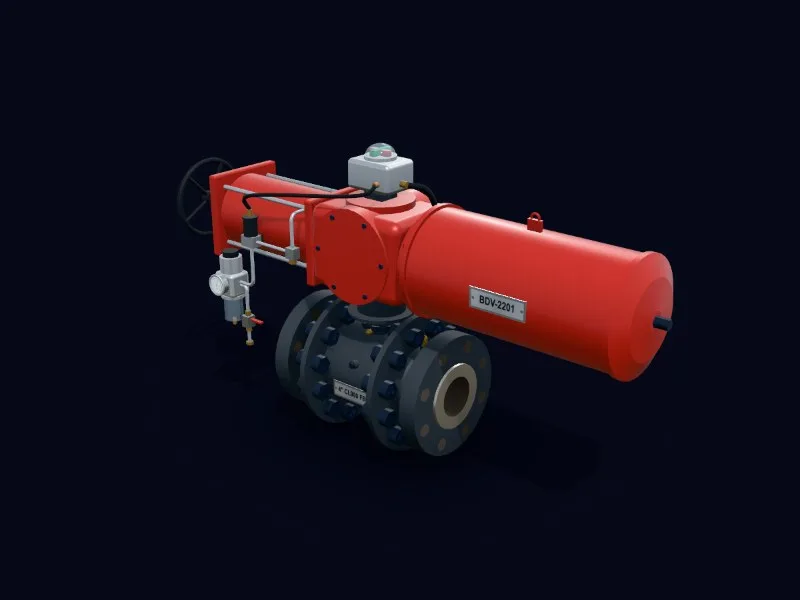
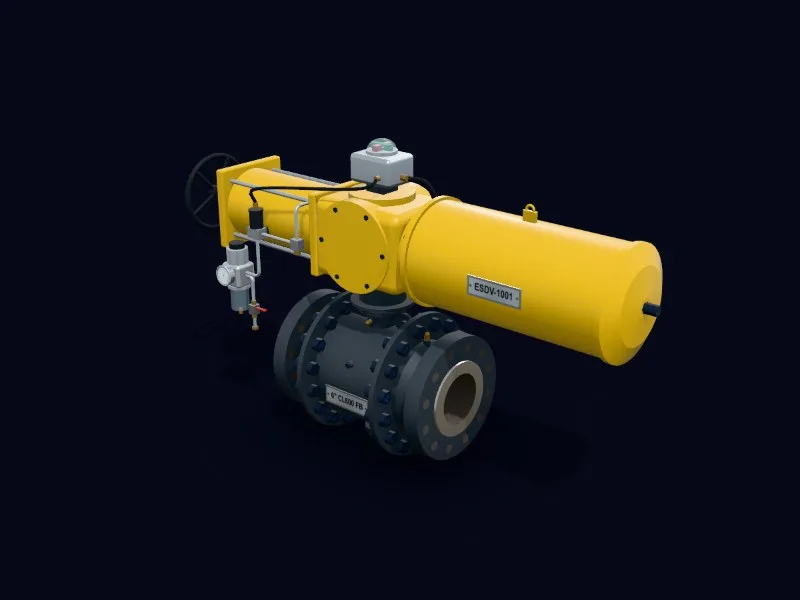
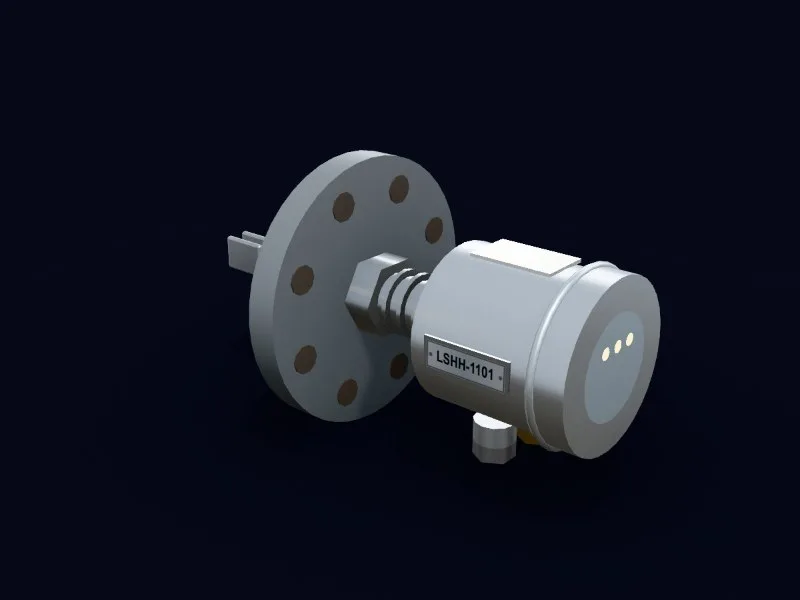
The level switch cites IEC 61508 for its SIL capability, and the ESD valve and blowdown valve cite IEC 61508 and 61511. These citations name the standard that such devices are commonly certified to. The 3D models are generic and carry no SIL rating or failure data.
Deck Twin uses these standards as reference values for visualisation. Check the current edition of each standard before using any value for design, procurement or fabrication.