NACE MR0175 / ISO 15156
Materials for use in H2S-containing environments in oil and gas production
NACE MR0175 / ISO 15156 explained: when a fluid is sour, the three parts, the 22 HRC hardness limit for carbon steel, and MR0175 vs MR0103.
Scope
NACE MR0175 / ISO 15156 sets requirements for metallic materials in oil and gas production equipment exposed to hydrogen sulphide (H2S), called sour service. Its aim is to prevent cracking caused by H2S, mainly sulphide stress cracking, hydrogen-induced cracking and stress corrosion cracking. It covers carbon and low-alloy steels, cast irons, corrosion-resistant alloys and other alloys.
It applies from the reservoir to the processing plant: wellheads and trees, downhole equipment, flowlines, gathering lines, separators, compressors and the piping and valves in between. The user, often a materials engineer, decides whether a service is sour, then the standard sets which materials and conditions are acceptable.
It is published as one standard by AMPP, which was formed in 2021 when NACE International merged with SSPC, and by ISO. It does not cover general corrosion or weight loss, and refinery equipment is covered by NACE MR0103 / ISO 17945 instead.
The three parts
| Part | Title | Covers |
|---|---|---|
| ISO 15156-1 | General principles for selection of cracking-resistant materials | Scope, responsibilities and how to qualify a material |
| ISO 15156-2 | Cracking-resistant carbon and low-alloy steels, and the use of cast irons | When steels are acceptable, hardness limits, welding and the severity of sour conditions |
| ISO 15156-3 | Cracking-resistant CRAs (corrosion-resistant alloys) and other alloys | Stainless steels, nickel alloys and others, with their environmental limits |
The current parts are the 2020 editions, published in the US as ANSI/NACE MR0175-2021/ISO 15156:2020. Errata and technical circulars have been issued since, and ISO has revised parts in draft, so check the current edition.
When a service is sour
For carbon and low-alloy steels, the commonly quoted threshold is an H2S partial pressure of 0.3 kPa (0.05 psi) in the gas. Below that, the sulphide stress cracking requirements of Part 2 do not usually apply to these steels, though the user should still consider other cracking risks. Corrosion-resistant alloys have their own limits in Part 3.
The partial pressure is the mole fraction of H2S in the gas times the total absolute pressure. For example, gas with 50 ppm H2S at 100 bar absolute has an H2S partial pressure of 0.005 bar, which is 0.5 kPa. That is above the threshold, so the service is sour even though the H2S content looks small.
Commonly quoted requirements for carbon steel
| Item | Commonly quoted requirement |
|---|---|
| Sour threshold for carbon and low-alloy steel | H2S partial pressure of 0.3 kPa (0.05 psi) or more |
| Maximum hardness, carbon and low-alloy steel | 22 HRC, for steels with less than 1% nickel in the listed heat-treatment conditions |
| Welds and heat-affected zones | Hardness controlled as well, by procedure qualification and testing |
| Hydrogen-induced cracking | Plate and pipe can need HIC testing, mainly for welded pipe and plate |
Commonly quoted headline values, not a copy of the standard. There are conditions and exceptions, and the severity of sour service also depends on pH. Check the current edition before you select a material.
Key concepts
- Sulphide stress cracking
- Cracking of a metal under tensile stress, caused by hydrogen from the sour corrosion reaction. It can happen fast and without warning, and harder steels are more prone to it, which is why hardness is limited.
- Hydrogen-induced cracking
- Hydrogen collects at inclusions in the steel and forms blisters and stepwise cracks, even without applied stress. It mostly affects plate and welded pipe, and clean steel with controlled chemistry reduces it.
- Stress corrosion cracking
- Corrosion-resistant alloys can crack in sour service when chlorides, temperature and H2S combine. Part 3 gives each alloy group limits on temperature, H2S partial pressure, chloride and pH.
- Hardness control
- For carbon steel the widely quoted limit is 22 HRC. Welds, heat-affected zones and cold-worked parts must also meet hardness limits, which often means post-weld heat treatment or qualified procedures.
- Severity of sour service
- Part 2 grades the severity of sour conditions for carbon steel by H2S partial pressure and pH, from mild to severe. Stricter requirements apply as the conditions get worse.
- Responsibility of the user
- The standard puts the duty of defining the service conditions on the equipment user. A maker supplies materials that meet the standard for the conditions the user states.
Questions
What is NACE MR0175?
NACE MR0175 / ISO 15156 is the standard for metallic materials in oil and gas production equipment exposed to H2S. It sets which materials, hardness limits and conditions resist sulphide stress cracking and other H2S cracking. It has three parts and is published jointly by AMPP and ISO.
What H2S partial pressure makes a service sour?
For carbon and low-alloy steels, the commonly quoted threshold is 0.3 kPa (0.05 psi) of H2S partial pressure. Partial pressure is the H2S mole fraction times the total absolute pressure, so even small concentrations can be sour at high pressure.
What is the NACE hardness limit for carbon steel?
The widely quoted maximum is 22 HRC on the Rockwell C scale. Welds and heat-affected zones must also be controlled, and some product forms have their own limits.
What is the difference between NACE MR0175 and MR0103?
MR0175 / ISO 15156 is for oil and gas production. NACE MR0103, published as ISO 17945, covers sour petroleum refining and related processing. The two are similar in approach but differ in detail.
Which API 6A material classes are sour service?
Classes DD, EE, FF and HH. Their materials must meet NACE MR0175 / ISO 15156. Class ZZ is used for materials qualified for one specific sour application. See API 6A.
In Deck Twin
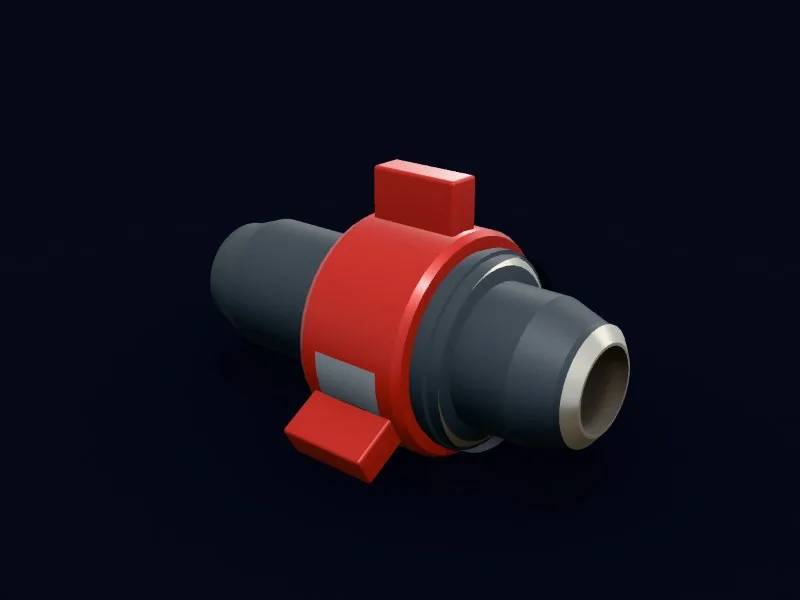
The hammer union cites NACE MR0175 as an optional sour service rating. No other component cites the standard. Wellhead and valve components such as the christmas tree and ball valve are used in sour service in practice, but the library does not model materials or hardness and makes no sour service claim.
Deck Twin uses these standards as reference values for visualisation. Check the current edition of each standard before using any value for design, procurement or fabrication.