NFPA 15
Water spray fixed systems for fire protection
NFPA 15 covers fixed water spray and deluge systems: nozzles, deluge valves, detection and design densities for vessels, tanks and process areas.
Scope
NFPA 15 covers the design, installation and testing of fixed water spray systems. These are systems of open nozzles fed from a deluge valve, which release water over a whole area at once when detection or an operator trips the valve.
On oil and gas facilities water spray protects pressure vessels, storage tanks, spheres, pumps, compressors, transformers and wellheads. It cools equipment exposed to a fire, controls burning and can help disperse gas. Offshore, deluge is often designed to NFPA 15 together with operator and NORSOK requirements.
It does not cover sprinkler systems (NFPA 13), foam systems (NFPA 11) or fire pumps (NFPA 20). Design densities and test requirements must be taken from the current edition.
Key concepts
- Deluge system
- A deluge system has open nozzles and dry pipework downstream of a deluge valve. When the valve opens, water flows from every nozzle in the zone at once.
- Design objectives
- A system is designed for one or more objectives: extinguishment, control of burning, exposure protection or prevention of fire. The objective sets the density and the response time.
- Application density
- Water is applied as a density over the protected surface, in L/min per m². A widely quoted figure for exposure protection of vessels is about 10.2 L/min/m² (0.25 gpm/ft²).
- Nozzles
- Medium-velocity nozzles give a fine spray for cooling surfaces. High-velocity nozzles give a coarse, fast spray for oil fires. Each nozzle has a K-factor that relates flow to pressure.
- Deluge valve and trim
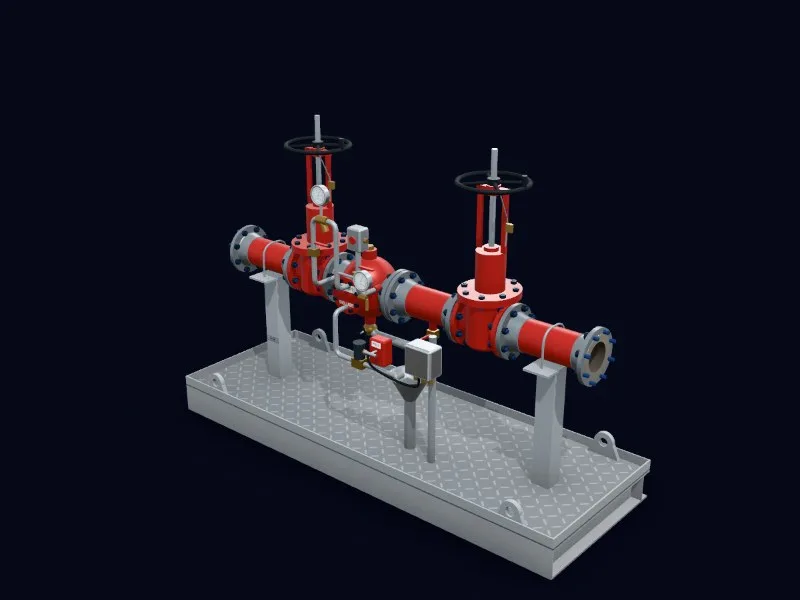
- The deluge valve holds water back until it is released by a solenoid, a pneumatic detection line or a manual release. The trim includes priming, alarm, drain and test lines.
- Hydraulic calculation
- Pipe sizes are proven by hydraulic calculation from the water supply to the most remote nozzle, so that every nozzle gets at least its design pressure.
- Testing
- Systems are flow tested at commissioning and periodically after that to check nozzle coverage, valve operation and water supply.
In Deck Twin
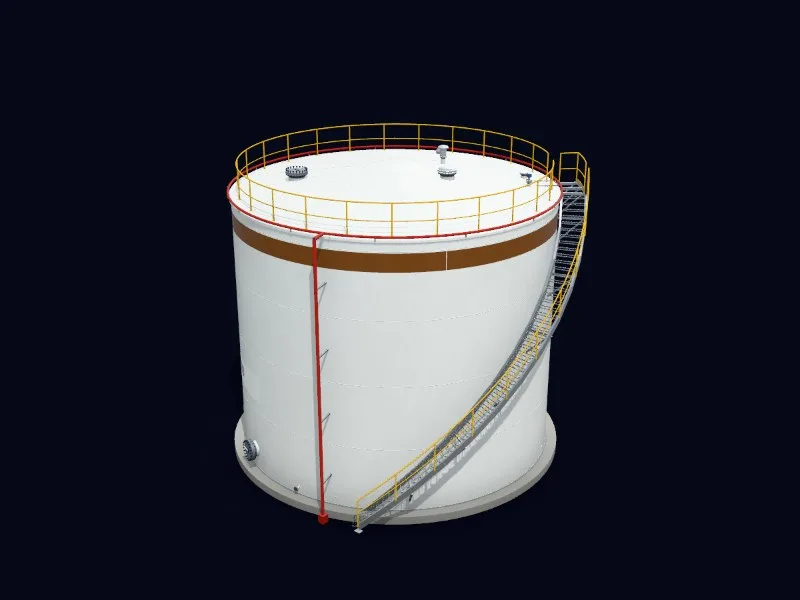
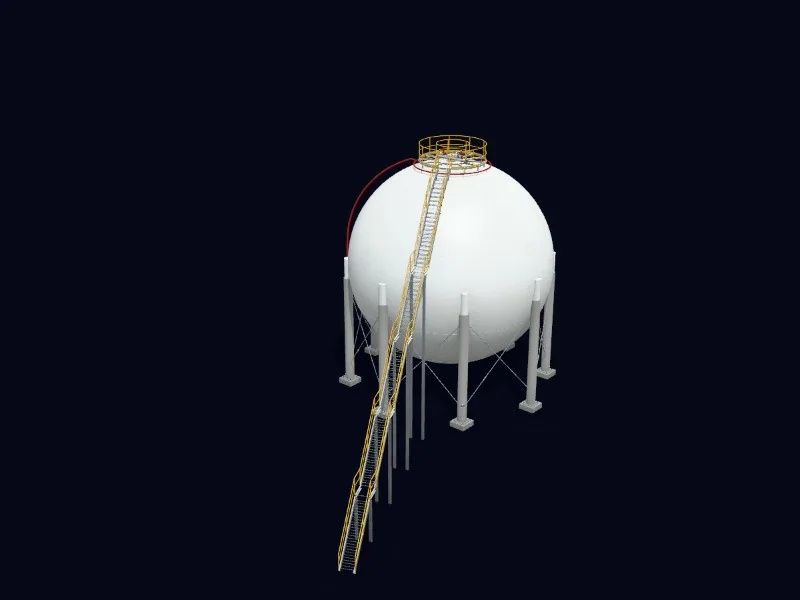
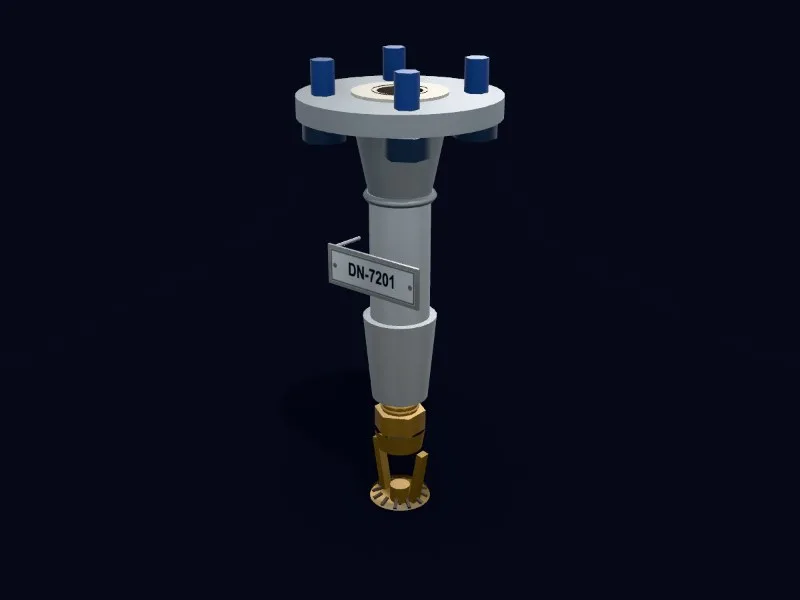
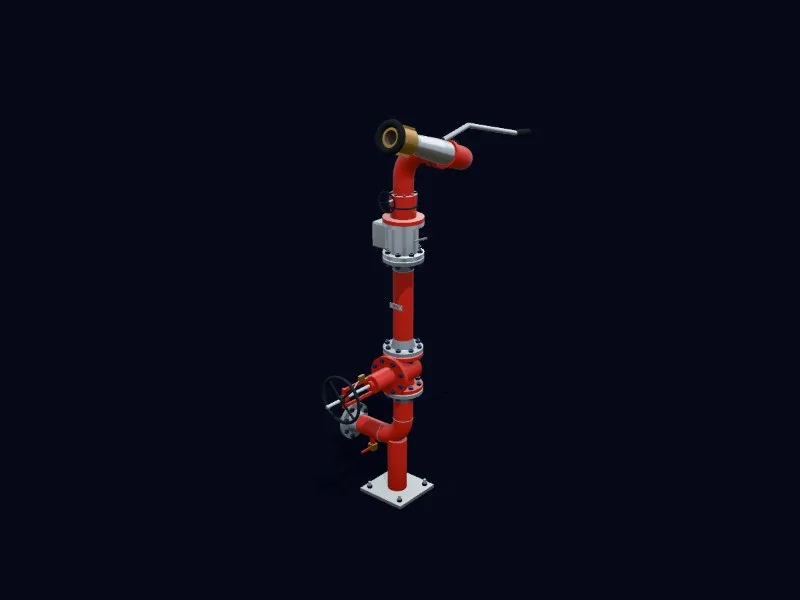
The deluge valve skid models a deluge valve with its full trim between locked-open isolation valves. The deluge nozzle offers medium-velocity, high-velocity, sprinkler and water-mist heads, and the fire monitor provides fixed manual cover. The storage tank and spherical tank can carry cooling rings to the same idea. There is no lib/standards function for it, and the models are not hydraulically designed.
Deck Twin uses these standards as reference values for visualisation. Check the current edition of each standard before using any value for design, procurement or fabrication.