Oil and gas P&ID symbols: flare, wellhead and pipeline
Oil and gas production adds its own symbols: the wellhead and its valves, the flare and vent system, the pipeline end with its pig traps and risers, and the packages that arrive as skids. Many are built from simpler symbols, so a christmas tree is a stack of valves and a metering skid a set of meter runs. They follow operator legend practice more than any one standard.
16 symbols.
How to read these symbols
Wellhead
A christmas tree is a vertical stack of valves on the well: master valves, a cross with production and kill wings, then a swab valve and a cap. The production wing leads through a choke to the manifold. A manifold shows two headers with a valve from each well to each header, so one well at a time can be routed to test. Wellhead equipment is covered by API 6A.
Flare and vent
A flare stack has a flame at the tip, and a cold vent stack has an open top and no flame. A flare boom is a lattice angled out from the platform edge. The knock-out drum upstream is a horizontal drum with inlets on top and a liquid outlet below. Flare and relief systems are designed to API 521.
Pipeline ends
A pig launcher is an enlarged barrel with a closure door at the back and a reducer to the pipeline at the front, and its flow arrow points away from the door. A receiver is the mirror image, with flow towards the door. A riser runs down through a wavy sea line to the seabed, often with an ESDV at the top.
Packages
A dash-dot boundary with a tag in the corner marks a vendor package. Read what is inside it. Chemical injection is a tank and metering pumps, fiscal metering is parallel meter runs, and a hydraulic power unit is a reservoir, pump and accumulator.
All 16 symbols


Download the legend sheet (SVG)Whole legend (SVG)
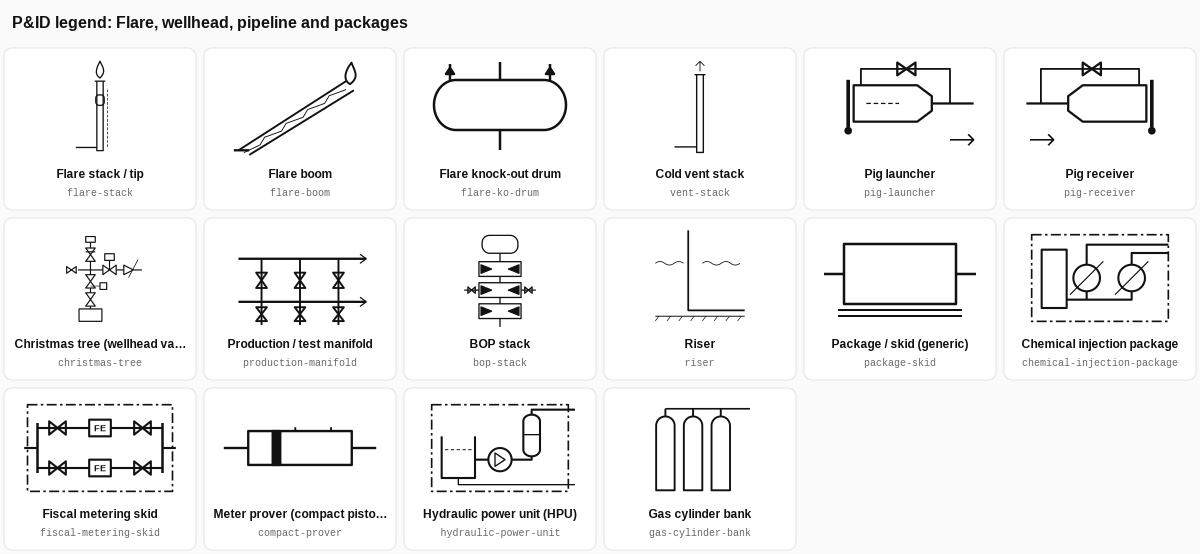

How each symbol is drawn
| Symbol | Drawn as | Tags |
|---|---|---|
| Flare stack / tip | A tall vertical stack with a flame shape at the tip, often with a molecular seal (a bulge) below the tip and pilot and ignition lines. | FS, FL, X |
| Flare boom | A long lattice boom (two parallel lines with a zig-zag between them) angled up and out from the platform edge, with the flare header inside it and a flame at the tip. | FB, X |
| Flare knock-out drum | A horizontal drum with flare inlets at one or both ends on top, the gas outlet to the flare from the top centre, and a liquid outlet underneath (often to pumps). | V |
| Cold vent stack | A vertical stack with an open top and no flame, sometimes with a small rain cap or dispersion arrows at the top. | VS, X |
| Pig launcher | An enlarged barrel (a fat pipe section) with a quick-opening closure door (thick bar) at the back end, a reducer to the pipeline at the front, a kicker line from the back of the barrel through a valve to the main line, and a flow arrow away from the door. | L, PL |
| Pig receiver | The mirror of a launcher: the pipeline enters through a reducer into the enlarged barrel, which ends at a closure door, with a bypass line and a flow arrow towards the door. | L, PR |
| Christmas tree (wellhead valves) | A vertical stack of valves on the wellhead: lower and upper master valves, a cross with a production wing valve (actuated) and a kill wing to the side, a swab valve and tree cap on top, and a choke on the production wing outlet. | XT, WH |
| Production / test manifold | Two parallel headers (production and test) with several incoming well lines; each well line has a valve to each header, so one well at a time can be routed to test. | M, MF |
| BOP stack | A vertical stack: an annular preventer on top (a rounded block), then two or three ram blocks (rectangles with rams drawn as opposing filled triangles), with choke and kill side outlets and valves. | BOP |
| Riser | A line running from the topsides down through the sea surface (a wavy line) to the seabed (a hatched line), where it turns into the pipeline; often with an ESDV at the top and "RISER" or a pipeline number written on it. | R |
| Package / skid (generic) | A rectangle (often inside a dash-dot boundary) labelled with the package tag and name, standing on skid rails, with connections crossing its edge. | X, A, PK |
| Chemical injection package | A dash-dot package boundary holding a chemical tank (or tote) and one or more metering pumps (pump circles with diagonal arrows), with injection lines leaving to the process. | C, X, CI |
| Fiscal metering skid | A dash-dot boundary with an inlet header, two or more parallel meter runs (each with isolation valves and a meter box or FE), an outlet header, and often a prover connection and a sampler. | X, FQ |
| Meter prover (compact piston prover) | A cylinder with a piston (a short vertical bar) inside and detector marks, with inlet and outlet connections and a 4-way valve or double-block valves to the meter runs. | X |
| Hydraulic power unit (HPU) | A dash-dot package with an oil reservoir (open-top tank), a pump with a motor, and an accumulator (a capsule split by a line), with hydraulic supply and return lines leaving. | X, HPU |
| Gas cylinder bank | A row of tall narrow cylinders with domed tops (gas bottles), each with a valve, joined to a common manifold. | X, N2 |
3D components for these symbols
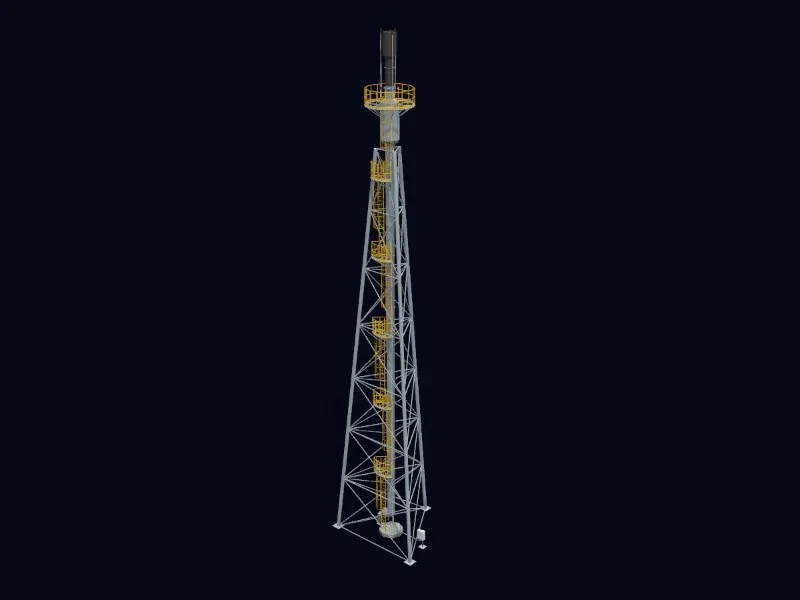 Flare stack (self-supported, guyed or derrick)
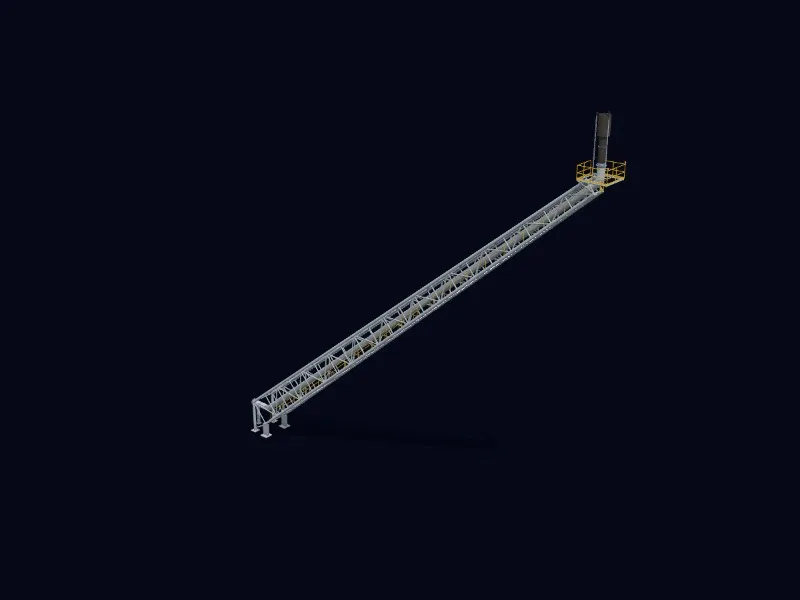 Flare boom
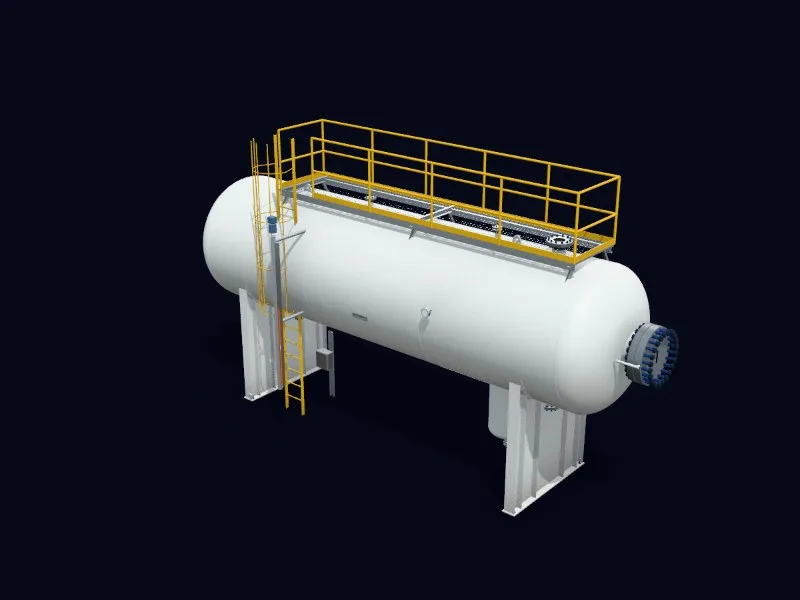 Horizontal separator
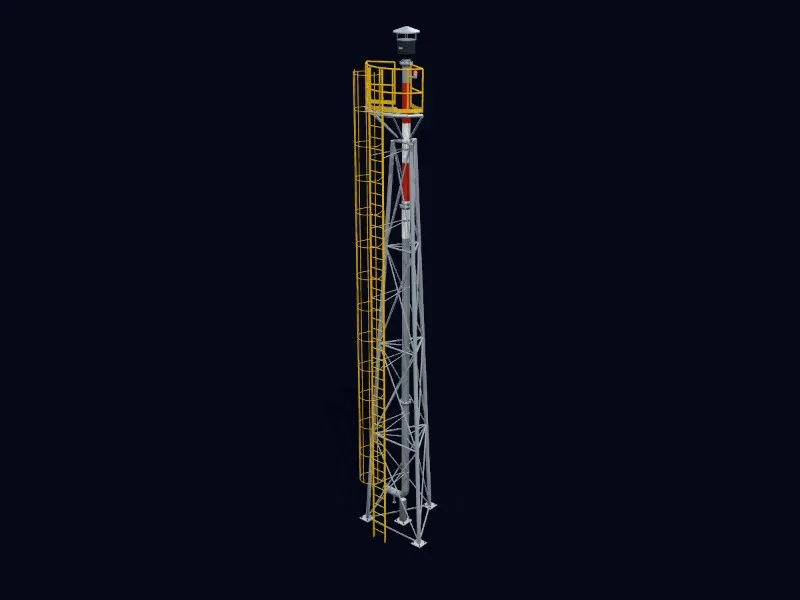 Cold vent stack
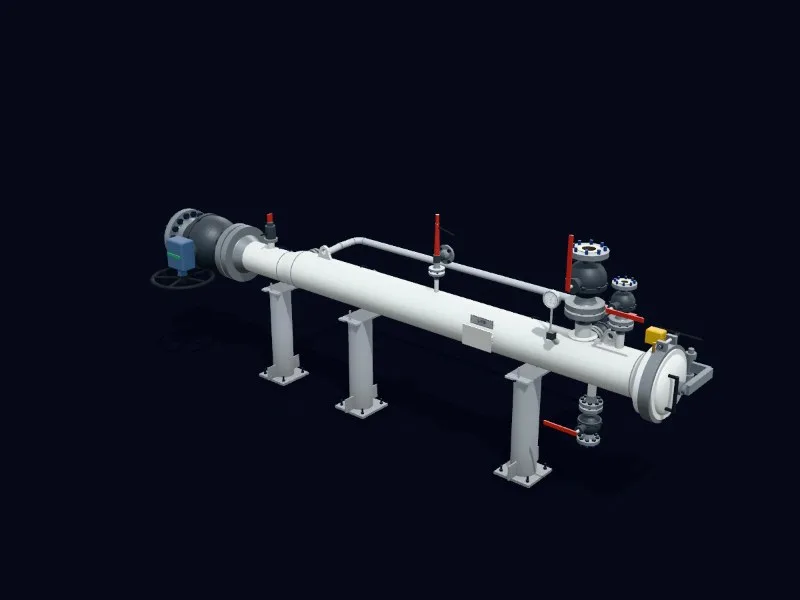 Pig launcher / receiver
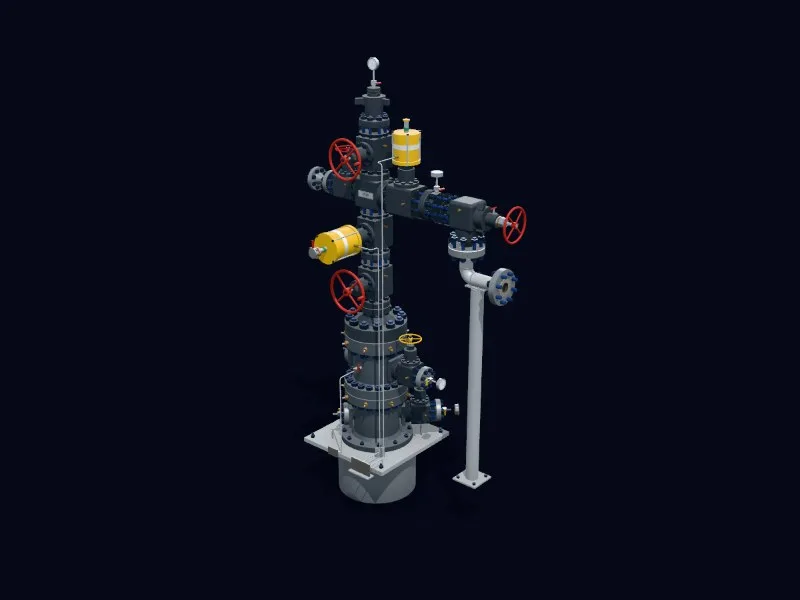 Christmas tree (surface, API 6A)
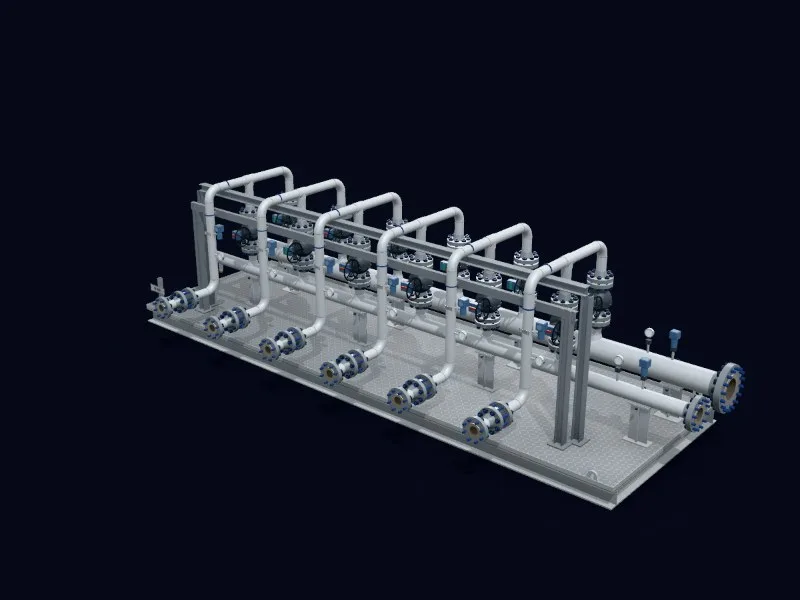 Production / test manifold
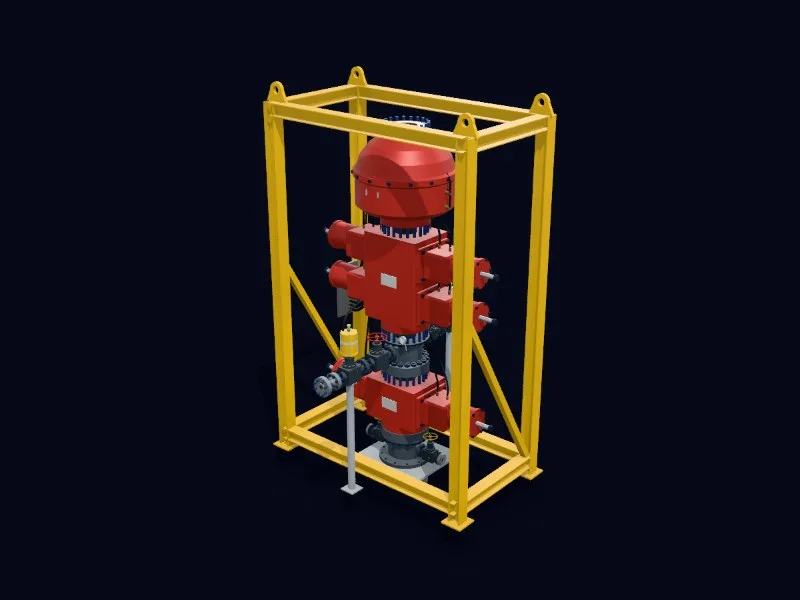 BOP stack (surface)
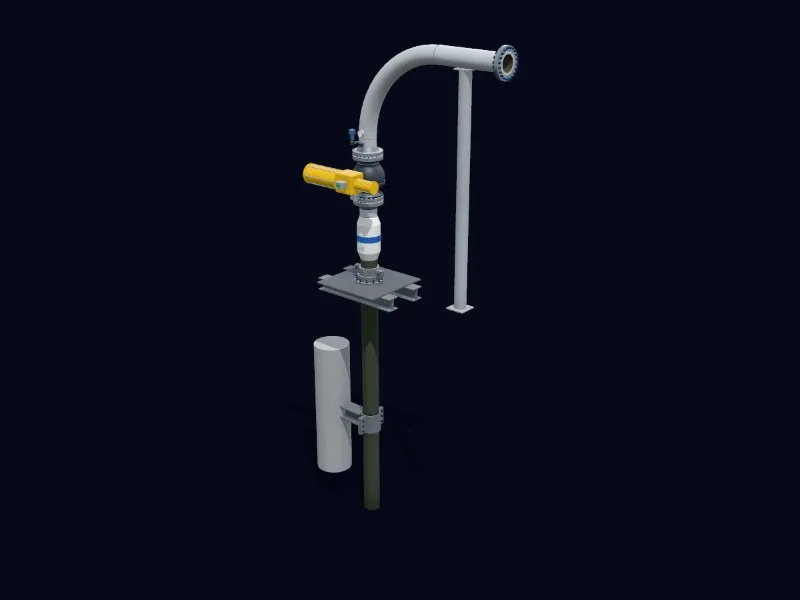 Riser top section
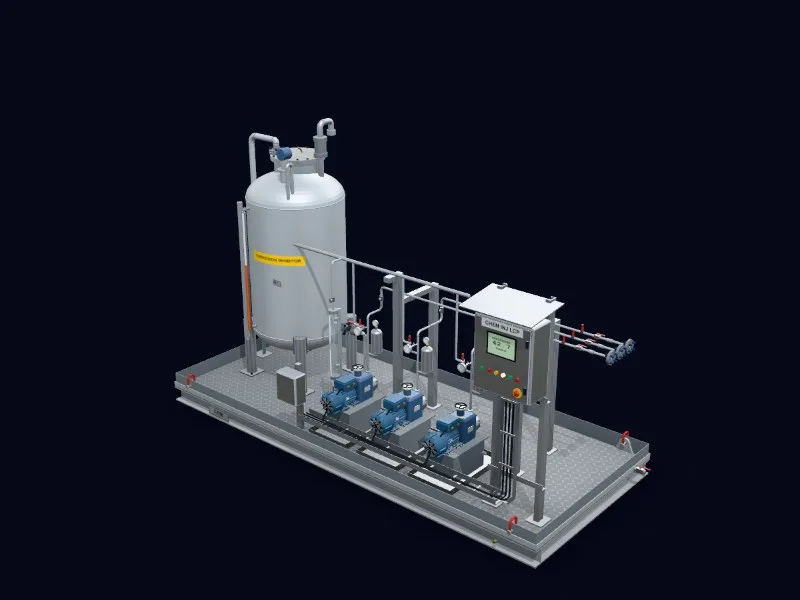 Chemical injection skid
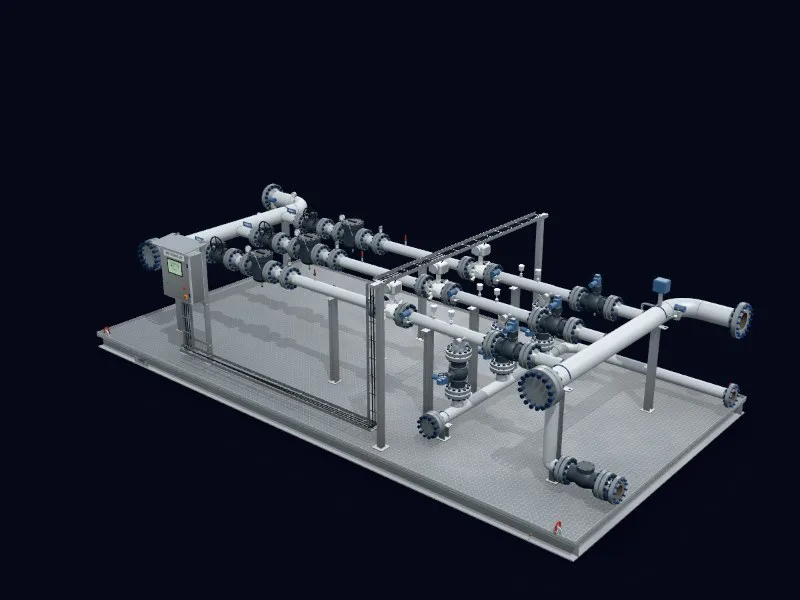 Fiscal metering skid
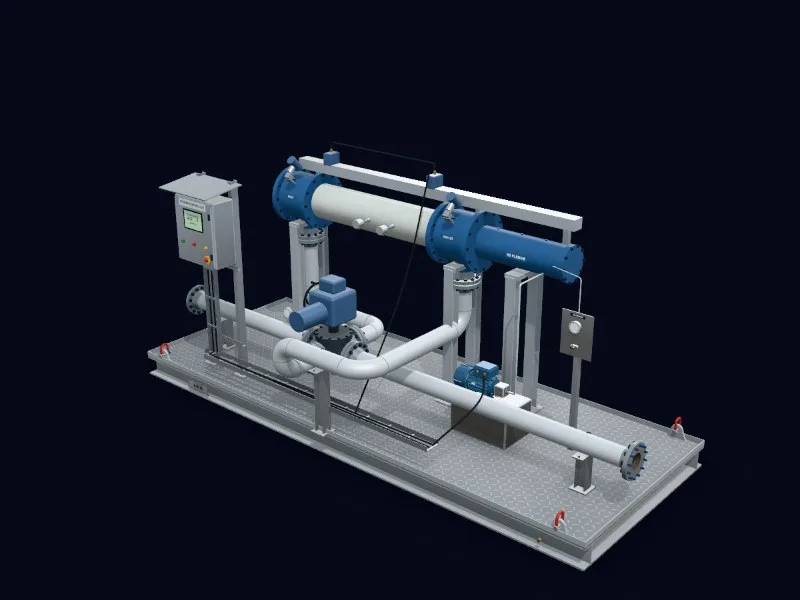 Compact piston prover
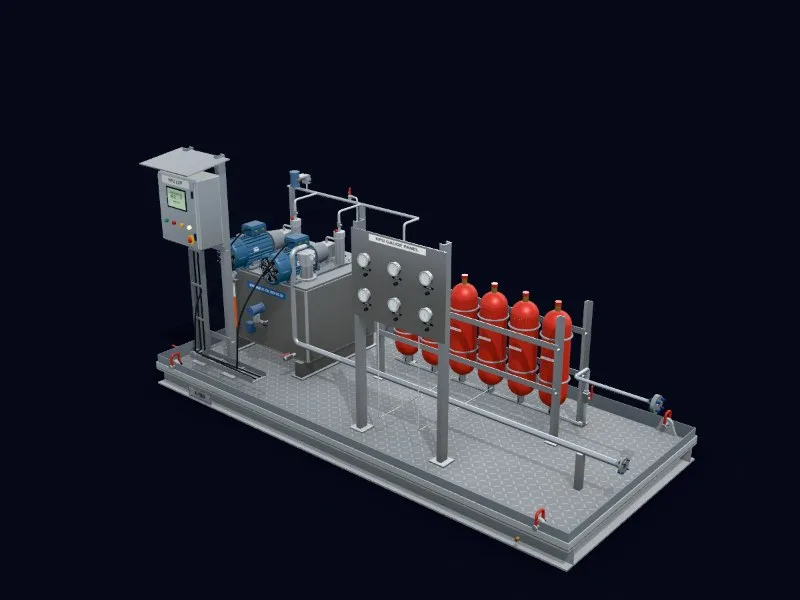 Hydraulic power unit (HPU)
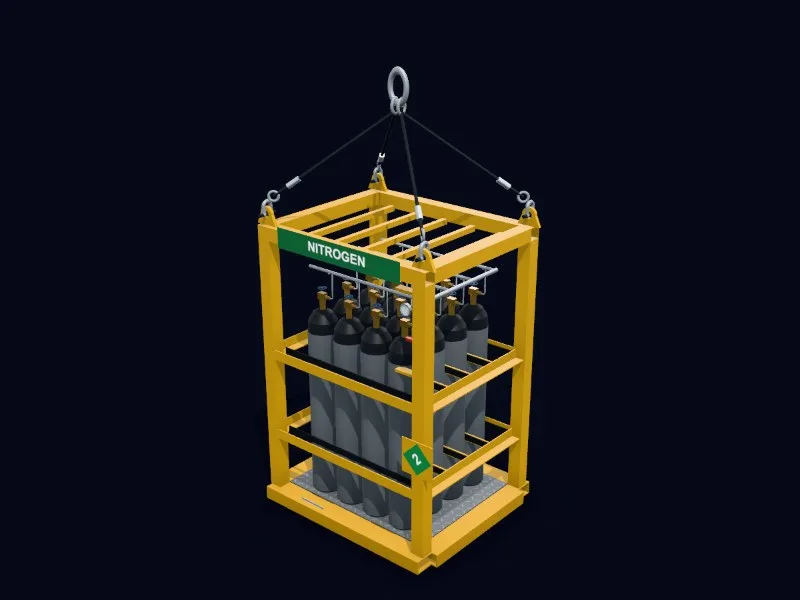 Gas cylinder quad (cylinder bundle)
Questions
What is the symbol for a christmas tree on a P&ID?
A vertical stack of valves on the wellhead: lower and upper master valves, a cross with an actuated production wing and a kill wing, a swab valve and tree cap on top, and a choke on the production wing. See the christmas tree symbol.
How do you tell a pig launcher from a pig receiver?
Follow the flow arrow. On a launcher the flow runs away from the closure door into the pipeline. On a receiver the pipeline enters the barrel and the flow runs towards the door.
What is the difference between a flare stack and a vent stack symbol?
A flare stack has a flame drawn at the tip, and often pilot lines and a seal below it. A cold vent stack has an open top with no flame, sometimes with a rain cap.
How is a riser shown on a P&ID?
As a line running from the topsides down through the sea surface, a wavy line, to the seabed, a hatched line, where it turns into the pipeline. See the riser symbol.
Other symbol categories
- Valves 23
- Check valves 6
- Relief, regulators and safety devices 9
- Actuators, operators and valve accessories 25
- Piping fittings and specials 37
- Lines and signals 16
- Connectors, boundaries and annotations 11
- Instrument bubbles and functions (ISA 5.1) 14
- Primary elements and field instruments 30
- Vessels, columns and tanks 13
- Heat transfer equipment 12
- Pumps 9
- Compressors, blowers and drivers 15
- Filters, separators and mixers 10
- Fire & gas and fire protection 24
- Electrical (single-line) 23