Valve symbols on a P&ID
Most manual valves on a P&ID are drawn on one body: two triangles meeting tip to tip on the line, often called the bow-tie. The mark where the tips meet gives the valve type, and the fill and any letters beside the body give its normal position. The shapes here follow ISO 10628-2 and PIP PIC001. Company legends add and change marks, so the legend sheet of the drawing comes first.
23 symbols.
How to read these symbols
The bow-tie and its centre mark
On many legends an empty bow-tie is a gate valve. Others use the plain bow-tie for a valve of unstated type and give the gate valve a mark of its own, such as a short bar at the tips. Published legends disagree on the centre marks, so check them on the legend sheet. In the forms drawn on this page, a solid dot in the middle is a globe valve, an open circle a ball valve and a small upright rectangle a plug valve. The butterfly valve drops the bow-tie: two short bars across the pipe with a diagonal disc between them.
Filled or open
On most legends a bow-tie drawn solid black means the valve is normally closed, as on drains, bypasses and spare connections. This is not universal. Some legends write NC beside an open body instead, and a check valve symbol may fill only one triangle. The fill says nothing about the body type.
Letters beside the body
LO and LC mean locked open and locked closed. CSO and CSC mean car-sealed open and car-sealed closed: a seal holds the valve in place and has to be broken before anyone can move it. These are company practice, so the exact letters can differ. Fail position letters such as FO and FC belong to actuated valves and are covered under actuators.
Bodies with more than two ports
An angle valve has one triangle from the side and one from below. Three-way and four-way valves add a triangle for each port, all meeting at one point. Wellhead chokes use the angle body too. This library draws a fixed choke with a plain cap, and an adjustable choke with a handwheel and a long diagonal arrow through the body.
All 23 symbols


Download the legend sheet (SVG)Whole legend (SVG)
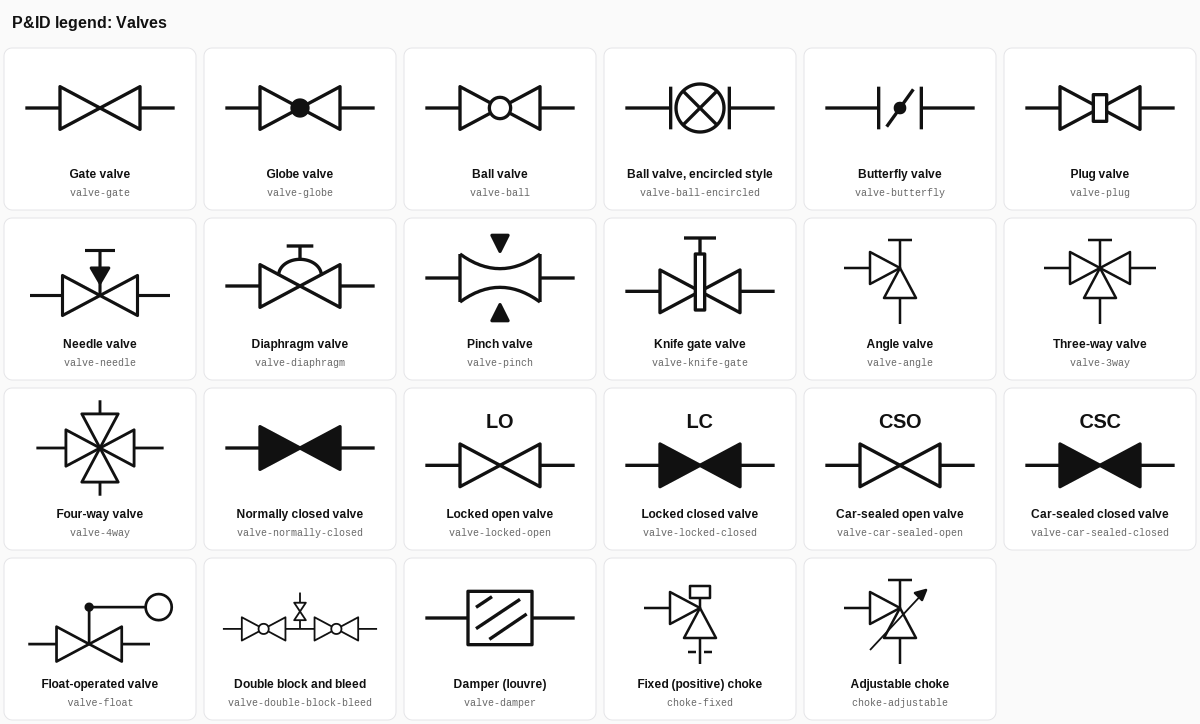

How each symbol is drawn
| Symbol | Drawn as | Tags |
|---|---|---|
| Gate valve | Two open triangles meeting tip to tip on the pipe (a bow-tie), with nothing in the middle. A handwheel stem (a T on top) is optional. | HV |
| Globe valve | Bow-tie with a solid black dot where the triangle tips meet. | HV |
| Ball valve | Bow-tie with an open (white) circle at the centre, where the tips meet. | HV |
| Ball valve, encircled style | A circle large enough to enclose the bow-tie, so it reads as a circle with an X in it, usually between two flange bars on the line. | HV |
| Butterfly valve | Two short vertical lines across the pipe (wafer body between flanges) with a diagonal line through the middle (the disc) and a dot at its centre (the shaft). | HV |
| Plug valve | Bow-tie with a small upright rectangle (the plug) at the centre. | HV |
| Needle valve | Small bow-tie with a stem carrying a solid triangle pointing down onto the body (the needle), topped by a handwheel bar. | HV |
| Diaphragm valve | Bow-tie with a curved arc (the diaphragm bonnet) spanning the top of the body where the tips meet, and a stem above. | HV |
| Pinch valve | A flexible sleeve: two curved lines bowing in towards the centre between short end bars, with two solid arrowheads pressing in from above and below. | HV |
| Knife gate valve | Bow-tie with a thin upright rectangle (the knife blade) through the centre that rises above the body, then a stem and handwheel bar. | HV |
| Angle valve | Two triangles at right angles: one pointing in from the side (inlet) and one pointing up from below (outlet), tips meeting, with a stem and handwheel on top. | HV |
| Three-way valve | Three triangles meeting tip to tip: left, right and one pointing up from below, each with a pipe stub. Usually carries an actuator or handwheel. | HV, TV, XV |
| Four-way valve | Four triangles meeting at one point, like two bow-ties crossed, with a pipe stub on every side. | HV, XV |
| Normally closed valve | Bow-tie with both triangles filled solid black. | HV |
| Locked open valve | A valve body with the letters "LO" written beside or above it. | HV |
| Locked closed valve | A valve body with the letters "LC" written beside or above it. The body is often drawn filled because the valve is closed. | HV |
| Car-sealed open valve | A valve body with the letters "CSO" written beside or above it. | HV |
| Car-sealed closed valve | A valve body with the letters "CSC" written beside or above it. The body is often drawn filled because the valve is closed. | HV |
| Float-operated valve | Bow-tie with a stem rising to a horizontal lever that ends in a circle (the float). | LCV, LV |
| Double block and bleed | Two isolation valves in series on the pipe with a small bleed valve on a branch between them, often inside a dashed box when it is a single-body DBB valve. | HV |
| Damper (louvre) | A rectangle across the duct with several parallel slanted blades inside. | HD, FD, MD |
| Fixed (positive) choke | An angle body (inlet triangle from the side, outlet triangle below) with a plain cap on top instead of a handwheel, and an orifice (a split bar) across the outlet. | CH, FO |
| Adjustable choke | An angle body with a handwheel stem and a long diagonal arrow through the body (the common mark for "adjustable"). | HCV, CH, PCV |
3D components for these symbols
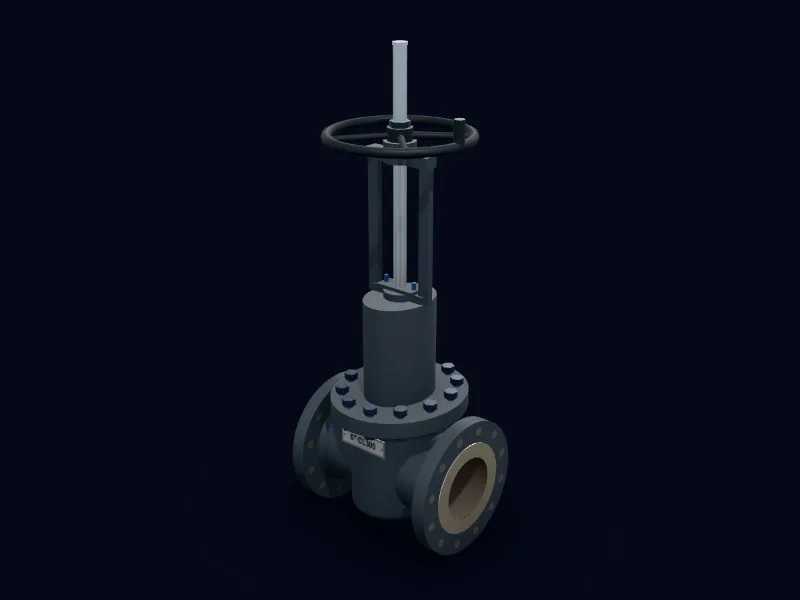 Gate valve
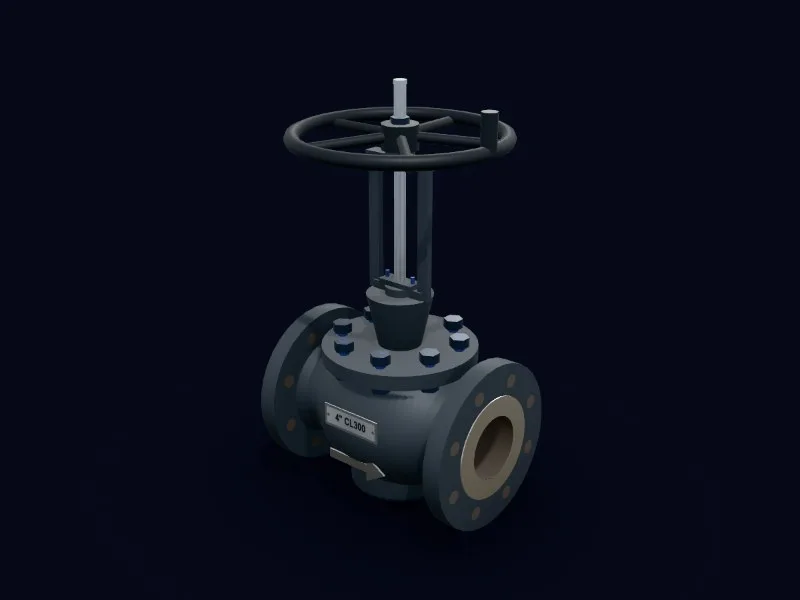 Globe valve
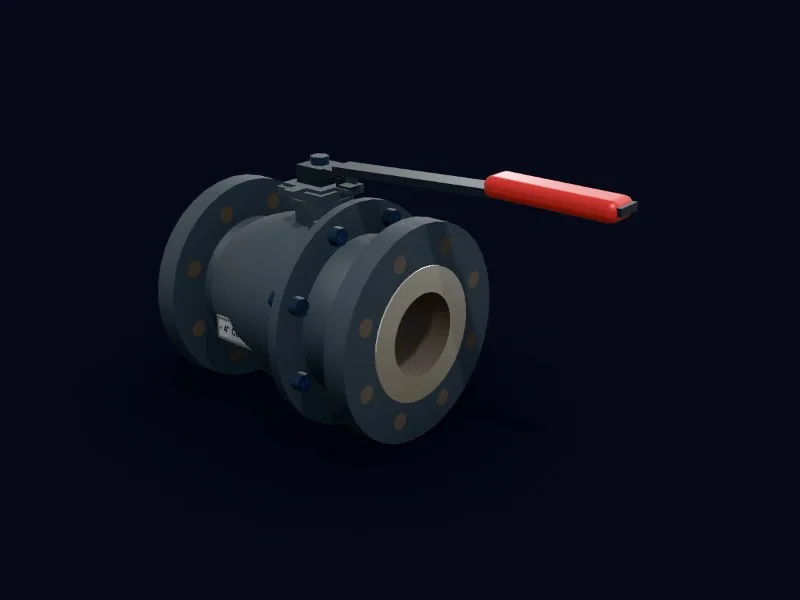 Ball valve
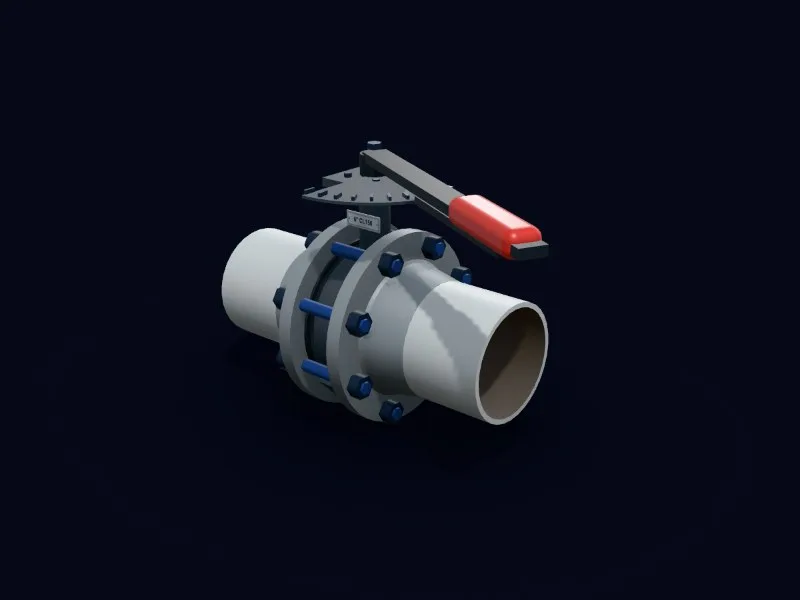 Butterfly valve
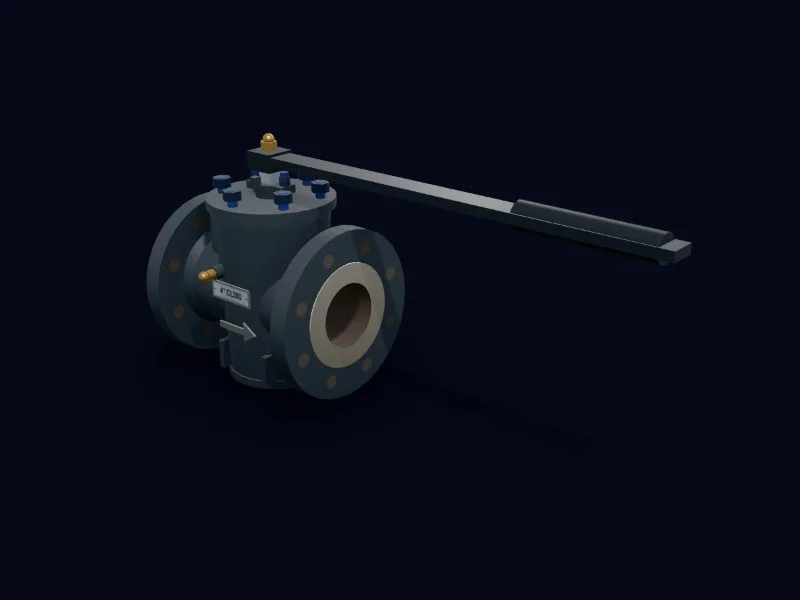 Plug valve (lubricated)
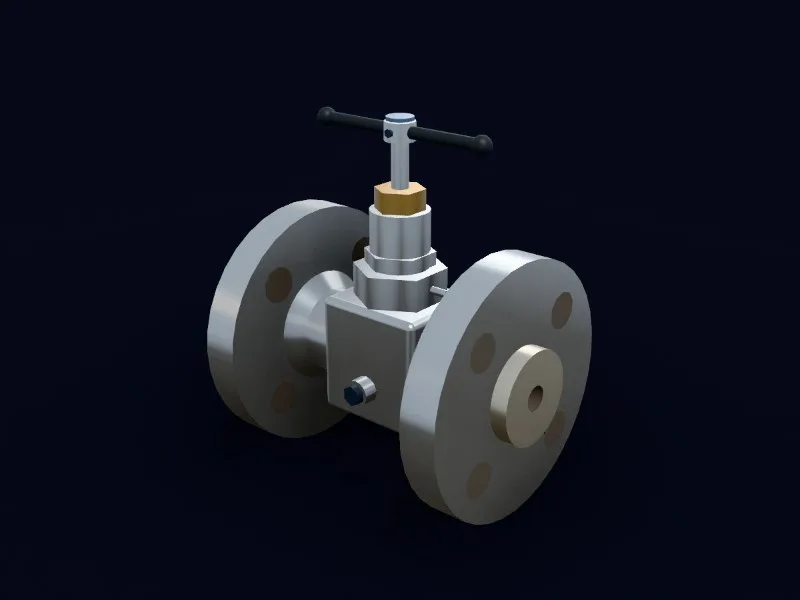 Needle valve (instrument)
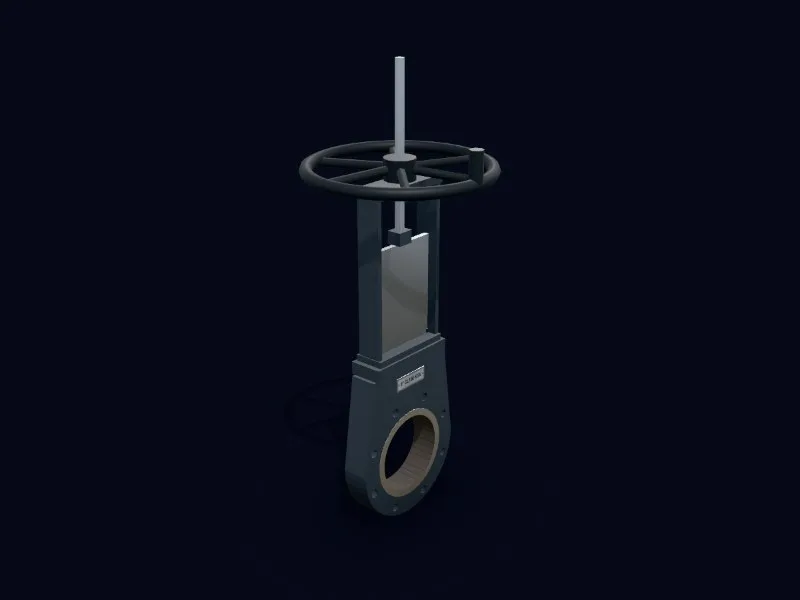 Knife gate valve
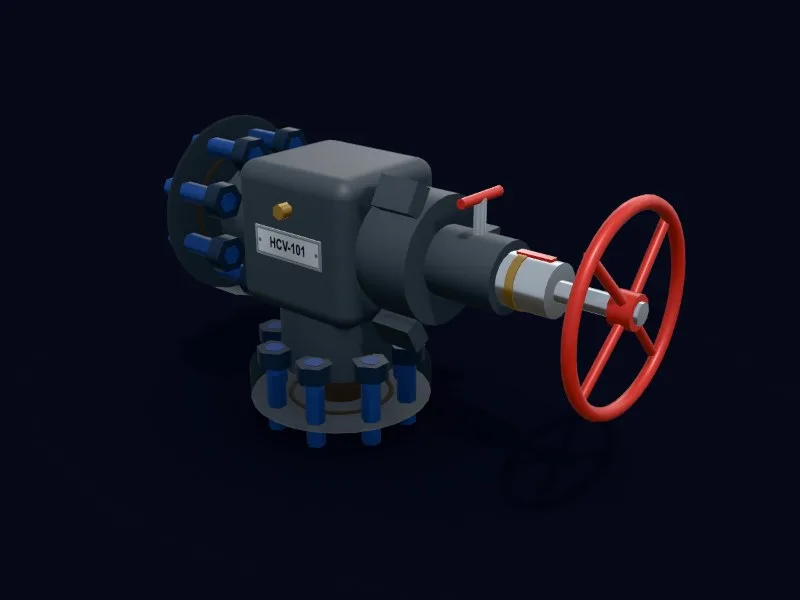 Wellhead choke (API 6A)
Questions
What is the symbol for a gate valve on a P&ID?
On many legends, two open triangles meeting tip to tip on the line, with nothing in the middle. Some legends use that plain bow-tie for any valve and mark the gate valve separately, so check the legend. See the gate valve symbol.
How do you tell a globe valve from a ball valve on a P&ID?
Look at the centre of the bow-tie. In this library's legend a globe valve has a solid black dot where the triangles meet, and a ball valve has an open circle there. Other legends use different centre marks, so confirm them on the legend sheet.
What does a filled valve symbol mean?
On most legends a bow-tie filled solid black is a normally closed valve. The fill only says the valve is closed in normal operation, so read the type from the centre mark or the legend. Some legends write NC beside an open body instead.
What do LO, LC, CSO and CSC mean next to a valve?
Locked open, locked closed, car-sealed open and car-sealed closed. They mark valves that must stay in one position, such as the isolation valves under a relief valve. See locked open and car-sealed closed.
What does a butterfly valve look like on a P&ID?
As drawn in this library, two short vertical lines across the pipe for the wafer body, with a diagonal line through the middle for the disc and a dot at its centre for the shaft. Some legends draw it on a bow-tie instead. See the butterfly valve symbol.
Other symbol categories
- Check valves 6
- Relief, regulators and safety devices 9
- Actuators, operators and valve accessories 25
- Piping fittings and specials 37
- Lines and signals 16
- Connectors, boundaries and annotations 11
- Instrument bubbles and functions (ISA 5.1) 14
- Primary elements and field instruments 30
- Vessels, columns and tanks 13
- Heat transfer equipment 12
- Pumps 9
- Compressors, blowers and drivers 15
- Filters, separators and mixers 10
- Flare, wellhead, pipeline and packages 16
- Fire & gas and fire protection 24
- Electrical (single-line) 23