Heat exchanger P&ID symbols
Exchangers are drawn in two ways. Simplified P&IDs and PFDs often use one general symbol, a circle with a zig-zag through it. Detailed P&IDs draw the real type: a shell-and-tube outline that shows its heads, a plate pack, a fin-fan bundle or a hairpin. Shell-and-tube types are named by their TEMA letters, such as AES or BEU.
12 symbols. Company legends vary, so the legend sheet of the drawing you are reading comes first.
How to read these symbols
The general symbol
A circle with a zig-zag through it is a heat exchanger of unstated type. One fluid follows the zig-zag and the other enters through stubs on the circle. The tag, the title or the datasheet gives the actual type.
Shell-and-tube: read the two ends
Bonnets at both ends with straight tubes between two tubesheets is a fixed tubesheet unit (BEM). A head at one end only and tubes bending back in a U is a U-tube unit (BEU or AEU). A flat channel cover at one end and a larger domed cover over a small floating-head arc is a floating head unit (AES). A shell that swells into a large drum over the bundle is a kettle reboiler.
Other exchangers
A frame full of thin vertical lines is a plate exchanger. A long bundle with header boxes and a fan is an air cooler. A U-shaped pipe within a pipe is a hairpin exchanger. A tall box with burners on the floor and a stack on top is a fired heater, and a vessel with a resistor zig-zag inside is an electric heater.
Following the two fluids
The nozzle labels or the datasheet say which fluid is on the shell side and which in the tubes. The line numbers help too, since cooling medium and process lines carry different service codes.
All 12 symbols


Download the legend sheet (SVG)Whole legend (SVG)
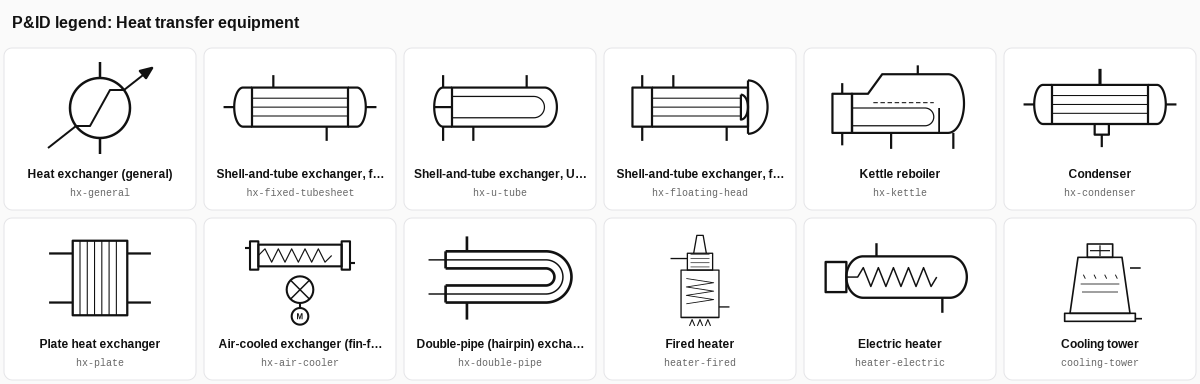

How each symbol is drawn
| Symbol | Drawn as | Tags |
|---|---|---|
| Heat exchanger (general) | A circle with a zig-zag line passing through it (one fluid) and pipe stubs on the circle (the other fluid). | E, HX |
| Shell-and-tube exchanger, fixed tubesheet (BEM) | A horizontal shell with a rounded bonnet at each end and straight tube lines running the full length between two tubesheets. | E |
| Shell-and-tube exchanger, U-tube (BEU / AEU) | A horizontal shell with a channel head at one end only, a rounded shell cover at the other, and tube lines drawn as a U bending back. | E |
| Shell-and-tube exchanger, floating head (AES) | A horizontal shell with a flat channel cover at one end and a larger domed shell cover at the other; inside the cover, a small floating-head arc closes the straight tubes. | E |
| Kettle reboiler | A small channel and tube bundle at one end, with the shell swelling into a much larger diameter over the bundle (a kettle), a weir plate at the far end, and a vapour outlet on top. | E |
| Condenser | A shell-and-tube exchanger with a large vapour inlet on top, a small condensate outlet (often from a boot or hotwell) underneath, and cooling medium through the tube side. | E |
| Plate heat exchanger | A rectangle (frame) with many thin vertical lines inside (the plates) and four connections, usually all on one end plate. | E |
| Air-cooled exchanger (fin-fan) | A long horizontal bundle (a rectangle with a zig-zag or straight tube passes) with header boxes at the ends and a fan (a circle with blades) beside or under it, often with an M motor. | E, AC |
| Double-pipe (hairpin) exchanger | A U-shaped (hairpin) pipe drawn as a pipe within a pipe: an inner line running through an outer annulus around the bend. | E |
| Fired heater | A tall box (radiant section) with burners (small flames or triangles) along the floor, a narrower convection box above, and a tapered stack on top. A coil (zig-zag) runs through. | H, F |
| Electric heater | A horizontal vessel with a heating element drawn as a zig-zag (resistor) inside, and a terminal box at one end. | E, H, EH |
| Cooling tower | A tapering box with a fan on top (induced draught), water spray or fill inside, and a basin at the bottom. | CT |
3D components for these symbols
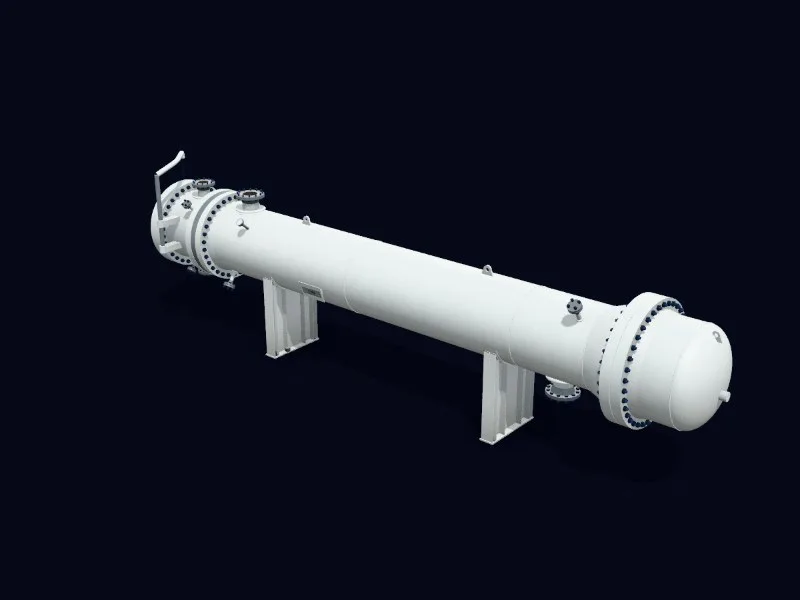 Shell-and-tube exchanger
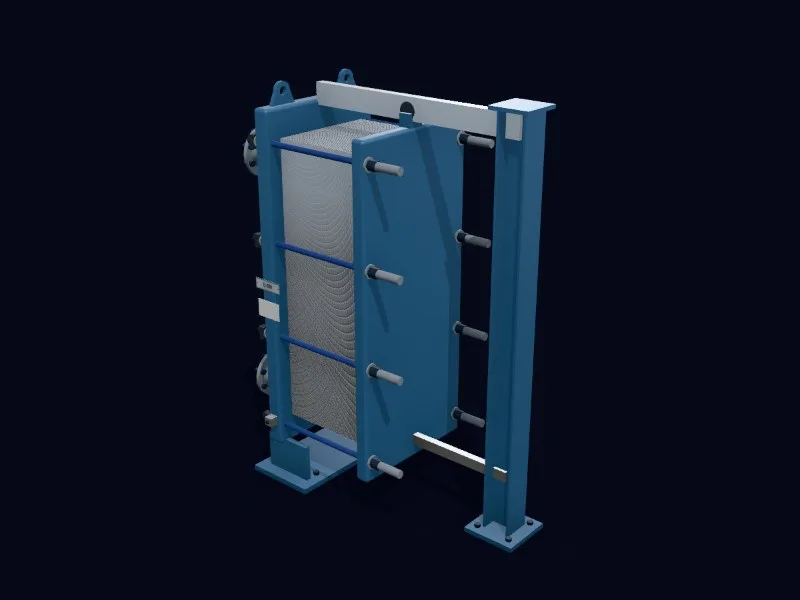 Gasketed plate heat exchanger (plate and frame)
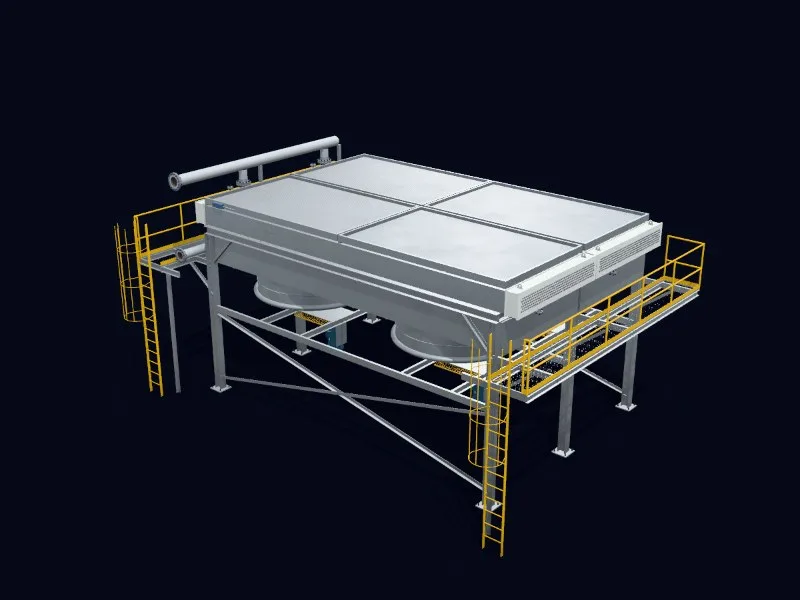 Air-cooled exchanger (fin-fan)
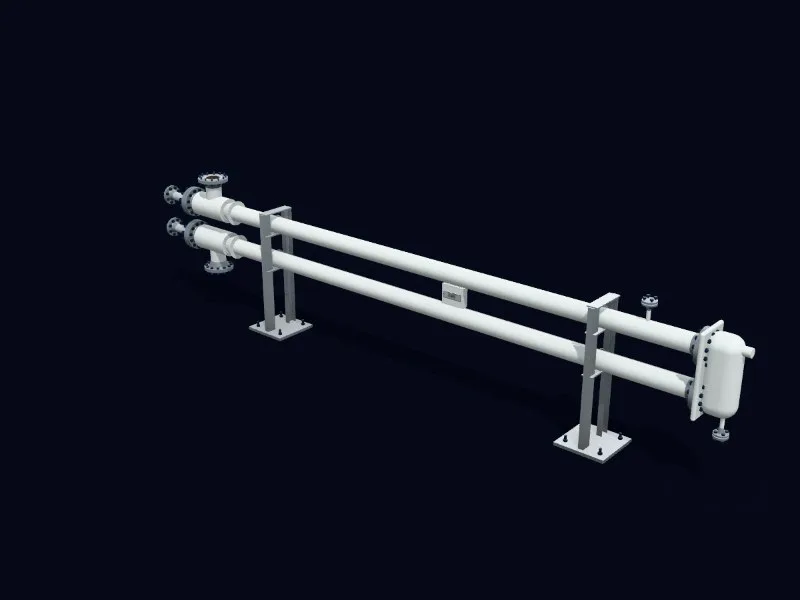 Hairpin (double-pipe) exchanger
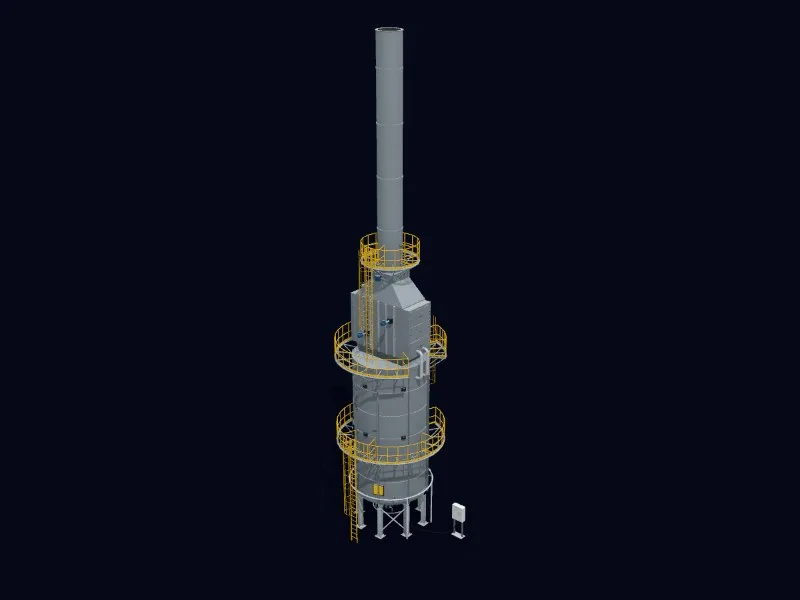 Fired heater (vertical cylindrical)
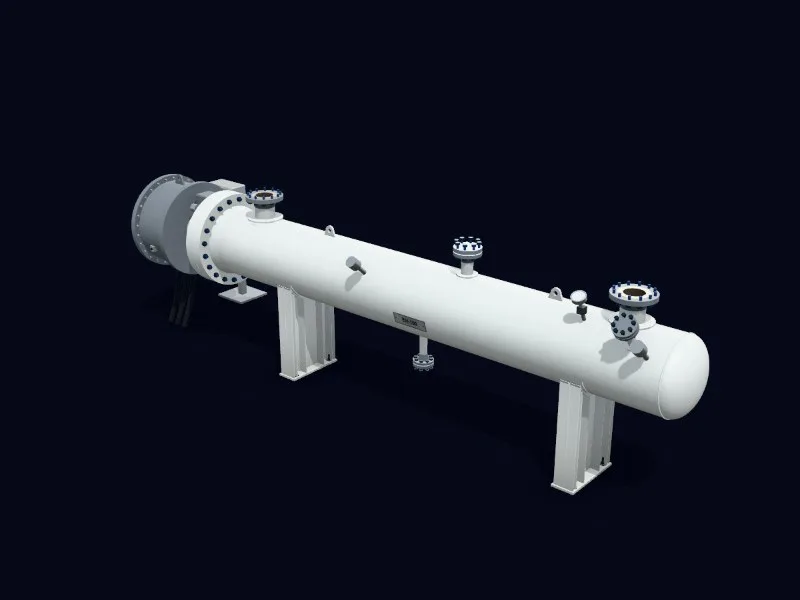 Electric process heater
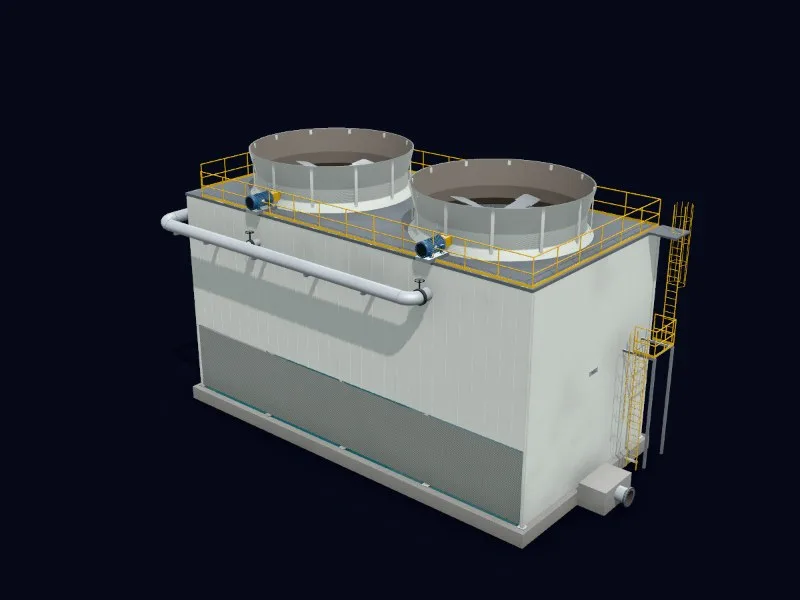 Cooling tower (induced draft, counterflow)
Questions
What is the symbol for a heat exchanger on a P&ID?
The general symbol is a circle with a zig-zag line passing through it, for one fluid, and pipe stubs on the circle for the other. Detailed P&IDs draw the real type instead. See the general heat exchanger symbol.
How do you tell a U-tube from a fixed tubesheet exchanger?
A U-tube exchanger has a channel head at one end only and tube lines drawn as a U bending back. A fixed tubesheet exchanger has a bonnet at each end and straight tubes running the full length.
What does AES mean on a heat exchanger?
It is a TEMA type code: A is a channel with a removable cover, E a one-pass shell and S a floating head with a backing device. See the floating head exchanger symbol.
What does an air-cooled exchanger look like on a P&ID?
A long horizontal bundle with header boxes at the ends and a fan, a circle with blades, beside or under it, often with an M for its motor. See the air cooler symbol.
What is the symbol for a kettle reboiler?
A small channel and tube bundle at one end, with the shell swelling into a much larger diameter over the bundle, a weir plate at the far end and a vapour outlet on top. See the kettle reboiler symbol.
Other symbol categories
- Valves 23
- Check valves 6
- Relief, regulators and safety devices 9
- Actuators, operators and valve accessories 25
- Piping fittings and specials 37
- Lines and signals 16
- Connectors, boundaries and annotations 11
- Instrument bubbles and functions (ISA 5.1) 14
- Primary elements and field instruments 30
- Vessels, columns and tanks 13
- Pumps 9
- Compressors, blowers and drivers 15
- Filters, separators and mixers 10
- Flare, wellhead, pipeline and packages 16
- Fire & gas and fire protection 24
- Electrical (single-line) 23