API 526
Flanged steel pressure relief valves
API 526 sets standard orifice letters D to T, inlet and outlet sizes, flange classes and centre-to-face dimensions for flanged relief valves.
Scope
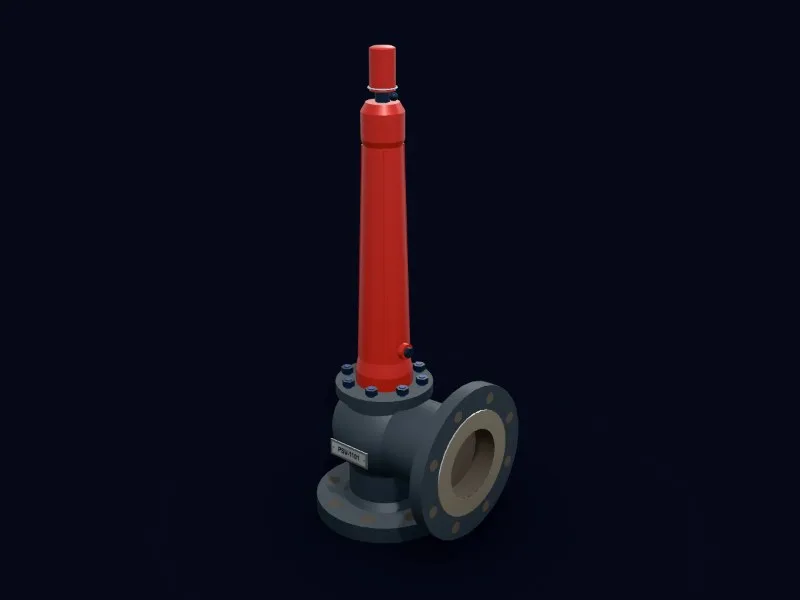
API Std 526 is a purchase specification for flanged steel pressure relief valves, both spring-loaded and pilot-operated. For each orifice letter and inlet pressure class it fixes the inlet and outlet sizes, the flange classes, the centre-to-face dimensions and the pressure and temperature limits. A valve from one maker can then replace another without changing the piping.
On oil and gas facilities most relief valves on vessels, exchangers, compressors and pipelines are specified to API 526. They discharge into a closed flare header or, where it is safe, to atmosphere.
API 526 does not size the valve. The relieving rate comes from API 521 and the required area from API 520. Threaded and small-bore valves, and valves in special materials, are often outside its tables.
Key concepts
- Orifice letters
- Fourteen standard orifices, D, E, F, G, H, J, K, L, M, N, P, Q, R and T, run from the smallest to the largest effective area. The J orifice, for example, has an effective area of 1.287 in².
- Size designation
- A relief valve is named inlet NPS, orifice letter and outlet NPS, for example 3J4 or 4P6. In the standard tables the outlet is larger than the inlet so that back pressure and exit velocity stay low.
- Effective and actual area
- The effective area and effective coefficient are standard values used to select a valve during design. The maker's certified area and coefficient are used to confirm the capacity of the valve actually bought.
- Inlet and outlet classes
- The inlet class follows the protected equipment and the set pressure. The outlet is usually Class 150 or 300, because the discharge side sees only the flare header pressure.
- Conventional, bellows and pilot
- A conventional spring valve is affected by back pressure. A balanced bellows valve cancels most of that effect and needs its bonnet vent open. A pilot-operated valve uses system pressure to hold the main seat closed until the pilot opens.
In Deck Twin
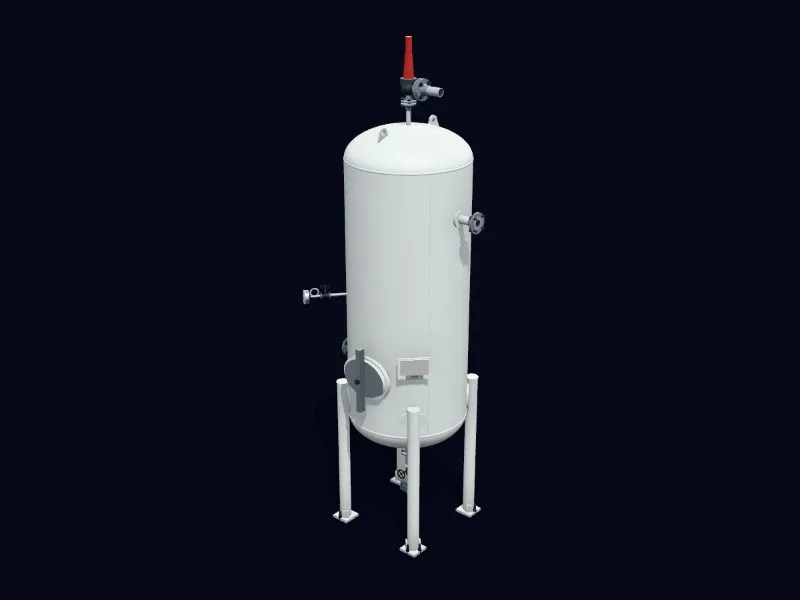
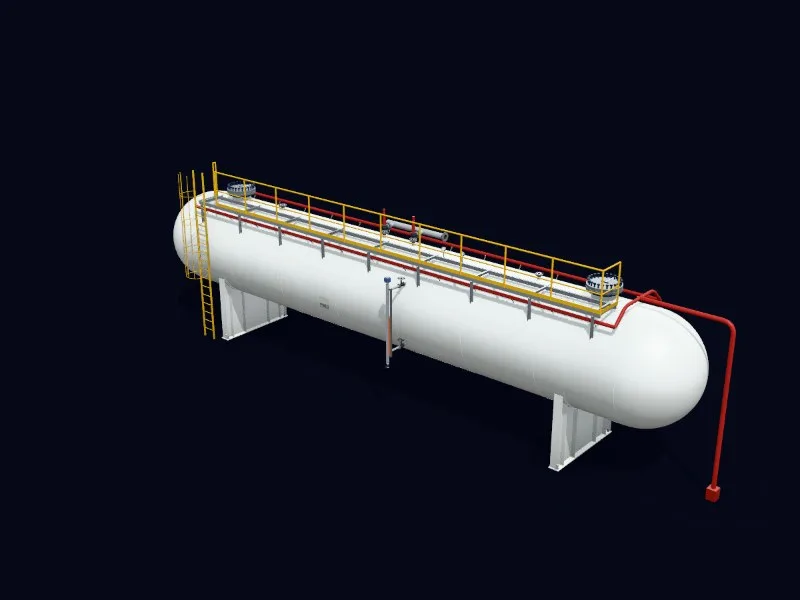
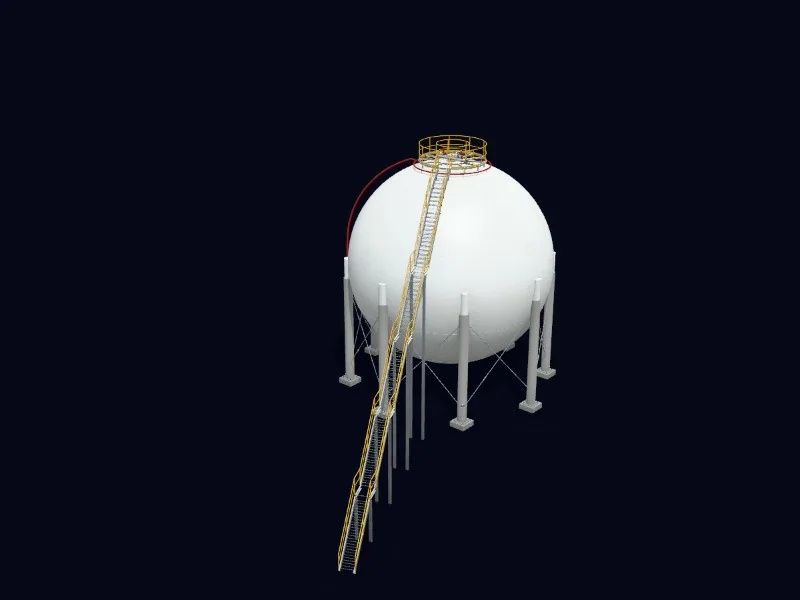
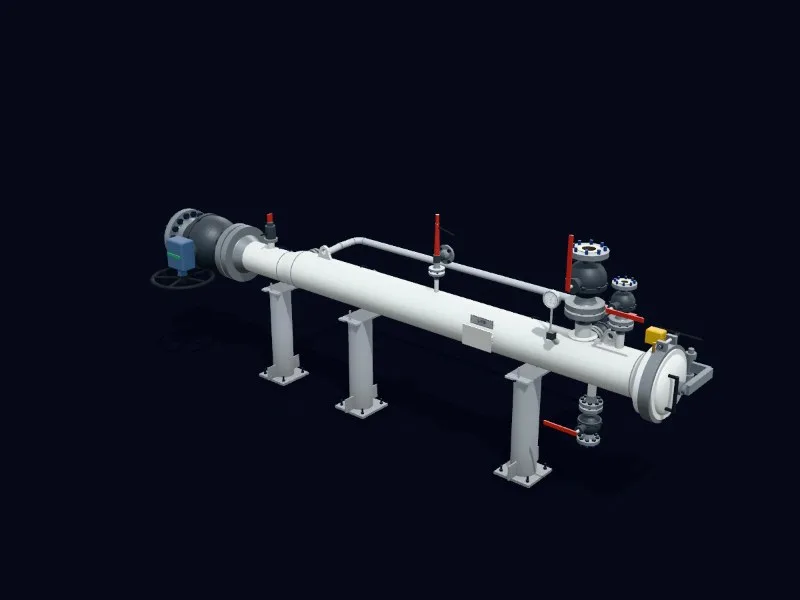
psv in lib/standards returns the API 526 inlet and outlet sizes, classes and centre-to-face dimensions for an orifice letter and inlet class, plus the effective area in m² and a typical height. If an orifice is not tabulated for the class, it uses the nearest lower class. The pressure safety valve is built from it with orifice, inletRating, bonnet, lever and bellows. The LPG sphere, bullet tank, air receiver and pig launcher carry relief valves sized the same way. The centre-to-face values are approximate and should be checked against the maker's API 526 table.
psv('J', 150)  // { orifice: 'J', area: 0.00083, inletNps: 2, outletNps: 3, inletRating: 150, outletRating: 150, … }
psv('P', 300)  // { inletNps: 4, outletNps: 6, outletRating: 150, … }
psv('Q', 900)  // inletRating: 600  (Q not tabulated at Class 900, nearest lower class used)
Deck Twin uses these standards as reference values for visualisation. Check the current edition of each standard before using any value for design, procurement or fabrication.