API 613
Special-purpose gears
API 613 covers special-purpose gear units between drivers and compressors, pumps or generators. How it differs from API 677 and API 617.
Scope
API Std 613 specifies special-purpose, enclosed, precision helical gear units of parallel-shaft design for petroleum, chemical and gas industry services. They are speed increasers and speed reducers with one or two stages. The standard is meant mainly for gears in continuous service with no installed spare.
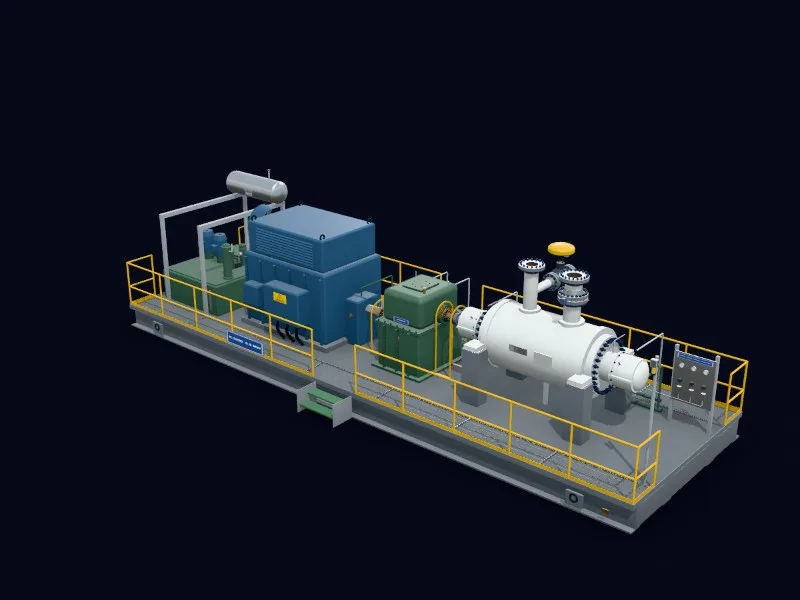
On oil and gas facilities these gear units sit between an electric motor and a centrifugal compressor, where they raise the speed, and between a gas turbine and a generator or pump, where they lower it. The gear unit is part of the machine train and shares its lube oil system.
General-purpose gear units are covered by API 677. Gears that are built into another machine, such as an integrally geared compressor, are covered by that machine's standard. Couplings follow API 671 and lube oil systems follow API 614.
Key concepts
- Special purpose and general purpose
- Special-purpose equipment is critical, usually unspared and runs continuously, so a failure stops production. General-purpose equipment is spared or less critical. The split decides whether a gear unit follows API 613 or API 677.
- Speed increasers and reducers
- A speed increaser lets a motor at fixed speed drive a compressor at several times that speed. A speed reducer lets a fast turbine drive a generator or pump at a lower speed. The gear ratio is the ratio of the two shaft speeds.
- Single and double helical
- Helical teeth run more smoothly than straight teeth but push the shafts sideways. A double helical gear has two opposite helices that cancel this thrust. A single helical gear needs thrust bearings or thrust collars.
- Service factor
- The gear is rated for more than the power it transmits. The rated power is multiplied by a service factor that depends on the driver and the driven machine, to allow for load variation and long life.
- Bearings and monitoring
- The shafts run in oil-film bearings fed with pressure lube oil. Vibration probes and bearing temperature sensors watch each shaft, in line with the machinery protection practice used on the rest of the train.
- Testing
- Each gear unit gets a mechanical running test, and the tooth contact pattern is checked. Further tests can be added by the purchaser.
Questions
What is the difference between API 613 and API 617?
They cover different machines in the same train. API 617 covers the compressor. API 613 covers a separate gearbox between the driver and the compressor. The gears inside an integrally geared compressor are part of the compressor and follow API 617.
What is the difference between API 613 and API 677?
API 613 is for special-purpose gear units: critical, usually unspared and in continuous service. API 677 is for general-purpose gear units on spared or less critical machines. API 613 asks for more in design, monitoring, testing and documentation.
In Deck Twin
The centrifugal compressor package cites API 613 for the speed-increasing gearbox it draws between the motor and the compressor when driver is motor. The gearbox is a generic casing sized with the train. The library does not model gear teeth, ratios or ratings.
Deck Twin uses these standards as reference values for visualisation. Check the current edition of each standard before using any value for design, procurement or fabrication.