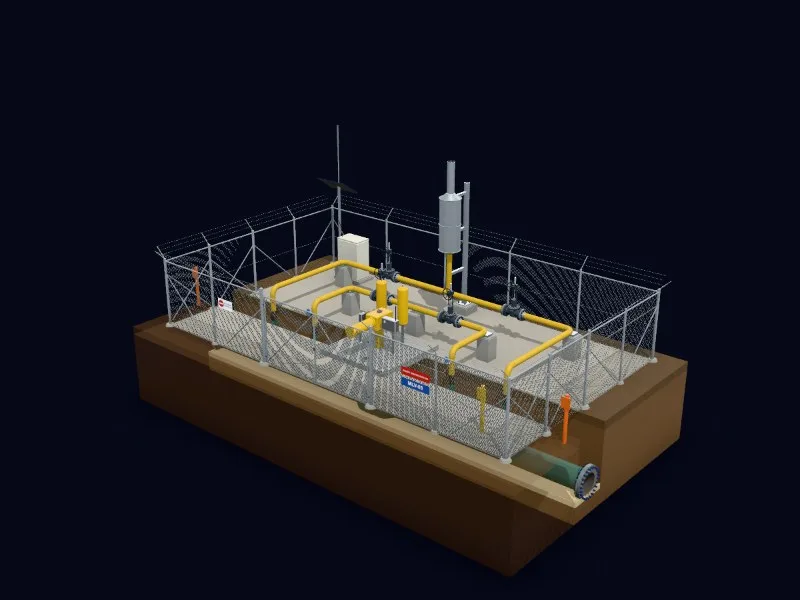
API 6D
Pipeline and piping valves
API 6D covers ball, gate, plug and check valves for pipelines and piping, including double block and bleed and double isolation and bleed.
Scope
API Spec 6D specifies the design, manufacture, testing and documentation of ball, gate, plug and check valves for pipeline and piping systems in the petroleum and natural gas industries. It was developed for pipeline service and is now widely used for process piping valves too. ISO 14313 is the closely related international standard.
On oil and gas facilities, 6D valves are typical for ESD and blowdown valves, riser and pipeline isolation valves, pig trap valves and manifold valves. Projects often call up 6D for large or high-integrity valves and a lighter standard, such as ISO 17292 or API 600, for small or general-service valves.
Its face-to-face lengths largely match ASME B16.10, and its flanges come from ASME B16.5 and B16.47. It does not cover wellhead valves (API 6A) or subsea valves (API 6DSS).
Key concepts
- Full bore and reduced bore
- A full-bore valve has an opening close to the pipe bore, so pigs pass and pressure drop is low. Pipeline valves are usually full bore. Reduced-bore valves are smaller and cheaper and suit process lines that are not pigged.
- Floating and trunnion ball
- In a floating ball valve the line pressure pushes the ball onto the downstream seat. In a trunnion-mounted valve the ball is held by trunnions and the seats move onto the ball. Larger and higher-pressure ball valves are trunnion mounted.
- Double block and bleed (DBB)
- One valve shuts off flow on both sides at once, and a bleed on the body cavity between the two seats proves that the isolation holds. It is a compact alternative to two valves with a vent between them.
- Double isolation and bleed (DIB)
- DIB-1 means both seats seal against pressure from either direction. DIB-2 means one seat is bidirectional and one seals from one direction only. The choice affects how the valve can be used for isolation during maintenance.
- Seat designs
- Self-relieving seats vent cavity overpressure into the line. Double-piston-effect seats seal from both sides, so the cavity needs its own relief. The seat type must match the isolation philosophy.
- Testing
- Each valve gets a hydrostatic shell test and seat tests, with gas tests as a supplementary option. Fire-type testing is a separate requirement, usually to API 6FA or API 607, when the purchaser specifies it.
In Deck Twin
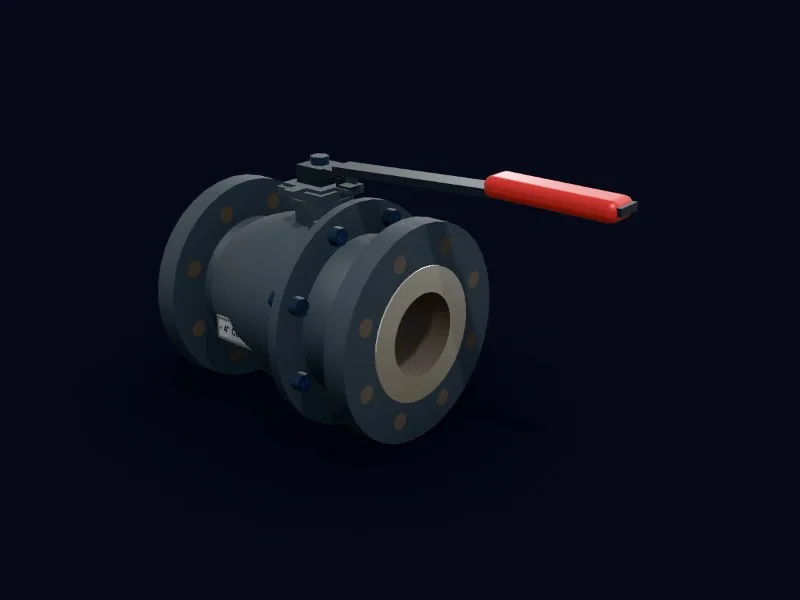
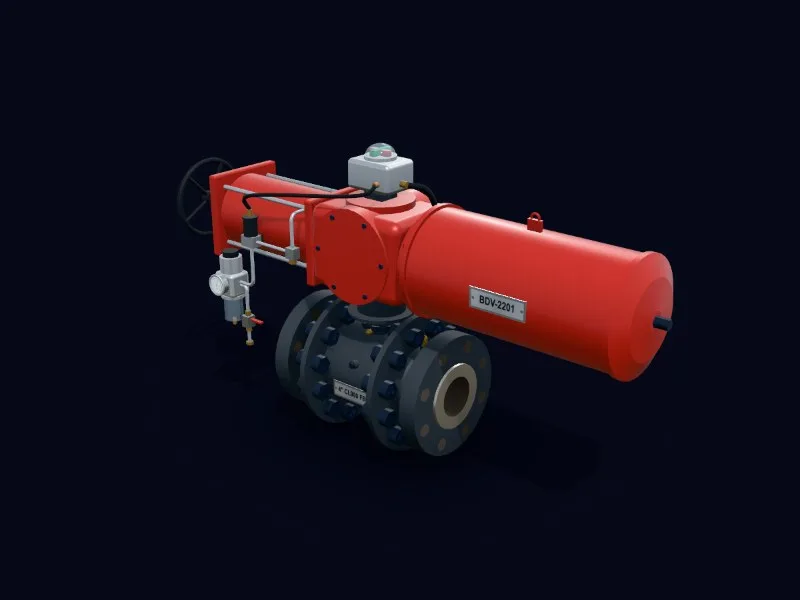
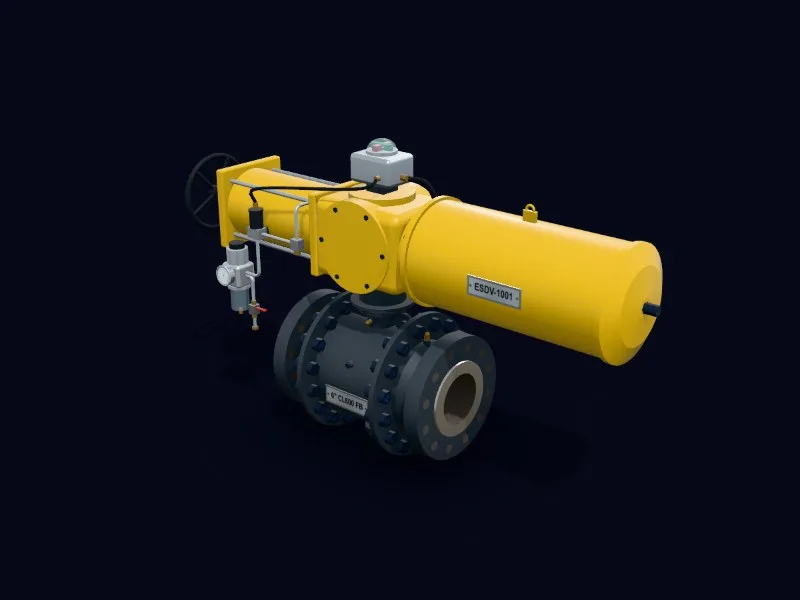
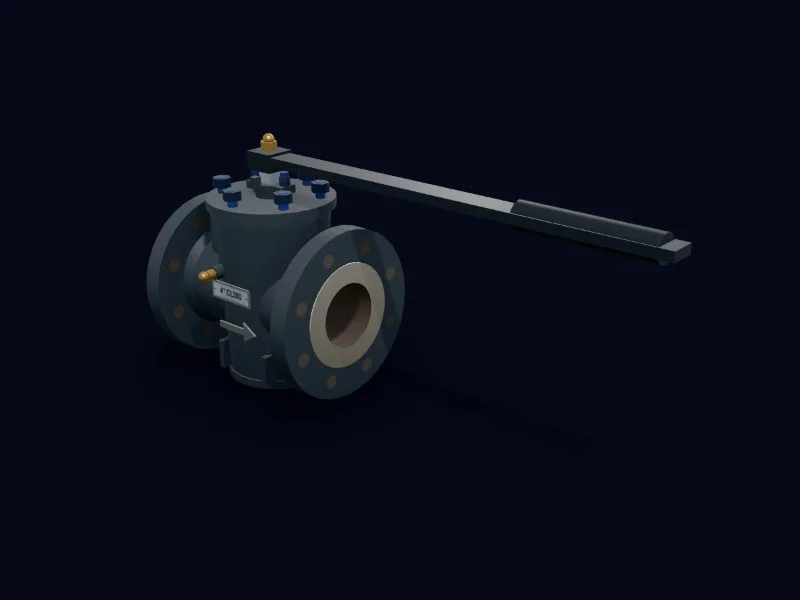
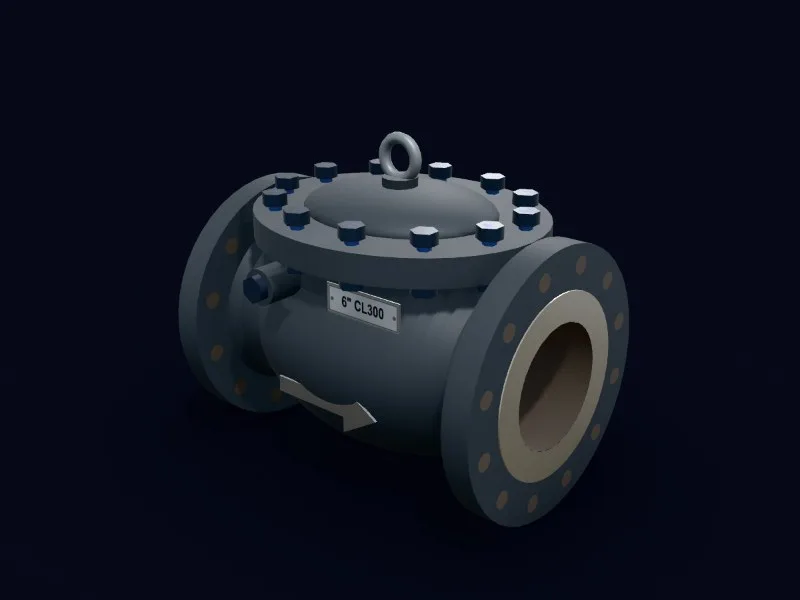
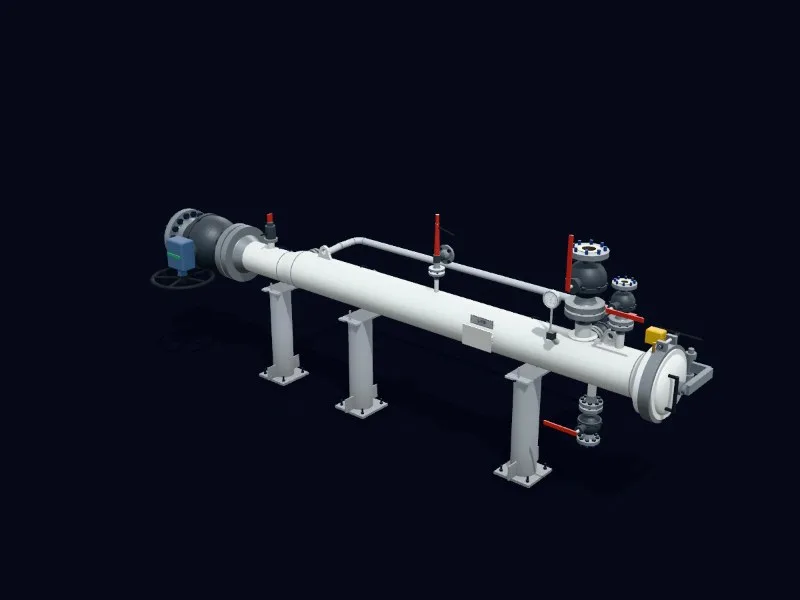
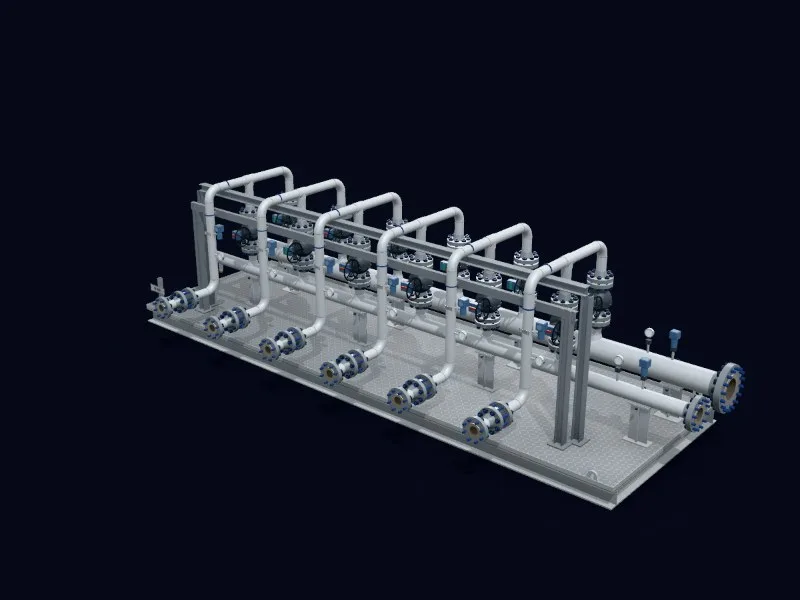
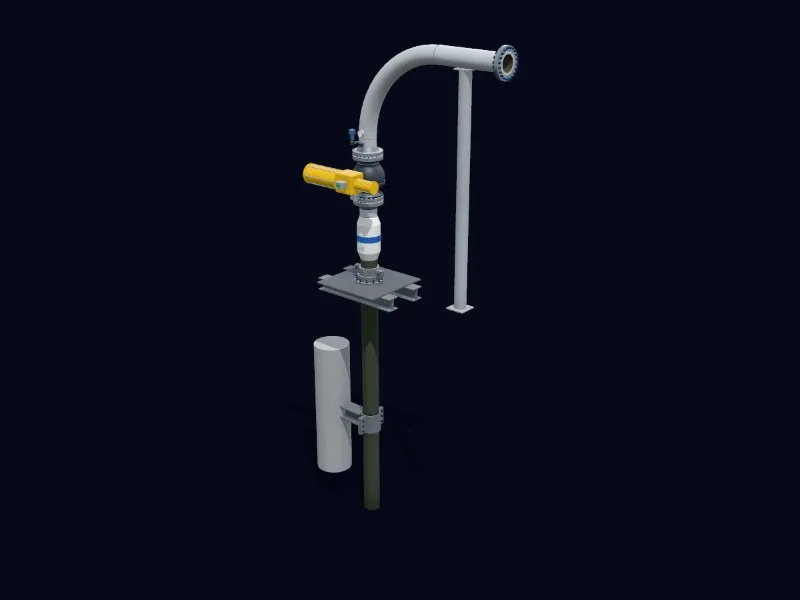
The ball valve, ESD valve, blowdown valve, plug valve and swing check valve follow 6D body forms, with bore and mounting on the ball valve. Their lengths come from faceToFace in lib/standards, which holds ASME B16.10 tables, and their flanges from flange (ASME B16.5). The pig launcher, riser, pipeline block-valve station and production manifold use these valves inline. Body shapes are generic proportions, not any maker's design.
faceToFace('ball-full', 8, 300)     // 0.5016  (B16.10 long pattern, 19-3/4")
faceToFace('ball-reduced', 8, 300)  // 0.4191  (short pattern, same as gate)
faceToFace('plug', 6, 300)          // 0.4034
Deck Twin uses these standards as reference values for visualisation. Check the current edition of each standard before using any value for design, procurement or fabrication.
Components that follow API 6D 9