API 600
Steel gate valves: flanged and butt-welding ends, bolted bonnets
API 600 gate valves explained: heavy-duty bolted bonnet steel gate valves, wedge types, trim, and API 600 vs API 602, API 6D and ISO 10434.
Scope
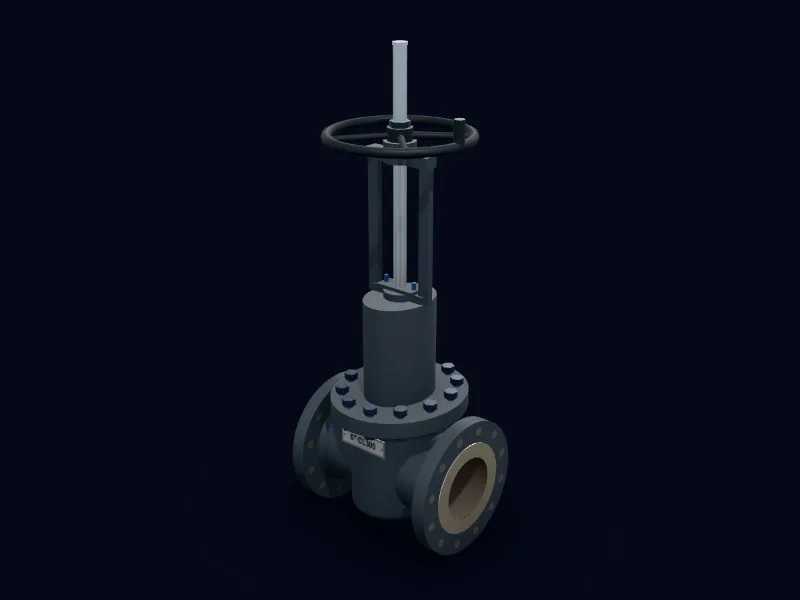
API 600 specifies heavy-duty bolted bonnet steel gate valves with flanged or butt-welding ends for petroleum and natural gas industry service. It covers the design, materials, wall thickness, trim, testing and marking of the valve. The valves have an outside screw and yoke and a rising stem, so the position of the stem shows whether the valve is open.
On oil and gas facilities API 600 gate valves are the usual manual block valves in process and utility piping: isolation valves around control valves and pumps, header isolation and battery limit valves. They are used for on and off duty, fully open or fully closed, not for throttling.
Compact gate, globe and check valves of NPS 4 and smaller are covered by API 602, and corrosion-resistant bolted bonnet gate valves by API 603. Pipeline gate valves, especially through-conduit valves that pass pigs, are covered by API 6D. The face-to-face dimensions follow ASME B16.10 and the pressure and temperature ratings follow ASME B16.34.
The parts of an API 600 gate valve
| Part | What it does |
|---|---|
| Body | Holds pressure and carries the end flanges or weld ends and the seats |
| Wedge (gate) | Slides across the flow to close the valve. Solid, flexible and split wedges are used |
| Seat rings | The sealing faces in the body that the wedge closes against |
| Bonnet | Bolted to the body with a gasket. Gives access to the internals |
| Stem and backseat | Lifts the wedge. A backseat on the stem seals against the bonnet when fully open, so the packing can be serviced |
| Packing and gland | Seals around the stem where it leaves the bonnet |
| Yoke and yoke nut | Carries the handwheel or gearbox. The rising stem passes through it |
A generic description, not a copy of the standard's parts list.
API 600 and the neighbouring valve standards
| Standard | Use it for |
|---|---|
| API 600 | Heavy-duty bolted bonnet steel gate valves, flanged or butt-welding ends |
| API 602 | Compact steel gate, globe and check valves of NPS 4 and smaller |
| API 603 | Corrosion-resistant bolted bonnet gate valves, usually in stainless steel |
| API 6D | Pipeline and piping valves, including through-conduit gate valves |
| ISO 10434 | The ISO standard for bolted bonnet steel gate valves, closely related to API 600 |
| API 598 | Inspection and pressure testing of the finished valve |
Check the project valve specification for which standard applies to each size and service.
Edition
The current edition of API 600 is the 14th, published in May 2021, with Errata 1 of April 2024. Check the API catalogue for a later edition before you cite one.
Key concepts
- Outside screw and yoke
- The stem thread is outside the valve body, away from the process fluid. The stem rises as the valve opens, which shows the position at a glance and keeps the thread clean.
- Wedge types
- A solid wedge is simple and strong. A flexible wedge has a cut around its rim so it can bend slightly and seal as the body moves with temperature. A split wedge has two halves that seat on each side independently.
- Trim
- The trim is the stem, the wedge faces, the seat faces and the backseat. API 600 identifies trim combinations by number, so a datasheet can call up a stainless steel or hardfaced trim in a few characters.
- Wall thickness
- API 600 sets its own minimum body wall thicknesses and stem sizes. This is a large part of what makes the valves heavy duty compared with a general-purpose valve of the same class.
- Bolted bonnet
- The bonnet is bolted to the body with a gasket. It is simple to open for maintenance. Pressure seal bonnets, used at high pressure, are a different design.
- On and off service
- A gate valve is not a throttling valve. Partly open, the wedge vibrates and the seats wear quickly in the high-velocity flow.
Questions
What is an API 600 valve?
It is a bolted bonnet steel gate valve built to API Standard 600, with flanged or butt-welding ends. API 600 valves are heavier than general-purpose gate valves of the same class and are the common manual block valve in refinery and oil and gas process piping.
What is the difference between API 600 and API 602?
API 600 covers full-size cast or forged bolted bonnet gate valves. API 602 covers compact steel gate, globe and check valves of NPS 4 and smaller, often with socket weld or threaded ends, used on small-bore lines, vents and drains.
What is the difference between API 600 and API 6D gate valves?
API 600 gate valves are wedge gate valves for plant piping. API 6D covers pipeline valves, including slab and expanding gate valves with a through-conduit bore that lets pigs pass. API 6D also adds double block and bleed requirements.
Is API 600 the same as ISO 10434?
They cover the same type of valve and have a shared history, but they are separate documents with their own editions. The current ISO 10434 is the 2020 edition. Check which one the project specification names.
In Deck Twin
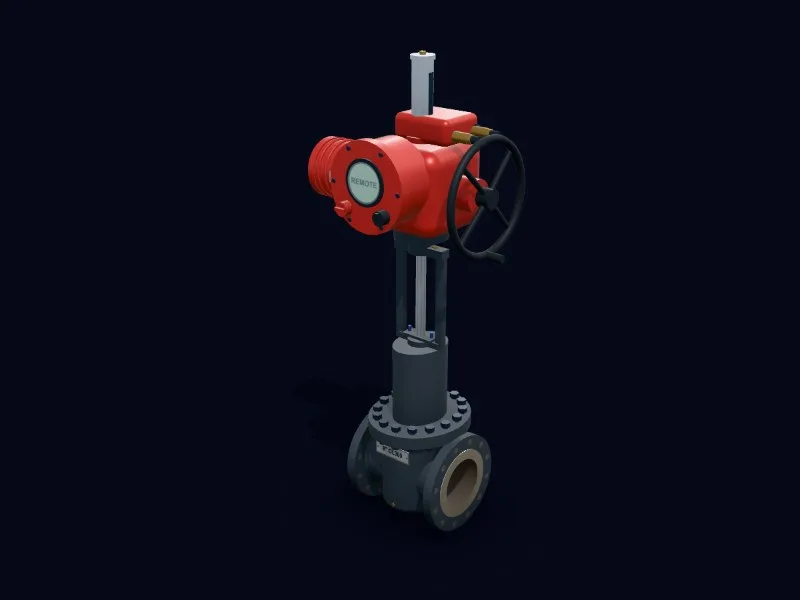
The gate valve and motor-operated valve cite API 600. The gate valve draws a flexible wedge, an oval bolted bonnet, a packing gland, an outside screw and yoke and a rising stem. The motor-operated valve draws a wedge gate body with a bolted bonnet and yoke under a multi-turn electric actuator. Face-to-face lengths come from faceToFace in lib/standards (ASME B16.10) and flanges from flange (ASME B16.5). Body proportions are generic, not API 600 wall thicknesses.
Deck Twin uses these standards as reference values for visualisation. Check the current edition of each standard before using any value for design, procurement or fabrication.